
When does aluminum busbar corrosion resistant really matter
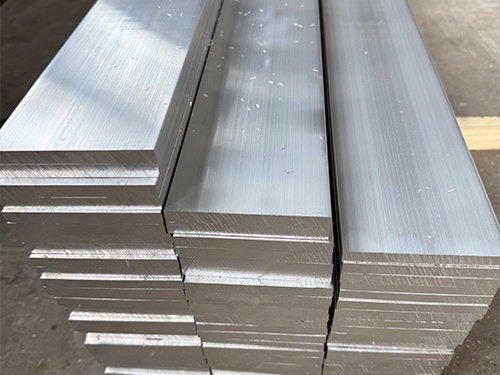
For quality control and safety managers, understanding when Aluminum busbar corrosion resistant performance really matters is essential to preventing failures, reducing maintenance risks, and ensuring long-term system reliability. In demanding environments such as new energy, rail transit, and industrial equipment, material selection directly affects safety, conductivity, and service life. This article explores the key conditions, risks, and evaluation points that make corrosion resistance a critical decision factor.
In many projects, aluminum busbars are selected for their low weight, good conductivity, and manufacturing flexibility. However, corrosion resistance is not equally critical in every installation. For teams responsible for inspection, compliance, and failure prevention, the key question is not whether corrosion can occur, but when it becomes a high-priority design and procurement issue.
This matters most where humidity, chemicals, salt exposure, temperature cycling, or dissimilar metal contact can accelerate surface degradation. In such conditions, a busbar that performs well in a dry indoor panel may not deliver the same 10- to 15-year stability in a coastal converter cabinet, battery energy storage system, or rail power enclosure.
For B2B buyers, corrosion-related decisions also affect inspection frequency, coating choice, joint design, and total maintenance planning. A lower initial material cost can lead to higher lifecycle risk if the environment, current load, and enclosure protection level are not evaluated together.
Why corrosion resistance matters in some aluminum busbar applications more than others
Aluminum naturally forms a thin oxide film, which gives it baseline protection in many normal environments. That is one reason aluminum remains widely used in power distribution, transport equipment, and lightweight industrial assemblies. But this natural film has limits, especially when exposed to chlorides, acidic contamination, trapped moisture, or repeated condensation cycles.
For quality and safety managers, the practical threshold is simple: when corrosion can affect electrical contact stability, heat rise, structural integrity, or inspection intervals, Aluminum busbar corrosion resistant performance becomes a procurement requirement rather than a desirable extra.
Typical conditions that raise corrosion risk
There are at least 5 common triggers. First, relative humidity above 60% to 75% over long periods increases condensation risk. Second, outdoor or semi-sealed installations near coastal zones expose surfaces to salt-laden air. Third, industrial plants may contain sulfur compounds, alkaline cleaners, or process vapors. Fourth, mixed-metal joints can create galvanic conditions. Fifth, temperature swings of 15°C to 30°C between day and night can repeatedly drive surface moisture formation.
- Battery storage cabinets and inverter systems in humid or coastal areas
- Rail transit electrical compartments with vibration and condensation exposure
- Factory automation lines where washdown or airborne contaminants are present
- Outdoor switchgear or auxiliary power enclosures with incomplete sealing
What can go wrong if corrosion is underestimated
The first consequence is rising contact resistance at joints, especially where oxide growth and contamination affect clamping interfaces. Even a small increase in resistance can create localized heating under medium or high current loads. The second consequence is maintenance uncertainty. Visual oxidation may look minor, while the actual risk is hidden at bolted or layered contact points.
A third issue is reliability drift over time. A system that passes factory inspection may show degradation after 12 to 24 months if enclosure design, venting, and surface treatment were not matched to site conditions. In safety-critical sectors, this directly impacts inspection planning and shutdown risk.
The table below helps distinguish low-risk and high-risk scenarios for Aluminum busbar corrosion resistant requirements in real industrial settings.
The main takeaway is that corrosion resistance becomes critical when the operating environment adds persistent moisture, salts, contaminants, or mixed-metal interfaces. In these cases, inspection strategy alone is not enough; material and process choices must be upgraded at the start.
How quality control teams should evaluate Aluminum busbar corrosion resistant performance
For procurement and quality review, corrosion resistance should be judged through a combination of 4 factors: alloy suitability, surface condition, joint design, and manufacturing consistency. Looking at only one parameter, such as conductivity, can create blind spots in long-term reliability assessment.
1. Start with alloy and process compatibility
Not all aluminum alloy products behave identically in fabrication or corrosive exposure. The intended environment should be matched with forming behavior, conductivity needs, and expected contact protection. In broader aluminum component systems, supporting materials also matter. For example, Aluminum rod in grades such as 6061, 3102, and 5050 may be selected in related machined or structural parts where balanced strength, corrosion resistance, and machining response are required.
This is especially relevant in integrated equipment manufacturing, where busbars do not operate alone. Brackets, supports, terminals, machined connectors, and custom hardware often share the same enclosure. If these surrounding parts are poorly matched, they can contribute to galvanic interaction, moisture retention, or inconsistent thermal behavior.
2. Check surface quality beyond visual appearance
A visually clean surface is not the same as a controlled surface. QC teams should verify whether smelting, casting, extrusion, and finishing are managed under stable process conditions. Surface contamination, embedded residues, uneven oxide layers, or handling damage can reduce actual Aluminum busbar corrosion resistant performance even before installation.
- Confirm raw material consistency and impurity control.
- Review whether degassing, purification, and slag removal are part of the upstream route.
- Inspect contact surfaces for scratches, contamination, and storage-related oxidation.
- Check whether packaging and transit conditions reduce moisture exposure during 7- to 30-day logistics periods.
3. Evaluate joint design as a corrosion hotspot
Many failures begin at the interface rather than across the full busbar length. Bolted joints, dissimilar terminals, layered connectors, and vibration zones should be treated as priority inspection points. A well-selected aluminum busbar can still underperform if the joint stack-up traps moisture or allows loosening after repeated thermal cycling.
In practical audits, 3 indicators deserve special attention: contact cleanliness at assembly, torque consistency, and protection against water ingress. For medium-to-high current systems, periodic thermographic checks every 6 to 12 months are often more informative than visual inspection alone.
The following table shows a practical QC checklist for evaluating when corrosion resistance should be treated as a key acceptance item.
This checklist shows that corrosion resistance is not a single-product attribute evaluated in isolation. It must be connected to process discipline, interface design, and site conditions. That is why experienced suppliers with full-process control offer a more reliable base for industrial procurement.
When corrosion resistance becomes a top decision factor in purchasing
Not every purchase specification needs the same corrosion focus. But there are several situations where Aluminum busbar corrosion resistant performance should move into the top 3 buying criteria, alongside conductivity and dimensional consistency.
Projects with long service-life expectations
If the design target is 10 years or more with limited shutdown windows, corrosion resistance has direct cost implications. Every added maintenance visit, connection cleaning cycle, or heat-rise investigation increases operational burden. This is common in new energy systems, transport infrastructure, and automated production lines that run on tight uptime targets.
Installations with limited maintenance access
Where access is difficult, such as roof-mounted systems, enclosed cabinets, or distributed equipment across multiple sites, a corrosion event is more expensive to diagnose and correct. In these cases, a stronger corrosion-resistant strategy reduces the chance of unscheduled field intervention within the first 12 to 36 months.
Mixed-component systems from multiple suppliers
Many OEMs source busbars, connectors, hardware, supports, and machined parts separately. This creates compatibility risk. A disciplined supplier such as Shandong Jinhao Aluminum Co., Ltd., with integrated R&D, production, sales, and after-sales service, can help reduce this risk by supporting material selection, processing control, and customized aluminum solutions under a more unified quality logic.
The company’s capabilities in precision extrusion, smelting and casting, standardized process control, and comprehensive inspection are particularly relevant for buyers who need consistency across repeat orders. For safety managers, repeatability is often as important as nominal material performance because uncontrolled batch variation can undermine field reliability.
A practical 5-step purchasing screen
- Define whether the installation is indoor, outdoor, coastal, chemical, or vibration-prone.
- Rank the top 3 risks: heat rise, corrosion, loosening, contamination, or water ingress.
- Review alloy fit, contact design, and supporting component compatibility.
- Set acceptance points for surface condition, dimensional tolerance, and inspection records.
- Align logistics, packaging, and after-sales response with the actual operating region.
This approach gives procurement teams a usable framework without overengineering low-risk projects. It also helps avoid a common mistake: specifying high corrosion resistance in general terms, but failing to control the real failure points at the joint, enclosure, and assembly stages.
Common misconceptions and field recommendations for QC and safety managers
One common misconception is that aluminum’s natural oxide film always provides enough protection. In reality, the environment determines whether that film remains stable or becomes part of a growing interface problem. Another misconception is that corrosion is easy to spot visually. In many cases, the critical degradation happens between contact surfaces where direct observation is limited.
Mistake 1: judging by appearance only
A busbar may look acceptable while hidden contact resistance is increasing. Infrared temperature checks, torque review, and maintenance history should be part of the assessment, especially after 6 months, 12 months, and major seasonal humidity shifts.
Mistake 2: overlooking adjacent aluminum components
Corrosion control is a system issue. Supporting parts, fabricated brackets, and machined elements must also fit the operating environment. In broader assemblies, using well-controlled products such as Aluminum rod for related fabrication and hardware can improve consistency in corrosion behavior, machinability, and processing response across the full equipment structure.
Mistake 3: focusing on price before lifecycle exposure
If a project has a 2-year temporary service target, corrosion resistance may be a moderate concern. If the target is 10 to 15 years in a demanding environment, lifecycle performance should lead the decision. That is where supplier process discipline, inspection capability, and material consistency become commercially important.
Recommended site actions
QC and safety teams can reduce risk with 4 routine actions: classify site environment during design review, inspect joints after commissioning, schedule thermographic checks at defined intervals, and document any change in humidity, contamination, or enclosure condition. These steps do not require overcomplicated systems, but they create a far better early-warning process.
Aluminum busbar corrosion resistant performance really matters when environmental stress, long service life, safety sensitivity, and maintenance difficulty overlap. In low-risk indoor applications, standard aluminum solutions may perform reliably with normal inspection. In high-humidity, coastal, contaminated, or vibration-heavy conditions, corrosion resistance becomes central to electrical safety, maintenance planning, and asset life.
For buyers in new energy, rail transit, industrial automation, and related sectors, the best results come from combining material selection with disciplined manufacturing, full-process inspection, and practical application support. Shandong Jinhao Aluminum Co., Ltd. provides aluminum alloy products and deep-processing solutions designed for demanding industrial use, supported by standardized control, customized service capability, and responsive supply cooperation.
If you are reviewing a new project or reassessing an existing system, now is the right time to evaluate whether your busbar environment truly requires a higher corrosion-resistant specification. Contact us to discuss application details, request a customized solution, or learn more about aluminum material options for safer and more reliable long-term performance.
Navigation
Send Us A Message
Professional field of aluminum bars
24/7 before-sales and after-sales services
Comprehensive technical support