
When a Chamfered Aluminum Busbar Improves Installation Safety
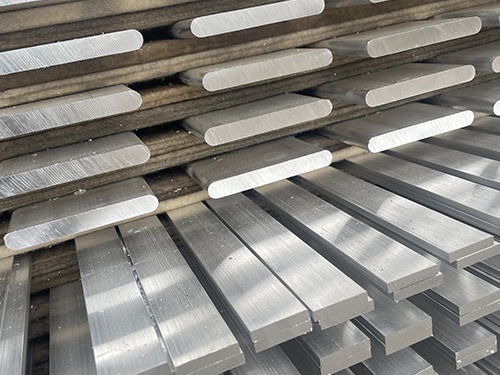
Why does a chamfered aluminum busbar matter so much during installation?
A chamfered aluminum busbar improves more than appearance. It reduces sharp-edge contact, helps alignment, and makes handling safer during assembly and maintenance.
In practical terms, smoother edges lower the chance of glove damage, skin cuts, insulation scraping, and awkward repositioning in tight cabinets.
That is why the detail matters in standardized electrical work. Safer fit-up often leads to fewer installation deviations and better long-term reliability.
When is a chamfered aluminum busbar the better choice?
The value becomes clearer where operators handle busbars frequently or where routing space is limited.
Common examples include power distribution rooms, energy storage systems, rail transit equipment, photovoltaic systems, and industrial control enclosures.
In these settings, a chamfered aluminum busbar can reduce snagging during insertion and lower the risk of damaging adjacent parts.
It also helps where repeatable assembly matters, especially for projects requiring consistent slot entry, bolted contact, or bundled conductor layout.
A quick judgment table for site use
If the application is still under review, this table helps compare where edge treatment brings practical safety value.
Does chamfering affect electrical or mechanical performance?
Usually, the main effect is mechanical and operational rather than electrical. The purpose is safer handling and more controlled installation.
Still, material selection remains important. For example, 1060/1070 supports very high conductivity, while 6061-T6 offers higher strength and stronger resistance to deformation.
Where both conductivity and installation stability matter, a well-machined Conductive aluminum busbar can balance current transfer, weight, and corrosion resistance.
Needless to say, chamfering should be controlled, not excessive. Poor dimensional control can affect contact surfaces, hole position, or assembly tolerance.
What should be checked before approving a busbar design?
A common mistake is reviewing only conductivity and cross-section while ignoring edge finish and installation route.
- Confirm whether the chamfer size matches the real insertion path.
- Check if deburring and surface quality are consistent across batches.
- Review alloy choice against bending load, fastening force, and thermal conditions.
- Verify corrosion resistance for cold storage, buildings, metallurgy, or outdoor energy projects.
Manufacturers with controlled extrusion, casting, machining, and inspection processes tend to deliver more reliable edge quality and dimensional consistency.
That background is especially relevant when working with suppliers such as Shandong Jinhao Aluminum, whose process control and deep-processing capabilities support customized aluminum solutions.
Is the extra processing cost justified?
In many projects, yes. The added machining step is often smaller than the cost of rework, handling incidents, or damaged insulation parts.
This is especially true in repeat installations, automated production lines, and high-volume electrical assemblies where small fit issues multiply quickly.
If the system also needs lightweight structure, good thermal conductivity, and dependable current flow, the design value becomes easier to justify over the operating cycle.
What is the practical next step?
Start with the actual installation risk points, not the drawing alone. Look at handling, insertion angle, fastening clearance, and nearby insulation exposure.
Then compare alloy, strength, conductivity, and edge finish together. In many cases, a chamfered aluminum busbar is a small design change with clear safety returns.
If the project involves customized profiles for new energy, rail, or industrial control, it is worth defining chamfer standards early and reviewing them with the busbar supplier before production.
Navigation
Send Us A Message
Professional field of aluminum bars
24/7 before-sales and after-sales services
Comprehensive technical support