
When Is 6101 Aluminum Busbar High Conductivity Worth the Higher Material Specification?
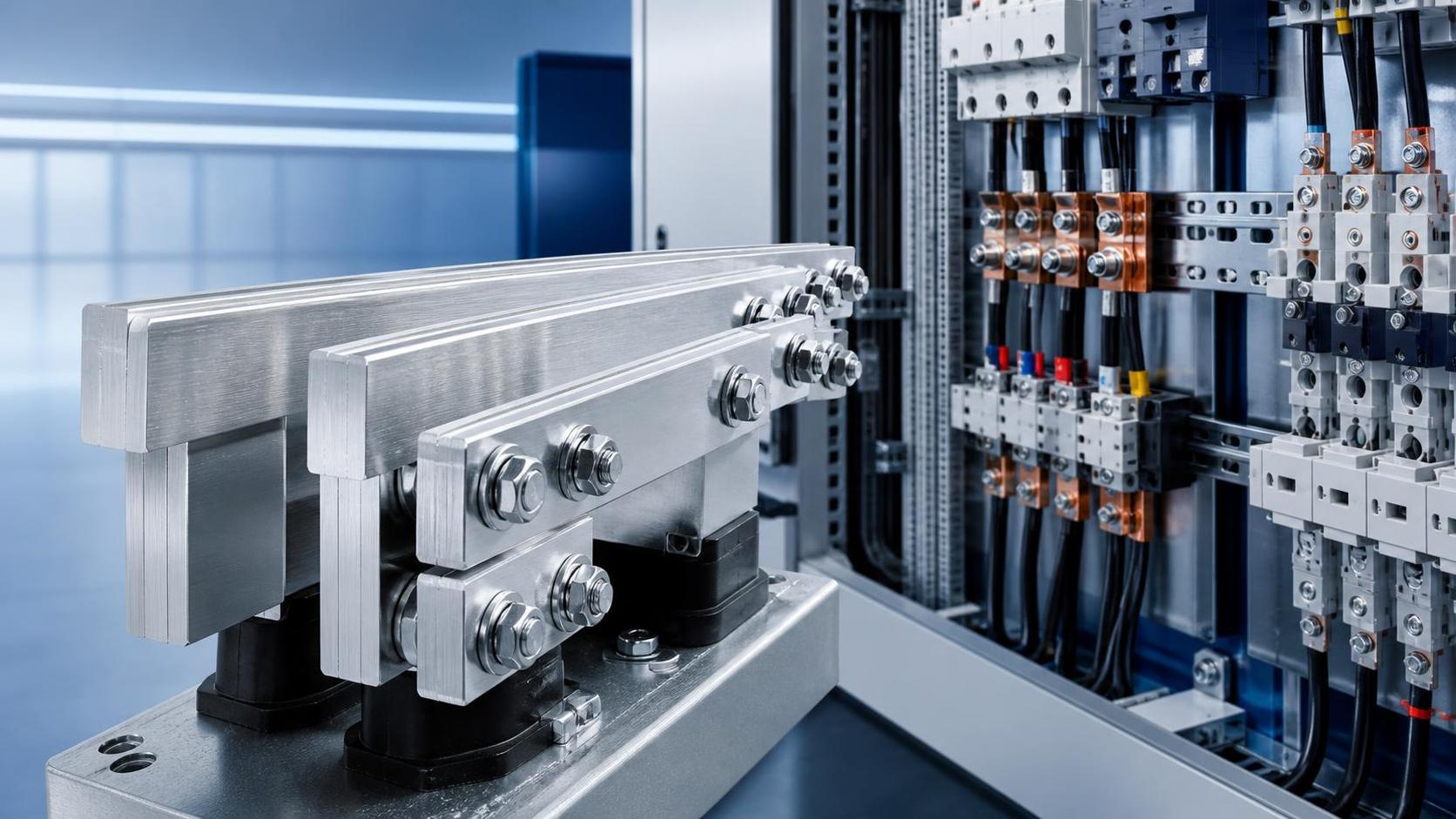
In many procurement reviews, material selection looks like a simple line-item comparison until operating cost enters the room. That is exactly where 6101 aluminum busbar high conductivity becomes a serious discussion rather than a technical preference. For finance decision-makers, the question is not whether a higher-conductivity alloy sounds better on paper. The real question is whether the added specification improves project economics through lower losses, steadier thermal behavior, fewer service issues, and longer useful life.
The answer is usually situational. In some projects, standard aluminum grades are entirely adequate. In others, choosing a busbar only by initial material cost can quietly create higher downstream expense.
Where the premium starts to make financial sense
6101 is often considered when a busbar must do more than merely carry current. If the installation will operate under sustained electrical loads, elevated ambient temperatures, or a demanding duty cycle, conductivity becomes tied to efficiency and heat control. Lower resistance can mean less energy loss and better temperature management across the system. For buyers responsible for capex and lifecycle cost, that matters more than the alloy name itself.
This tends to be especially relevant in power distribution, new energy systems, rail transit, energy storage, and photovoltaic applications. In these environments, current stability, thermal performance, and reliability are not abstract engineering goals; they affect uptime, maintenance scheduling, and sometimes safety margins.
Three procurement signals that justify 6101
1. Energy loss has a visible cost.
If the busbar is part of a high-current system that runs for long periods, even incremental electrical efficiency improvements may translate into meaningful operating savings over time. Finance teams should look beyond purchase price and ask how much the conductor contributes to total system loss.
2. Heat is already a design concern.
Where busbars are installed in compact cabinets, industrial control assemblies, or enclosed power equipment, excess heat can shorten component life and increase maintenance frequency. A higher-conductivity aluminum busbar may support more stable current transfer and better thermal behavior, reducing stress on the wider system.
3. Weight matters but copper is too expensive.
Many buyers compare aluminum with copper not only on conductivity, but also on installed cost and structural load. In transport-related systems, building infrastructure, and renewable energy equipment, aluminum often offers an attractive balance of lighter mass and better cost control. When conductivity requirements rise beyond what lower-grade options comfortably support, 6101 can become the practical middle ground.
When the higher specification may not pay back
Not every project needs it. If the electrical load is moderate, duty cycles are light, conductor runs are short, and the environment is not thermally demanding, a more economical grade may deliver acceptable performance. Many applications still perform well with alternatives selected according to forming needs, strength requirements, or budget constraints.
For example, some buyers prioritize machining stability, profile retention, or stronger resistance to deformation. In such cases, the selection process may also involve grades used in broader Conductive aluminum busbar manufacturing, including pure aluminum options for very high conductivity or structural alloys such as 6061-T6 and 6063 where mechanical adaptability and installation conditions are part of the equation.
What finance teams should ask before approving
A useful procurement review often comes down to five practical questions:
Will this busbar operate continuously at high current?
Is thermal buildup likely to affect neighboring components?
Are downtime and maintenance expensive in this installation?
Does lighter weight reduce installation or support-structure cost?
Is the project expected to run long enough for efficiency gains to matter?
If most answers are yes, the premium for 6101 becomes easier to justify. If most are no, the higher material specification may simply be overbuying.
Looking at total value, not just alloy price
Good procurement decisions in aluminum products rarely come from comparing raw material quotes in isolation. They come from matching conductivity, strength, corrosion resistance, fabrication needs, and service conditions to the actual business objective. A busbar in a cold storage facility, a wind power unit, or an industrial control cabinet will not face the same financial logic, even if the drawings look similar.
That is why experienced suppliers matter. Shandong Jinhao Aluminum Co., Ltd., with its integrated capabilities in aluminum alloy R&D, extrusion, smelting, casting, and quality control, supports buyers who need more than a catalog answer. For projects where electrical performance, lightweight design, and long-term stability must be balanced carefully, a supplier that understands both product processing and application fit can help avoid costly over-specification as well as risky under-specification.
In the end, 6101 aluminum busbar high conductivity is worth the higher material specification when efficiency, heat control, reliability, and lifecycle cost are financially material to the project. If those factors are minor, choose a simpler grade. If they are central to project performance, the upgrade is often less a premium than a controlled investment.
Navigation
Send Us A Message
Professional field of aluminum bars
24/7 before-sales and after-sales services
Comprehensive technical support