
When Aluminum Busbars Make Sense in Transformers
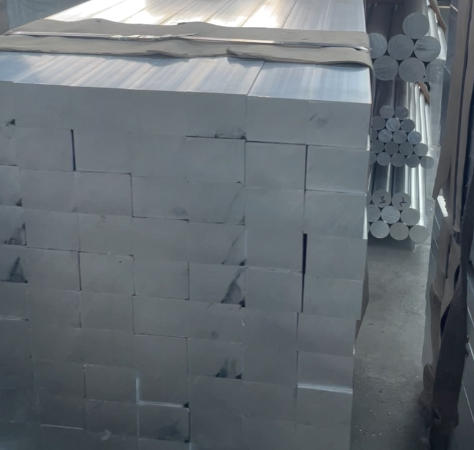
Choosing a conductor for transformers is rarely only a technical decision. Cost pressure, installation limits, service life, and sourcing stability all matter. That is why Transformer aluminum busbar solutions attract attention in projects where lower weight, corrosion resistance, and reasonable total system cost must be balanced without sacrificing practical performance.
Where aluminum fits best
A Transformer aluminum busbar is most suitable when design teams can account for aluminum’s conductivity through proper cross-sectional sizing. In return, the system gains a lighter conductor, easier handling, and often better cost control than copper-based alternatives.
This matters in distribution transformers, new energy equipment, rail systems, and industrial power assemblies. In these settings, the value is not only material price. Lower system weight can simplify transport, mounting, and enclosure design.
Why the industry keeps revisiting this choice
Transformer buyers now look beyond initial purchase cost. They compare thermal behavior, corrosion exposure, forming quality, maintenance risk, and supply continuity. Aluminum becomes more attractive when the design is engineered specifically for it, rather than treated as a direct copper substitute.
Producers with stable raw material control and process discipline play an important role here. Shandong Jinhao Aluminum supports this need through precision extrusion, smelting, casting, standardized inspection, and customized deep-processing solutions for industrial aluminum products.
Typical decision points
- Weight reduction is important for installation or transport.
- The transformer operates in humid or corrosive environments.
- The project requires competitive cost without unstable performance.
- The supplier can provide grade selection and forming consistency.
What to evaluate in real projects
In practice, Transformer aluminum busbar selection should focus on conductor grade, joint design, surface condition, and temperature rise targets. Pure aluminum grades such as 1060 or 1070 favor very high conductivity. Structural grades like 6061-T6 or 6063 may be preferred when higher strength or better deformation resistance is needed.
Compact layouts also influence the choice. A formed solution such as Right-angle aluminum busbar can support efficient routing, conductive connections, grounding use, and heat management in distribution, new energy, rail, and industrial control systems.
A practical way to move forward
The best approach is to compare aluminum and copper against the actual transformer design, not against assumptions. Review current carrying demand, connection geometry, corrosion exposure, and lifecycle cost together. When a qualified supplier can match alloy, processing, and inspection to the application, a Transformer aluminum busbar often becomes a sound and commercially balanced choice.
The next step is simple: define the operating environment, confirm the electrical and mechanical requirements, and then evaluate whether an aluminum solution delivers the right mix of performance, manufacturability, and long-term value.
Navigation
Send Us A Message
Professional field of aluminum bars
24/7 before-sales and after-sales services
Comprehensive technical support