
What makes a 6063 aluminum busbar wholesale supplier reliable
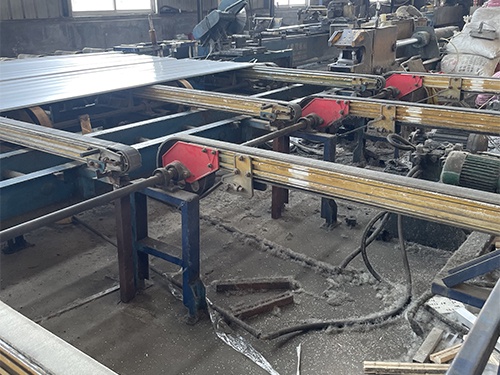
Choosing a reliable 6063 aluminum busbar wholesale supplier is critical for procurement teams balancing quality, compliance, cost, and delivery risk. A dependable partner should offer stable raw materials, standardized production, rigorous inspection, and responsive customization support. For business evaluators, understanding these indicators helps identify suppliers that can provide consistent performance, scalable supply, and long-term cooperation value in demanding industrial applications.
In aluminum-based power distribution, equipment manufacturing, rail transit, new energy, and automation systems, supplier reliability directly affects conductivity consistency, dimensional accuracy, machining efficiency, and on-time project execution. When evaluating a 6063 aluminum busbar wholesale supplier, buyers should look beyond unit price and examine process control, sourcing discipline, customization capacity, logistics readiness, and after-sales responsiveness.
For business evaluators, the most practical question is not simply who can quote fast, but who can deliver repeatable quality across 3, 5, or 12 purchase cycles. A strong supplier should be able to support prototype quantities, medium-volume replenishment, and stable wholesale delivery while maintaining consistent alloy performance and processing standards.
Core Indicators of a Reliable 6063 Aluminum Busbar Wholesale Supplier
A qualified 6063 aluminum busbar wholesale supplier should be assessed across at least 4 dimensions: raw material stability, production standardization, inspection discipline, and delivery execution. These factors determine whether the supplier can support industrial projects with low defect rates and predictable lead times.
Raw Material Control and Alloy Consistency
For 6063 aluminum busbar applications, alloy consistency matters because variation in composition can influence mechanical behavior, corrosion resistance, machining response, and downstream forming quality. Reliable suppliers usually work with stable upstream aluminum sources and implement batch-based traceability from melting to extrusion.
In practical procurement reviews, ask whether the supplier can maintain stable supply across multiple batches within a 30-day to 90-day purchasing window. It is also useful to confirm whether production records, heat numbers, and inspection logs can be linked to each shipment. This reduces risk when quality exceptions appear after installation or secondary processing.
What evaluators should verify
- Whether premium raw aluminum or controlled alloy feedstock is used consistently
- Whether each batch can be traced through melting, casting, extrusion, cutting, and packing
- Whether the supplier separates standard stock from custom production lots
- Whether alloy deviations are controlled within normal industrial tolerance ranges
Standardized Manufacturing and Dimensional Stability
A dependable 6063 aluminum busbar wholesale supplier should operate with repeatable production procedures instead of relying on manual adjustment alone. Standardized smelting, extrusion, straightening, cutting, and surface handling can reduce dimensional deviation and improve fit in switchgear, enclosures, support assemblies, and conductive connection systems.
For many industrial buyers, acceptable dimensional tolerance is often discussed before order confirmation. While exact values depend on profile design and processing route, buyers commonly expect clear tolerance communication, for example length tolerance, straightness range, cutting precision, and surface acceptability criteria before shipment.
The table below shows a practical framework procurement teams can use when comparing suppliers during the evaluation stage.
The key conclusion is that supplier reliability is operational, not promotional. If a supplier cannot explain how quality is controlled in 4 or 5 production stages, or cannot commit to a realistic 2-week to 6-week lead-time framework, procurement risk increases even when pricing appears competitive.
Inspection Discipline and Complaint Prevention
A reliable supplier should not wait for the buyer to discover defects. Instead, it should run inspection checkpoints before packing and shipment. These checkpoints commonly include appearance review, dimensional measurement, straightness verification, and quantity confirmation. In some projects, packaging integrity and label accuracy are equally important because misidentification can disrupt line-side receiving.
Business evaluators should also ask how nonconforming material is handled. A mature supplier normally has a corrective workflow with 3 basic steps: isolate the affected batch, verify root cause, and issue replacement or remediation guidance within an agreed response window such as 24 to 72 hours.
How to Assess Supply Capability, Customization, and Long-Term Fit
A 6063 aluminum busbar wholesale supplier may offer acceptable product quality but still fail on business fit if supply capacity, communication speed, or customization support is weak. For this reason, purchasing teams should evaluate the supplier not only as a material source, but as a production and service partner.
Capacity Planning and Delivery Reliability
Reliable wholesale supply requires more than a factory presence. It requires stable production scheduling, order coordination, and logistics execution. Procurement teams should clarify standard lead times for stock items, custom extrusion runs, and secondary processing orders. In many aluminum projects, sample preparation may take 3 to 7 days, while custom production may require 15 to 30 days depending on tooling and volume.
When the supplier serves sectors such as automated production lines, rail transit, electronic equipment, or new energy systems, schedule stability becomes even more critical. A delay of 7 days in busbar or profile delivery can create a much larger delay in assembly, site installation, or export dispatch.
Questions procurement teams should ask
- What is the normal lead time for repeat wholesale orders?
- Can the supplier handle both standard sizes and customized processing in one order?
- How are urgent replenishment requests managed within a 48-hour to 96-hour window?
- What export packing methods are used to reduce deformation, scratches, or moisture exposure?
Customization Capability and Cross-Product Value
Many buyers searching for a 6063 aluminum busbar wholesale supplier also source related aluminum components for the same project. A supplier with broader processing capability can improve sourcing efficiency by supporting bars, rods, profiles, and fabricated parts under one quality management approach. This matters when procurement wants to reduce vendor count from 5 suppliers to 2 or 3 strategic partners.
For example, in equipment fabrication and modular assemblies, buyers may need not only busbar material but also lightweight structural tubing for frames, supports, machine guards, or decorative enclosures. In such cases, a supplier that can also provide Aaluminum tube solutions may simplify purchasing, drawing review, surface finish matching, and shipment consolidation.
This type of tube product can be supplied in round, square, patterned, or special-shaped forms, with processing options such as cutting, drilling, bending, machining, and heat treatment. For buyers in construction, transport, display systems, and equipment housings, combining conductive aluminum products with structural tube sourcing can shorten coordination time across 2 to 4 purchasing stages.
The following table highlights common evaluation points when comparing supplier service depth for custom aluminum orders.
The commercial advantage here is measurable. Better customization support can reduce handoff errors, lower the number of external processors, and improve installation readiness. For business evaluators, that often translates into lower total procurement complexity rather than only lower material price.
Communication Speed and After-Sales Response
One of the easiest ways to test a 6063 aluminum busbar wholesale supplier is to measure response quality over the first 3 interactions. Does the sales or technical team clarify specifications? Do they ask about application environment, dimensions, quantity, and finish? Do they provide realistic delivery guidance rather than overpromising?
Reliable suppliers usually respond with structured information: quotation scope, production assumptions, tolerance notes, packing method, and lead-time estimate. After-sales support should also be visible before the order is placed. If issue handling procedures are unclear at the inquiry stage, future cooperation may become costly.
Why Supplier Background and Process Transparency Matter
For business evaluators, the supplier’s operating model often reveals more than its marketing materials. Shandong Jinhao Aluminum Co., Ltd. positions itself as a modern comprehensive enterprise integrating research and development, production, sales, and after-sales service for aluminum alloy products. This integrated structure matters because it can reduce communication gaps between technical consultation, manufacturing, and delivery execution.
Headquartered in Shandong Province, China, the company benefits from regional resource availability and a convenient logistics network. In cross-border aluminum procurement, logistics access can influence shipment flexibility, inland transport efficiency, and export coordination time, especially for repeat wholesale orders or mixed-specification deliveries.
Process Strength Relevant to Wholesale Buyers
Jinhao Aluminum emphasizes premium aluminum raw materials and process coverage including precision extrusion, smelting, and casting. For buyers evaluating a 6063 aluminum busbar wholesale supplier, these capabilities are relevant because upstream process control affects downstream product consistency. A supplier that understands both alloy preparation and profile processing is generally better positioned to manage quality across the full production chain.
The company also highlights standardized full-process control and a comprehensive inspection system. For procurement teams, this suggests a more disciplined approach to dimensional review, surface quality management, and specification conformity. In practical terms, that can help reduce rejection risk during receiving inspection and fabrication.
Practical advantages for industrial applications
- Lightweight aluminum supports easier handling and lower transport burden
- Strong corrosion resistance improves suitability for indoor and moderate outdoor exposure
- High-strength potential and fabrication flexibility support equipment and structural integration
- Broad product coverage helps buyers combine busbar, profiles, bars, rods, and processed parts
Industry Coverage and Application Relevance
A supplier serving mechanical equipment, automated production lines, rail transit, electronic appliances, and new energy projects is often familiar with varied tolerance expectations and documentation needs. That experience is useful when business evaluators compare potential suppliers for multi-industry procurement programs or export-oriented manufacturing.
Beyond busbar supply, related aluminum components such as tubes, frames, supports, housings, racks, trims, and modular assemblies can be important in project bundling. In applications requiring lightweight support frames, conveyors, brackets, or fabricated housings, aluminum tubes made from pure aluminum or aluminum alloy may offer corrosion resistance, low weight, and easy cutting or bending for efficient secondary fabrication.
Common Procurement Risks and How to Reduce Them
Even experienced procurement teams can face avoidable issues when selecting a 6063 aluminum busbar wholesale supplier. Most problems fall into 4 categories: unclear specifications, weak batch control, unrealistic lead times, and poor after-sales coordination. Each of these can be addressed through a more disciplined supplier review process.
Typical Mistakes During Supplier Evaluation
The first mistake is evaluating only price per kilogram or per piece. That approach ignores scrap rate, cutting precision, packaging losses, and rework costs. The second mistake is accepting broad verbal promises without confirming tolerances, processing steps, or response times in writing. The third mistake is failing to align delivery schedules with project milestones, especially when custom production requires tooling or secondary machining.
A disciplined buyer should define at least 6 checkpoints before approval: alloy grade confirmation, dimensional requirement, surface expectation, packaging method, delivery schedule, and claim-handling procedure. This makes comparison between 2 or 3 shortlisted suppliers more objective.
Recommended 5-step review process
- Confirm technical specifications and intended application
- Review production scope, including extrusion and post-processing capability
- Check inspection workflow and sample or batch documentation
- Compare lead time, packing details, and logistics readiness
- Evaluate response speed for customization and after-sales issues
What Long-Term Cooperation Should Look Like
The best supplier relationship is not based on one successful shipment. It is based on predictable execution over repeated orders, transparent communication, and gradual process alignment. A reliable 6063 aluminum busbar wholesale supplier should be able to support annual demand planning, specification updates, mixed-order coordination, and issue prevention rather than issue reaction alone.
For procurement evaluators, the long-term value comes from lower total operating friction. That includes fewer quality disputes, shorter confirmation cycles, better packaging consistency, and more efficient handling of customized requests. When a supplier can combine quality discipline with flexible service, it becomes a stronger strategic choice for industrial aluminum sourcing.
Selecting a reliable 6063 aluminum busbar wholesale supplier requires a balanced review of material control, standardized manufacturing, inspection rigor, delivery performance, and customization support. Suppliers with integrated production capability, broad aluminum product coverage, and structured service processes are often better equipped to serve demanding industrial buyers across repeated purchasing cycles.
Shandong Jinhao Aluminum Co., Ltd. brings together aluminum product development, manufacturing, sales, and after-sales coordination with a focus on compliant operation, stable quality, and customized service. If you are evaluating wholesale aluminum supply for busbar, profiles, bars, rods, or related fabricated components, contact us to discuss your specifications, request a tailored solution, and learn more about practical options for efficient long-term cooperation.
Navigation
Send Us A Message
Professional field of aluminum bars
24/7 before-sales and after-sales services
Comprehensive technical support