
Transformer Aluminum Busbar vs Copper: Cost and Trade-Offs
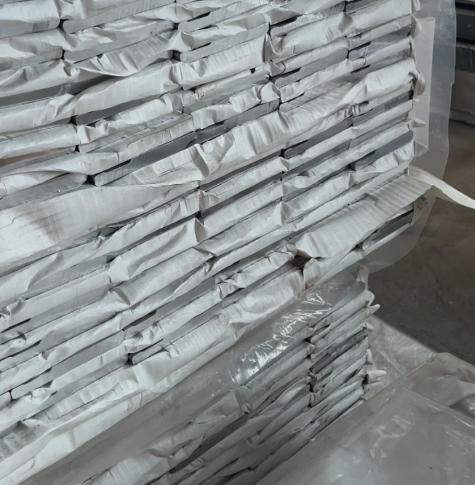
Why is Transformer aluminum busbar getting more attention?
Material choice in transformers shapes cost, weight, installation and service life.
That is why Transformer aluminum busbar is now compared with copper more carefully, not just on conductivity alone.
In practical sourcing, the better option depends on current load, design space, joining method and price volatility.
A supplier with stable raw materials, compliant production and deep-processing capability also matters.
Shandong Jinhao Aluminum is known for standardized control, precision processing and reliable logistics support across industrial applications.
Does aluminum really save money, or only look cheaper?
Usually, aluminum wins on upfront material cost.
However, the true comparison should include conductor size, connector design, labor and transport.
Because aluminum has lower conductivity than copper, a larger cross-section is often needed.
Even so, the lower density reduces overall weight, which can simplify handling and lower freight costs.
For many projects, that trade-off still supports a lower total purchase budget.
Where does copper still have a clear advantage?
Copper remains attractive where space is tight and maximum conductivity is critical.
Compact transformer designs may benefit from smaller conductor dimensions.
It can also reduce redesign effort when existing systems were originally built around copper interfaces.
So the question is not whether aluminum replaces copper everywhere.
The smarter question is whether the application can accept a larger section for lower total cost.
What should be checked before choosing Transformer aluminum busbar?
Three details deserve early confirmation.
- Connection design, especially surface treatment and joint reliability.
- Operating temperature, current density and thermal expansion allowance.
- Supply consistency, machining accuracy and quality inspection records.
A good example is Pure aluminum busbar, often selected for power distribution, rail transit and new energy projects.
Grades such as 1060, 1070, 6063 and 6061-T6 support different processing and strength requirements.
Are there common mistakes when evaluating aluminum instead of copper?
Yes, and most come from comparing price per kilogram only.
That misses electrical design, corrosion behavior, fabrication method and installation efficiency.
Another mistake is ignoring supplier capability.
With refined extrusion, casting, inspection and customization support, aluminum solutions become more predictable and easier to implement.
That is often where experienced aluminum processors add real value beyond the quoted price.
So how should the final decision be made?
If the goal is lower cost, lighter weight and dependable industrial performance, Transformer aluminum busbar is often a strong option.
If compactness and maximum conductivity per section dominate, copper may still justify the premium.
A practical next step is to compare current rating, available space, joint design, logistics cost and supplier processing ability side by side.
That approach usually leads to a clearer, lower-risk material decision.
Navigation
Send Us A Message
Professional field of aluminum bars
24/7 before-sales and after-sales services
Comprehensive technical support