
Key Standards for Conductive Aluminum Busbar in Solar Power Systems
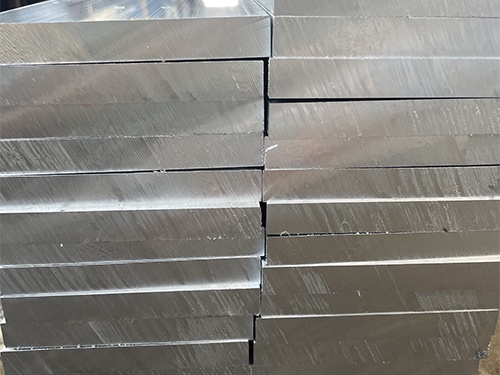
Why do standards matter so much in solar busbar selection?
A conductive aluminum busbar for solar power systems is judged by more than conductivity alone.
Long service life depends on electrical safety, dimensional stability, corrosion control, and consistent processing quality.
In practice, evaluation often starts with whether the supplier follows recognized industrial standards across raw material, extrusion, machining, and inspection.
That is why companies with full-process quality control, such as Shandong Jinhao Aluminum, are usually easier to assess on compliance and traceability.
Which standards should be checked first?
The first layer is material and manufacturing compliance.
For a conductive aluminum busbar for solar power systems, buyers usually verify alloy grade, conductivity performance, tolerance control, and surface quality.
The next layer covers application safety.
That includes current-carrying capability, heat rise behavior, connection reliability, and corrosion resistance under outdoor or humid operating conditions.
Are all aluminum grades suitable for solar applications?
Not necessarily. The right choice depends on current load, installation geometry, and structural demand.
1060 and 1070 are often favored where very high conductivity is the priority.
6063 and 6061-T6 are more relevant when balanced hardness, higher strength, and better deformation resistance are needed.
For compact routing, a Right-angle aluminum busbar can be useful in power distribution layouts that require efficient turns without adding unnecessary weight.
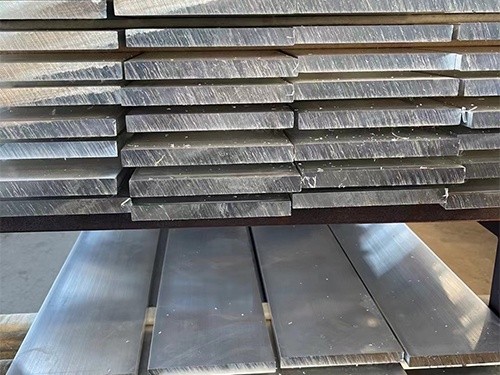
What risks are often missed during supplier comparison?
A common mistake is focusing on price while overlooking process consistency.
Uneven smelting, weak extrusion control, or incomplete inspection can lead to unstable conductivity and premature joint heating.
Another overlooked issue is corrosion exposure.
Solar installations may face moisture, temperature cycling, and dissimilar-metal contact, so corrosion resistance should be verified with the actual operating environment in mind.
How should the final decision be made?
A practical decision combines standard compliance, application fit, and delivery reliability.
- Confirm alloy grade, conductivity, and tolerance data.
- Review corrosion and thermal performance for solar conditions.
- Check whether manufacturing and after-sales support are documented.
When comparing any conductive aluminum busbar for solar power systems, it is worth narrowing choices to suppliers that can prove stable material quality, disciplined processing, and dependable customization support.
Navigation
Send Us A Message
Professional field of aluminum bars
24/7 before-sales and after-sales services
Comprehensive technical support