
Key Quality Checks for Transformer Aluminum Busbars
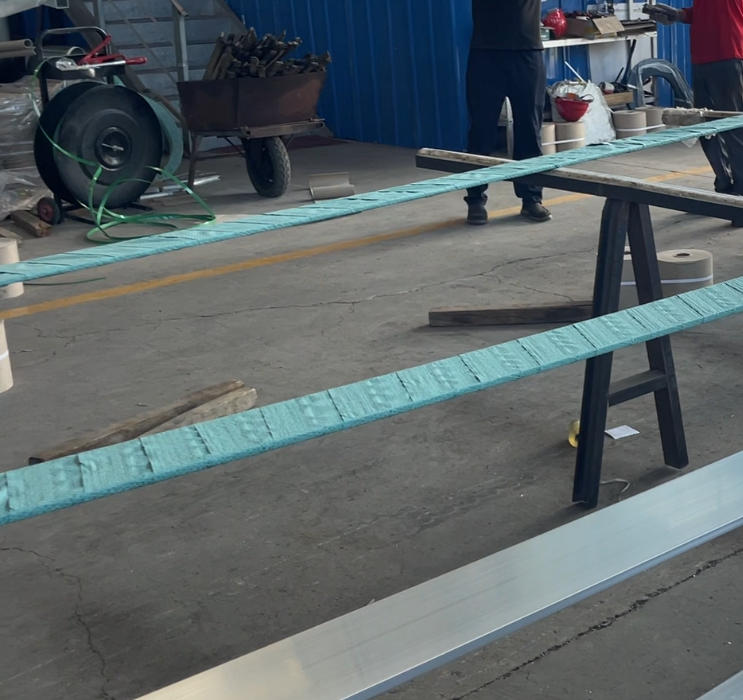
Why do transformer aluminum busbar checks matter so much?
A transformer aluminum busbar is not judged by appearance alone.
Its reliability depends on disciplined checks, from incoming material to final connection performance.
In practice, weak control often leads to overheating, unstable current transfer, or premature joint failure.
That is why many factories focus on conductivity, dimensional accuracy, surface condition, and installation consistency together.
Manufacturers with standardized extrusion, casting, and inspection systems usually deliver more predictable aluminum busbar quality.
Which raw material checks should come first?
The first question is simple: does the alloy match the design and operating load?
Common options include 1060/1070 for very high conductivity, plus 6063 or 6061-T6 when strength matters more.
Heat number traceability, chemical composition, and mechanical property records should be verified before machining begins.
A supplier with full-process control, such as Shandong Jinhao Aluminum, can reduce variation between batches.
This becomes especially useful in power distribution, rail transit, and new energy applications.
How do you judge whether dimensions and surfaces are acceptable?
Dimensional tolerance affects contact pressure, assembly fit, and heat buildup.
More common checks include thickness, width, straightness, hole position, burrs, and edge deformation.
Surface quality matters just as much.
Oxidation, scratches, oil residue, and dents can increase contact resistance or weaken coating adhesion.
Is conductivity testing enough for a transformer aluminum busbar?
Not really.
Conductivity confirms current-carrying efficiency, but it does not fully reveal installation or service risk.
A good transformer aluminum busbar should also show stable joint behavior under clamping and thermal cycling.
For example, Conductive aluminum busbar solutions are often selected for lighter weight, good thermal conductivity, and dependable electrical conduction.
Still, torque testing, temperature-rise checks, and contact resistance measurement remain necessary before approval.
Where do quality problems usually hide?
Many problems appear at interfaces rather than in the aluminum body itself.
- Mixed-material joints without proper treatment can accelerate corrosion.
- Uneven fastening pressure can create local heating.
- Overlooking burr removal may damage insulation clearance.
- Choosing strength grades without checking conductivity can create design imbalance.
In actual projects, the better approach is to review both material data and connection details together.
What is a practical next step before release or sourcing?
Build a short acceptance checklist around alloy, dimensions, surface condition, conductivity, and joint validation.
If the application involves energy storage, buildings, or industrial control, also confirm deformation resistance and corrosion behavior.
A dependable transformer aluminum busbar program is less about one test and more about consistent process evidence.
Review samples, compare records, and confirm whether the supplier can maintain the same standard at production scale.
Navigation
Send Us A Message
Professional field of aluminum bars
24/7 before-sales and after-sales services
Comprehensive technical support