
Is aluminum coil busbar for wind turbine worth the switch
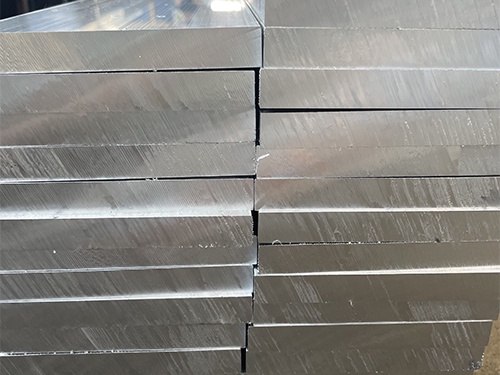
Is Aluminum coil busbar for wind turbine worth the switch
For energy-sector decision-makers, the question is no longer whether to improve efficiency, but where the greatest value lies.
Aluminum coil busbar for wind turbine systems is drawing attention for lower weight, corrosion resistance, and favorable material economics.
Yet any switch must be judged by real operating conditions, not by theory alone.
In wind power applications, conductor choice affects structural load, installation efficiency, thermal behavior, maintenance cycles, and total lifecycle cost.
That is why Aluminum coil busbar for wind turbine projects should be evaluated through specific scenarios and measurable performance targets.
Why scenario-based evaluation matters in wind power
Wind turbine electrical systems do not operate in a single standard environment.
Offshore turbines face salt spray and moisture.
Onshore units may face dust, thermal swings, or difficult transportation routes.
A material that performs well in one site may need different design allowances elsewhere.
For this reason, the value of Aluminum coil busbar for wind turbine installations depends on conductor sizing, connection engineering, coating strategy, and expected maintenance access.
The switch becomes far more attractive when project teams compare operating loads, current demands, and service intervals in a structured way.
Scenario 1: When tower weight and transport efficiency drive the decision
Weight reduction is one of the strongest reasons to consider Aluminum coil busbar for wind turbine systems.
Aluminum offers a lighter mass than many traditional conductor options, which helps reduce structural burden inside nacelles and towers.
This matters most in large turbines, remote projects, and installations with complex lifting logistics.
A lighter busbar may simplify handling during assembly and reduce strain during support integration.
In projects where crane time and transport planning influence cost, reduced weight can create savings beyond the conductor itself.
Key judgment points
- How much weight reduction improves installation efficiency
- Whether support structures can be optimized
- How transport limits affect conductor format choices
- Whether lower mass improves maintenance access inside the tower
Scenario 2: When corrosion exposure defines reliability expectations
Corrosion risk changes the economic case significantly.
In offshore wind and coastal wind farms, moisture and salt accelerate degradation in poorly matched materials.
Aluminum’s natural corrosion resistance gives Aluminum coil busbar for wind turbine applications a practical advantage when surface treatment and connection design are well controlled.
Good corrosion performance can extend service stability and reduce replacement frequency.
However, corrosion performance is never just about the base metal.
Joint interfaces, fastener compatibility, insulation protection, and sealing details all influence long-term results.
This is where engineered products such as Conductive aluminum busbar solutions can provide more predictable matching for demanding environments.
Scenario 3: When current transfer and thermal control are the priority
Some projects focus less on weight and more on stable power transmission.
In converters, distribution assemblies, and turbine electrical cabinets, efficient current transfer and temperature management are critical.
Aluminum busbar designs can offer very high conductivity with good thermal conductivity, supporting safe current flow when dimensions are correctly engineered.
The real question is not whether aluminum conducts well.
The real question is whether the selected section, alloy grade, and mounting method meet the required ampacity and heat dissipation targets.
For example, 1060 and 1070 grades are often preferred where conductivity is the main priority.
6061-T6 and 6063 may be selected when higher strength, machining stability, or profile retention are needed.
Scenario 4: When cost control must include the full lifecycle
Material price alone can mislead a project decision.
The better comparison includes procurement cost, fabrication, transport, installation labor, support requirements, inspection frequency, and replacement risk.
In many cases, Aluminum coil busbar for wind turbine projects becomes attractive because it balances dependable electrical conduction with lower structural load and better cost control.
This is especially true for large-scale projects where every kilogram and every installation hour affect budget outcomes.
A lower initial material cost is helpful, but the stronger argument often comes from easier handling and lower system-level burden.
How different wind power scenarios change material requirements
Practical recommendations for selecting Aluminum coil busbar for wind turbine projects
A good switch decision should follow a clear evaluation path.
- Define current load, peak temperature, and installation constraints.
- Match alloy type to conductivity and strength requirements.
- Review corrosion exposure, including coastal or offshore risk.
- Check connection methods for galvanic compatibility and contact stability.
- Calculate lifecycle cost instead of material price only.
- Request process control and inspection data from the supplier.
A qualified aluminum solution should support stable current transfer, lower weight, good thermal conductivity, and reliable anti-deformation performance.
These factors become more credible when backed by standardized production and consistent quality inspection.
Shandong Jinhao Aluminum Co., Ltd. combines extrusion, smelting, casting, and deep-processing capabilities to support such application-specific requirements across new energy and industrial fields.
Common misjudgments that weaken project value
Several avoidable mistakes can make Aluminum coil busbar for wind turbine adoption look less effective than it should be.
- Assuming all aluminum grades behave the same
- Ignoring joint design and only comparing base material
- Undersizing the conductor section to chase lower cost
- Overlooking thermal expansion behavior in system design
- Evaluating price without transport and installation savings
Another common issue is choosing a generic product where a customized profile or deep-processed solution would perform better.
In retrofit or high-load systems, dimensional precision and profile retention can be just as important as conductivity.
So, is the switch worth it?
In many wind power scenarios, yes.
Aluminum coil busbar for wind turbine systems can be worth the switch when the project benefits from lighter weight, good corrosion resistance, efficient current transfer, and stronger overall cost control.
The decision becomes even stronger when alloy grade, section design, and connection details are tailored to the actual operating environment.
Projects that need dependable conduction, easier installation, and long-term operational stability should assess aluminum solutions with full lifecycle metrics.
If the next step is a technical comparison, review actual load conditions, environmental exposure, and fabrication needs before final material selection.
A well-matched aluminum busbar solution can deliver practical value, not just theoretical advantages.
Navigation
Send Us A Message
Professional field of aluminum bars
24/7 before-sales and after-sales services
Comprehensive technical support