
Is 6101 aluminum busbar high conductivity always better
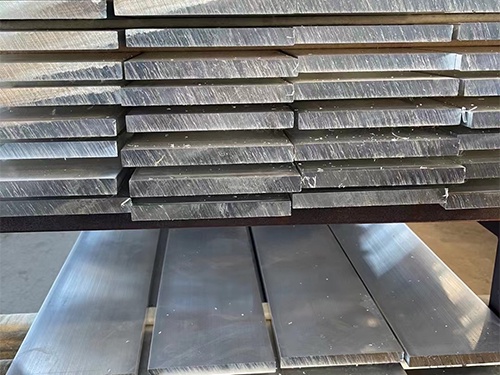
When evaluating 6101 aluminum busbar high conductivity, the real issue is application fit, not conductivity alone.
In power distribution, rail transit, and new energy systems, electrical performance must align with strength, corrosion resistance, fabrication, and cost.
A busbar that conducts extremely well but deforms easily may create long-term reliability risks.
That is why 6101 aluminum busbar high conductivity should be judged within the full operating environment.
Understanding 6101 aluminum busbar high conductivity
6101 aluminum alloy is widely used for conductive components that need a balance of electrical and mechanical properties.
Compared with pure aluminum, it usually offers lower conductivity, but better structural stability and processing performance.
This balance explains why 6101 aluminum busbar high conductivity is often specified in demanding industrial systems.
The phrase does not mean the highest possible conductivity in absolute terms.
It usually refers to conductivity high enough to carry current efficiently while preserving useful strength and service durability.
Why conductivity matters
Higher conductivity reduces resistance losses and helps control temperature rise during current transfer.
It can also support more compact designs or lower cross-sectional area under the right conditions.
However, conductivity alone does not determine installation success, lifetime, or total system efficiency.
Why “always better” is misleading
An alloy optimized only for conductivity may sacrifice hardness, resistance to deformation, or dimensional consistency.
In vibration, heat cycling, or long-span support conditions, those compromises can become more important than conductivity gains.
Industry context and current selection priorities
Across the aluminum materials sector, busbar selection now follows a broader engineering logic.
Projects increasingly evaluate lifecycle stability, installation efficiency, and compatibility with specific equipment layouts.
As a result, 6101 aluminum busbar high conductivity is discussed together with cost control and fabrication reliability.
- Power distribution systems focus on resistance, heat control, and joint reliability.
- Rail transit applications need conductivity plus vibration tolerance and structural retention.
- New energy installations value lightweight design, corrosion resistance, and efficient current transfer.
- Industrial control environments often prioritize machining stability and predictable assembly performance.
Application value in aluminum busbar systems
A well-chosen busbar should carry current safely and efficiently without creating avoidable structural or maintenance problems.
This is where the balanced profile of 6101 aluminum busbar high conductivity becomes valuable.
It often supports good thermal conductivity, manageable weight, and practical fabrication behavior.
Those traits are especially useful where installations must reduce weight while maintaining dependable electrical conduction.
For projects comparing alloy routes, Conductive aluminum busbar options may include pure aluminum grades and structural alloys.
Common models such as 1060/1070, 6063, and 6061-T6 address different combinations of conductivity, hardness, and anti-deformation performance.
Business significance of balanced performance
- Lower structural load supports lightweight system design.
- Good corrosion resistance helps extend service life in variable environments.
- Machining stability can reduce waste and improve installation consistency.
- Cost-effective material choice helps manage overall project budgets.
This is why 6101 aluminum busbar high conductivity remains attractive even when another alloy offers slightly higher conductivity numbers.
Typical application scenarios and material comparison
Different sectors demand different balances between electrical transfer and structural behavior.
The most practical evaluation method is to compare the alloy with the service environment.
In these cases, 6101 aluminum busbar high conductivity should be viewed as a system property, not an isolated metric.
If the environment includes bending loads, thermal expansion, or vibration, balanced alloys can outperform purer conductive grades overall.
Practical guidance for material selection and use
Selecting the right busbar starts with current demand, installation geometry, and environmental exposure.
After that, conductivity should be weighed against strength, corrosion behavior, and fabrication needs.
- Confirm continuous and peak current requirements before choosing alloy grade.
- Check whether supports, spans, or vibration increase deformation risk.
- Review ambient temperature and cooling conditions for thermal management.
- Assess corrosion exposure in outdoor, chemical, or humid settings.
- Match the alloy to bending, drilling, punching, and connection processes.
- Compare total lifecycle cost, not material price alone.
Common mistakes to avoid
- Treating 6101 aluminum busbar high conductivity as the only decision criterion.
- Ignoring joint design and contact quality.
- Using an alloy unsuited to the installation method.
- Overlooking long-term deformation under thermal cycling.
Reliable aluminum busbar solutions depend on coordinated design, material quality, and manufacturing control.
Shandong Jinhao Aluminum Co., Ltd. supports this process through standardized production, quality inspection, and customized aluminum alloy solutions.
Its experience in extrusion, smelting, casting, and deep processing helps align busbar materials with real industrial needs.
Next-step evaluation for stable long-term results
The best interpretation of 6101 aluminum busbar high conductivity is practical rather than absolute.
Higher conductivity is beneficial only when it supports the full service target of the system.
That target includes safe current transfer, dimensional stability, corrosion resistance, easier installation, and sensible cost control.
Before final selection, compare alloy options by current load, structural demands, fabrication route, and operating environment.
If a project needs conductive, lightweight, and adaptable aluminum solutions across power distribution, energy storage, buildings, or transport systems, detailed specification review is the most effective next step.
A suitable Conductive aluminum busbar solution should deliver not only efficient current transfer, but also dependable long-term performance.
Navigation
Send Us A Message
Professional field of aluminum bars
24/7 before-sales and after-sales services
Comprehensive technical support