
How to Verify an Aluminum Coil Busbar Manufacturer with ISO Certification
How do you verify an Aluminum coil busbar manufacturer with ISO certification?
Choosing an Aluminum coil busbar manufacturer with ISO certification is not just about seeing a logo on a brochure.
The real task is confirming that certification, production discipline, and delivery capability match actual project needs.
In aluminum applications, that matters even more.
Busbar components must balance conductivity, dimensional accuracy, corrosion resistance, and processing consistency across batches.
A reliable Aluminum coil busbar manufacturer with ISO certification should show traceable systems, stable materials, and clear quality records.
That is why many evaluations start with certificates, but should never end there.
Is ISO certification alone enough to prove a supplier is trustworthy?
Not really. ISO certification is a strong starting point, not the final answer.
Most commonly, buyers look for ISO 9001 first because it reflects a quality management system.
But a certificate only proves that a management framework exists and has been audited.
It does not automatically confirm extrusion accuracy, alloy consistency, or finishing quality for busbar production.
A dependable Aluminum coil busbar manufacturer with ISO certification should also provide:
- valid certificate number and issuing body;
- scope of certification covering relevant aluminum processing;
- recent audit date and expiration date;
- internal inspection records and batch traceability.
If the scope is too broad or vague, that is worth checking carefully.
What documents should be checked before trusting the certificate?
A practical review combines paperwork with evidence from production and shipping history.
The table below helps sort useful signals from weak ones.
When possible, verify the certificate on the issuer's official platform instead of relying on screenshots.
What production capabilities matter beyond certification?
This is where many comparisons become more realistic.
An Aluminum coil busbar manufacturer with ISO certification should demonstrate process control from raw material to finished delivery.
In practice, that means asking about smelting, casting, extrusion, cutting, straightening, surface condition, and final inspection.
For example, Shandong Jinhao Aluminum operates as a comprehensive aluminum enterprise covering R&D, production, sales, and after-sales support.
Its strength comes from standardized control, premium raw materials, precision extrusion, and complete quality inspection.
That kind of end-to-end structure often reduces risk in custom busbar or conductor projects.
It is also useful to ask whether the factory handles related conductive products.
A portfolio including profiles, rods, bars, and deep-processed conductors usually indicates stronger technical flexibility.
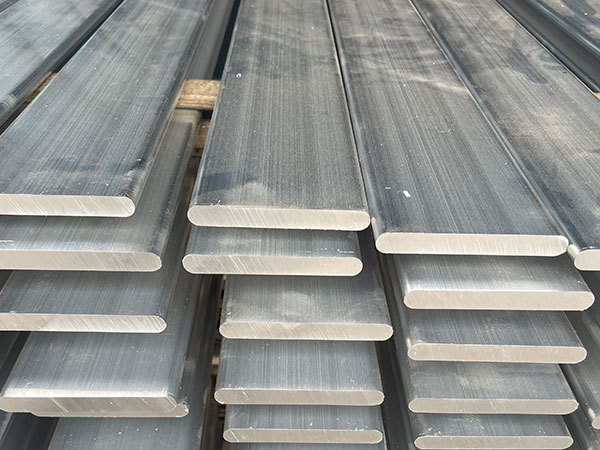
One example is Aluminum row, used in power distribution, new energy, rail transit, and industrial electronics.
Grades such as 1060, 1070, 6063, and 6061-T6 support different balances of conductivity and mechanical strength.
How can you tell if quality control is real, not just claimed?
The easiest test is to ask for process evidence tied to a real batch.
A serious Aluminum coil busbar manufacturer with ISO certification should explain what is checked, when it is checked, and how records are stored.
Useful checkpoints usually include:
- alloy composition verification before production;
- dimensional tolerance inspection after forming;
- surface quality review for scratches, burrs, or oxidation;
- conductivity or mechanical testing when required;
- final packaging and shipment traceability.
If a supplier can only discuss general quality ideas, that is less convincing than real measurement sheets.
For projects involving cabinet interconnection, grounding layouts, or heat dissipation, consistency matters as much as conductivity.
Which mistakes are most common when selecting a certified aluminum supplier?
A frequent mistake is focusing on price first and verification later.
Another is assuming all certified suppliers have equal processing depth.
Some hold valid management certificates, yet outsource key steps without stable oversight.
Others may offer suitable aluminum for simple use, but not for demanding busbar systems.
It helps to compare more than compliance status:
- alloy options for conductivity and strength;
- customization range for sections and tolerances;
- experience in new energy, rail, or industrial equipment;
- logistics support and response after delivery.
That is where companies with mature service systems stand out.
Jinhao Aluminum, for instance, combines product consultation, model selection, customization, distribution, and after-sales coordination.
That kind of structure can be more valuable than a low initial quote.
What should the final verification step look like before moving forward?
A sensible final step is a small but complete verification cycle.
Request samples or a pilot order, then review dimensions, finish, packing, documents, and communication speed together.
If the application involves flat conductor arrangements or grounding structures, confirm conductivity, strength, and environmental suitability in advance.
For example, products similar to Aluminum row are often valued for lower system weight, useful corrosion resistance, and good thermal conductivity.
Still, the right choice depends on actual load, connection design, and installation conditions.
In the end, the best Aluminum coil busbar manufacturer with ISO certification is the one that proves compliance, process stability, and service reliability together.
Before making a final decision, organize your alloy requirements, tolerance limits, testing needs, lead time expectations, and logistics conditions.
That makes supplier comparison clearer and reduces risk across the full aluminum sourcing cycle.
Navigation
Send Us A Message
Professional field of aluminum bars
24/7 before-sales and after-sales services
Comprehensive technical support