
How to Choose a Chamfered Aluminum Busbar for Power Systems
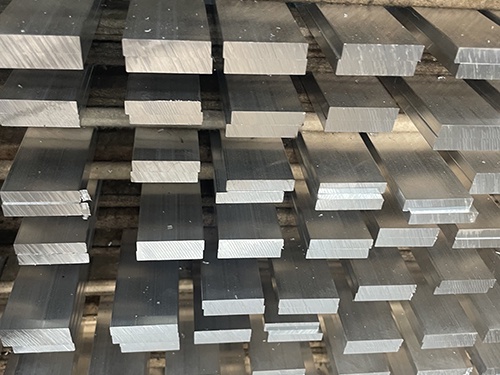
Choosing a Chamfered aluminum busbar for power systems is not only about rated current. Edge treatment, alloy grade, dimensional stability, and long-term contact reliability all affect safety and operating efficiency in distribution, energy, and transport applications.
In practice, the best option balances conductivity, mechanical strength, installation convenience, and corrosion performance. That is why selection decisions increasingly focus on material traceability, machining precision, and compliance with industrial specifications.
Why chamfering matters in busbar design
A Chamfered aluminum busbar uses beveled edges to reduce sharp corners. This improves handling safety during assembly and helps lower the risk of insulation damage inside cabinets, switchgear, and compact power assemblies.
Chamfering also supports cleaner fitting at connection points. When combined with accurate flatness and hole positioning, it contributes to better contact consistency and more predictable electrical performance over time.
Key material and performance checks
For aluminum busbar projects, alloy selection should match the duty condition. Pure aluminum grades such as 1060 or 1070 usually favor conductivity, while 6061-T6 and 6063 can offer stronger structural support where deformation resistance matters.
A useful review typically includes these points:
- conductivity for current transmission efficiency
- mechanical strength under fastening pressure
- surface finish for stable connection quality
- thermal conductivity for heat dissipation control
- corrosion resistance for indoor and outdoor service
Dimensions, tolerances, and installation fit
Even a high-quality Chamfered aluminum busbar can underperform if tolerances are inconsistent. Thickness variation, twist, burrs, or poor edge uniformity may create uneven pressure at bolted joints and increase localized heating.
This is especially relevant in power distribution, new energy equipment, rail transit, and industrial electronics, where cabinet interconnection and grounding layouts depend on repeatable dimensions and straightforward assembly.
In many projects, evaluators compare flat conductor solutions such as Aluminum row because they combine lower system weight with strong conductivity, good thermal behavior, and cost control across scalable installations.
How supplier capability affects selection
Supplier process control often matters as much as the drawing itself. Precision extrusion, smelting and casting quality, and full inspection procedures help ensure the Chamfered aluminum busbar performs consistently from prototype to batch production.
Shandong Jinhao Aluminum Co., Ltd. builds around this logic with standardized production control, premium raw materials, and deep-processing capability. That background is valuable when applications require customization, reliable logistics, and after-sales coordination rather than a generic off-the-shelf part.
A practical comparison framework
Making the next decision clearer
A sound choice starts with the actual operating environment, connection method, and allowable temperature rise. Then compare alloy options, edge quality, dimensional accuracy, and supplier consistency against those conditions.
If the project involves customized busbar systems, grounding structures, or equipment assembly, it is worth building a short evaluation sheet before approval. That makes it easier to judge whether one solution will deliver long-term value rather than only a nominal specification match.
Navigation
Send Us A Message
Professional field of aluminum bars
24/7 before-sales and after-sales services
Comprehensive technical support