
How to Choose Aluminum Busbar for Switchgear
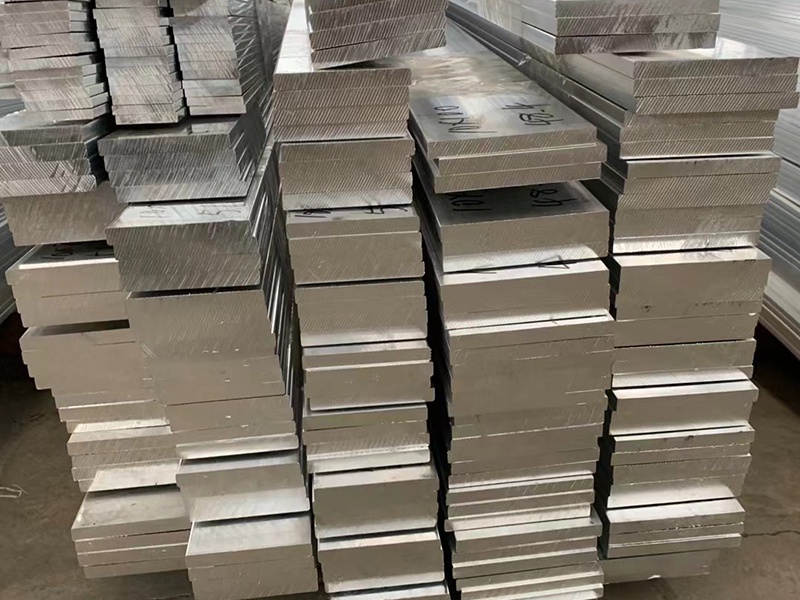
How to Choose Aluminum Busbar for Switchgear
Choosing the right Aluminum busbar for switchgear affects conductivity, temperature rise, strength, and service life.
A sound decision comes from matching electrical duty with material behavior, fabrication quality, and installation conditions.
Start with Current and Temperature
First, define continuous current, overload range, ambient temperature, and enclosure ventilation.
These factors decide the required cross-section of the Aluminum busbar for switchgear.
If heat cannot dissipate well, even a conductive bar may run too hot.
In practice, lower temperature rise usually improves insulation life and connection stability.
Check Alloy Grade and Mechanical Need
Not every project needs the same alloy.
For higher conductivity, grades like 1060 or 1070 are common choices.
Where strength and machining matter more, 6061-T6 or 6063 may be more suitable.
This balance is especially important in compact switchgear and vibration-prone installations.
Review Dimensions, Surface, and Joints
Dimensional accuracy directly affects contact pressure, alignment, and assembly efficiency.
A flat, clean surface helps reduce contact resistance at bolted joints.
Natural oxidation protects aluminum, but joint areas still need proper treatment.
For many projects, Pure aluminum busbar offers high conductivity, light weight, and good thermal transfer.
Match the Busbar to the Application
Application context matters as much as the datasheet.
- Power distribution needs stable current carrying capacity.
- New energy systems often value low weight and corrosion resistance.
- Rail transit and industrial control require reliable performance under repeated load.
That is why Aluminum busbar for switchgear should be evaluated against the real duty cycle.
Verify Supplier Capability
A good product also depends on process control.
Shandong Jinhao Aluminum Co., Ltd. supports selection with standardized production, quality inspection, and custom processing capability.
This is useful when the Aluminum busbar for switchgear must fit strict drawings or special layouts.
Final Selection Focus
Choose by checking current rating, alloy, dimensions, joint quality, and compliance together.
When these points are verified early, Aluminum busbar for switchgear becomes a safer and more cost-effective decision.
Navigation
Send Us A Message
Professional field of aluminum bars
24/7 before-sales and after-sales services
Comprehensive technical support