
How to Choose 1060 Coiled Aluminum Busbar: Key Specs for Conductivity, Thickness, and Bendability
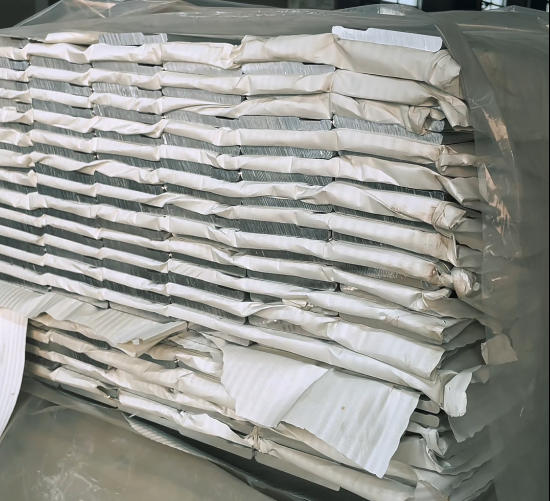
Choosing a 1060 coiled aluminum busbar is rarely just a material decision. It affects electrical loss, forming efficiency, installation reliability, and total processing cost, especially where compact layouts and repeated bending are involved.
For many projects, conductivity, thickness tolerance, and bendability must be judged together rather than separately. A busbar that performs well on paper can still create trouble if coil consistency, edge condition, or forming response does not match the application.
Why 1060 alloy remains a practical choice
The 1060 coiled aluminum busbar is widely selected when high aluminum purity and good electrical conductivity are the main priorities. It is often used in power distribution, battery connections, control cabinets, and lightweight electrical assemblies.
Compared with more complex alloys, 1060 offers easier forming and dependable corrosion behavior. That combination matters in installations where the busbar must be bent, punched, or routed through limited space without sacrificing stable current transfer.
The three specifications that deserve closer attention
Conductivity is the first screening factor
A 1060 coiled aluminum busbar is generally chosen for its strong conductivity performance. In practical terms, this affects temperature rise, voltage drop, and long-term operating stability under load.
It is worth checking not only nominal conductivity values, but also raw material quality and process stability. Purification, degassing, and controlled casting can reduce internal variability that may influence electrical consistency.
Thickness tolerance shapes downstream accuracy
Thickness is not only about current capacity. It also affects punching precision, terminal fit, coating behavior, and contact pressure after assembly.
When comparing a 1060 coiled aluminum busbar, ask for actual tolerance control across the coil, not only a catalog number. Uneven thickness can lead to unstable forming angles and inconsistent resistance at connection points.
Bendability determines processing freedom
Good bendability is essential where routing paths are tight or multi-step forming is required. The key issue is whether the material can tolerate bending without edge cracking, surface damage, or springback beyond process limits.
In actual use, bendability should be judged with coil temper, bending radius, and final geometry together. A 1060 coiled aluminum busbar may perform differently depending on stamping sequence and post-processing requirements.
How these specs connect to application risk
This is why selection should be tied to the real assembly route. A technically acceptable material may still underperform if the verification process ignores fabrication details.
What to ask a supplier before final selection
A useful supplier discussion should move beyond price and basic dimensions. The more relevant questions usually relate to process control, repeatability, and support for custom conversion.
- Whether conductivity data is based on batch testing rather than nominal alloy assumptions.
- How thickness tolerance and flatness are controlled during rolling and coil finishing.
- Whether edge condition is suitable for tight-radius bending or punching operations.
- If custom slitting, deep processing, or application-oriented recommendations are available.
Shandong Jinhao Aluminum builds its production around standardized quality inspection, compliant manufacturing, and stable raw material control. That matters when evaluating a 1060 coiled aluminum busbar for repeat orders or demanding industrial environments.
A broader view of material matching
In some projects, busbar selection is only one part of a larger aluminum component strategy. Structural supports, machined connectors, and fabricated hardware may require different alloy behavior in the same system.
That is where related materials such as Aluminum rod become relevant. Grades like 6061, 3102, and 5050 can support machining, forming, and corrosion needs in adjacent electrical or mechanical parts.
Using compatible aluminum products from one controlled supply chain can simplify quality tracking, improve processing predictability, and reduce mismatch between conductive parts and supporting components.
A more reliable way to compare options
A good comparison process starts with the real current load, installation space, bending radius, and connection method. Then it checks whether the 1060 coiled aluminum busbar can hold those requirements with stable thickness and consistent forming response.
If the application includes tight tolerances or repeated fabrication steps, sample validation becomes more valuable than generic specification sheets. Reviewing coil data, trial bends, and downstream compatibility often leads to a clearer decision.
The next step is simple: map the electrical target and forming route together, compare suppliers on measurable process control, and judge the 1060 coiled aluminum busbar by performance in the intended assembly, not by a single parameter alone.
Navigation
Send Us A Message
Professional field of aluminum bars
24/7 before-sales and after-sales services
Comprehensive technical support