
How Surface Treatment Affects Conductive Aluminum Busbar Reliability
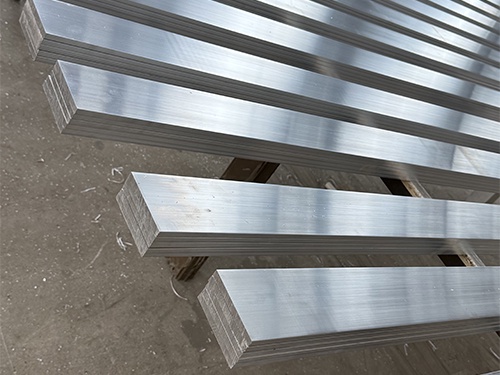
Surface treatment often decides whether a busbar performs reliably for years or begins failing at the contact point, joint surface, or exposed edge. In aluminum systems, that question matters even more because conductivity, oxidation behavior, heat dissipation, and corrosion resistance are closely linked. For installations in power distribution, rail transit, energy storage, and industrial control, understanding surface condition is as important as choosing the right alloy.
Why the surface matters beyond material grade
Aluminum naturally forms an oxide film.
That film protects the base metal, but it can also increase contact resistance if the joint design or finish is unsuitable.
In a conductive path, small changes at the surface may lead to local heating, unstable current transfer, or reduced fastening reliability.
This is why a Conductive aluminum busbar cannot be evaluated only by bulk conductivity data.
How common treatments affect reliability
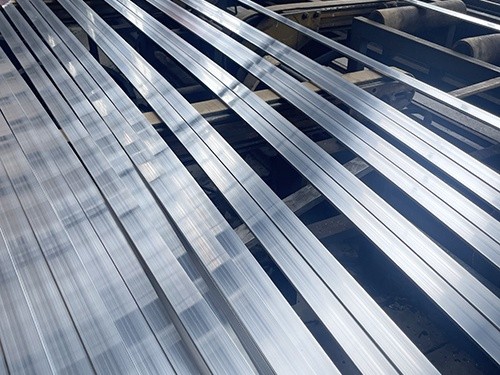
Different finishes solve different risks.
A finish that looks uniform is not automatically fit for electrical duty.
Joint faces, bolt holes, cut ends, and transition areas need separate attention.
Where failures usually begin
Most reliability problems start at interfaces rather than in the center of the bar.
- Oxide buildup raises contact resistance.
- Poor plating adhesion flakes under vibration.
- Uneven treatment creates hot spots during load cycles.
- Surface contamination weakens bolted connections.
- Mixed-metal exposure accelerates galvanic corrosion.
In new energy, photovoltaic systems, wind power, and battery-linked equipment, thermal cycling makes these issues more visible.

What to check in practical inspection
Inspection should connect finish quality with service conditions.
Focus points before installation
- Confirm alloy selection such as 1060/1070, 6063, or 6061-T6.
- Check whether the surface matches the joint method and current load.
- Verify coating continuity on edges and machined sections.
- Review storage protection to prevent oxidation before assembly.
Focus points during service
- Monitor temperature rise at joints, not just total line current.
- Look for discoloration, pitting, loosening, or white corrosion products.
- Compare treatment performance in humid, cold storage, and chemical environments.
Choosing a reliable aluminum solution
A dependable solution balances conductivity, forming performance, corrosion behavior, and structural demands.
For example, pure aluminum grades favor very high conductivity, while 6061-T6 offers stronger resistance to deformation.
In many applications, the right answer is not the strongest alloy or the thickest coating, but the best surface-and-alloy match.
Suppliers with standardized extrusion, smelting, casting, and inspection control are better positioned to maintain finish consistency across batches.
This matters for products used in buildings, metallurgy, industrial electronics, and transportation rail, where stable current flow and temperature management must remain predictable.
As a reference point, Conductive aluminum busbar solutions are often evaluated by conductivity, corrosion resistance, lighter mass, and machining stability together, not separately.
A practical next step
When reviewing a busbar project, build the checklist around surface condition, joint design, alloy grade, and operating environment as one system.
That approach reduces hidden risk more effectively than relying on nominal conductivity alone.
If specifications are still being compared, start with the service environment, required current stability, and inspection criteria, then assess which finish gives the most reliable long-term result.
Navigation
Send Us A Message
Professional field of aluminum bars
24/7 before-sales and after-sales services
Comprehensive technical support