
Common Risks When Sourcing from Chinese Aluminum Busbar Manufacturers
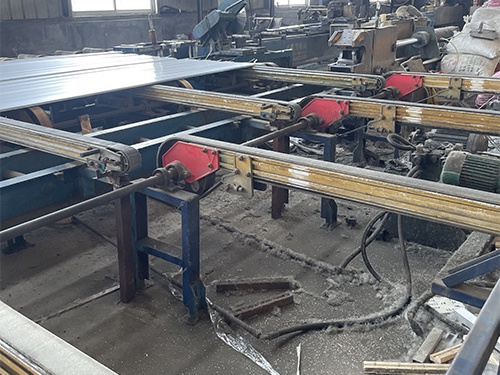
Why risk checks change by application
Working with Chinese Aluminum Busbar Manufacturers often improves cost control and supply flexibility.
The real challenge is not price alone.
Different operating conditions expose different weaknesses in material choice, process control, and delivery reliability.
In power distribution, stable conductivity matters first.
In rail transit or new energy, vibration, heat, and dimensional precision become harder constraints.
That is why evaluating Chinese Aluminum Busbar Manufacturers should always start from the final use environment.
What usually matters in high-frequency usage settings
For indoor cabinets and industrial electronics, consistency is usually the first checkpoint.
Minor thickness deviation can affect cabinet interconnection, assembly speed, and contact stability.
In these cases, Chinese Aluminum Busbar Manufacturers should be checked for die accuracy, batch traceability, and inspection records.
For outdoor systems, cold storage, or metallurgy, corrosion resistance and thermal behavior deserve more attention.
A supplier may offer acceptable samples but struggle with long-run stability under humidity, temperature swings, or continuous load.
This is where a product such as Aluminum row becomes relevant.
Grades like 1060 / 1070, 6063, and 6061-T6 fit different balances of conductivity, strength, and deformation resistance.
The same busbar request may hide different priorities
Where sourcing mistakes usually begin
A common mistake is treating similar industries as having identical busbar needs.
Construction grounding layouts and equipment assembly may both use aluminum conductors, yet loading conditions differ sharply.
Another mistake is checking only unit price.
Lead time variation, packaging protection, and rework risk often create higher total cost than the original quote suggests.
Experienced Chinese Aluminum Busbar Manufacturers usually show stronger process transparency, raw material control, and after-sales response.
That matters when orders involve custom profiles, flat conductor arrangements, or mixed batches for multiple projects.
Companies with integrated extrusion, deep processing, inspection, and logistics coordination often reduce these hidden gaps more effectively.
Practical checks before moving forward
- Match alloy grade to use conditions, not just target conductivity.
- Confirm tolerance control, certification scope, and batch inspection frequency.
- Review whether customization covers drilling, bending, and surface requirements.
- Check how the supplier handles delivery changes and after-sales traceability.
In practice, reliable sourcing from Chinese Aluminum Busbar Manufacturers depends on scenario matching more than broad claims.
It helps to compare load, environment, compliance, and service response together.
That approach makes technical choices, including options like Aluminum row, more grounded and easier to validate over time.
Navigation
Send Us A Message
Professional field of aluminum bars
24/7 before-sales and after-sales services
Comprehensive technical support