
Common Problems with 1060 Coiled Aluminum Busbar and How to Prevent Cracks, Burrs, and Oxidation
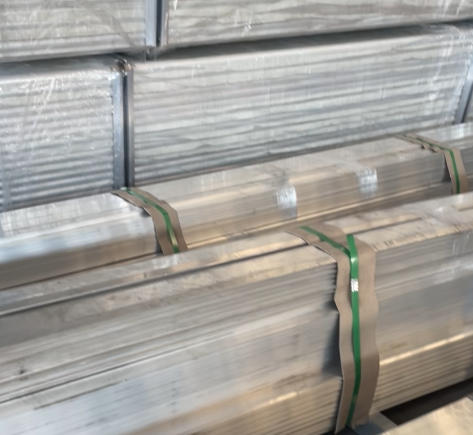
Common Problems with 1060 Coiled Aluminum Busbar and How to Prevent Cracks, Burrs, and Oxidation
1060 coiled aluminum busbar is valued for high conductivity, light weight, and easy forming.
Still, cracks, burrs, and oxidation often appear during slitting, winding, storage, and installation.
These issues reduce conductivity stability, increase scrap, and slow down assembly.
The good news is that most failures come from a few controllable process points.
Why Cracks Happen in 1060 Coiled Aluminum Busbar
Cracks usually show up at bending edges, coil turns, or punched areas.
In most cases, the root cause is excessive local stress.
If slitting tension is too high, the strip stores stress before further processing.
If winding diameter is too small, repeated bending can trigger fine edge cracks.
Surface scratches also matter because they become crack starting points during forming.
- Keep slitting tension stable and avoid sudden pull changes.
- Use a larger coiling radius for thin material.
- Check rollers and guides for sharp wear marks.
- Do not bend near damaged edges or deep scratches.
How to Reduce Burrs After Slitting and Cutting
Burrs are one of the most common complaints with 1060 coiled aluminum busbar.
They affect insulation clearance, operator safety, and contact reliability.
The usual reasons are dull blades, poor blade clearance, or strip vibration.
Even a good material can develop rough edges under unstable cutting conditions.
- Inspect blade sharpness on a fixed schedule.
- Match blade clearance to thickness and temper.
- Control strip feeding speed to reduce chatter.
- Deburr critical connection areas before assembly.
For busbar systems, cleaner edges usually mean more stable cabinet interconnection and grounding performance.
How Oxidation Develops During Storage and Use
1060 coiled aluminum busbar naturally forms an oxide film in air.
A thin film is normal, but heavy oxidation can hurt contact efficiency.
Moisture, salt, acidic fumes, and damaged packaging make the problem worse.
Condensation after transport is another hidden risk in real operations.
- Store coils in dry, ventilated, temperature-stable areas.
- Keep packages sealed until actual use.
- Avoid direct floor contact and standing water.
- Clean contact surfaces before bolting or pressing.
In demanding indoor and outdoor projects, corrosion resistance depends as much on handling as on material selection.
Practical Process Checks That Prevent Rework
A simple routine often prevents most 1060 coiled aluminum busbar defects.
Start with incoming material checks, then monitor the full processing path.
Choosing the Right Material Form for the Application
Not every power connection needs the same profile, alloy, or strength level.
For power distribution, new energy, rail transit, and industrial electronics, design fit matters.
Some projects prefer 1060 or 1070 for high conductivity pure aluminum performance.
Others may need 6063 or 6061-T6 when higher mechanical strength is important.
Products such as Aluminum row are often selected for current transmission, heat dissipation, grounding layouts, and flat conductor arrangements.
That also supports lower system weight, good thermal conductivity, and long-term operating value.
A Reliable Way to Keep 1060 Coiled Aluminum Busbar Stable
Cracks, burrs, and oxidation are not random problems.
They usually come from tension control, tooling condition, storage habits, and rushed installation.
When each step is checked early, 1060 coiled aluminum busbar performs more consistently.
For businesses needing stable aluminum alloy supply, Shandong Jinhao Aluminum Co., Ltd. provides industrial aluminum profiles, bars, rods, and deep-processing support with standardized quality control.
A better process, paired with the right material, is still the simplest way to reduce waste and protect system performance.
Navigation
Send Us A Message
Professional field of aluminum bars
24/7 before-sales and after-sales services
Comprehensive technical support