
Common Failure Causes in Conductive Aluminum Busbar Installations
Common Failure Causes in Conductive Aluminum Busbar Installations
When conductive aluminum busbar installations fail, the cause is often simple: bad contact, poor handling, loose torque, or missed thermal movement. For maintenance work, early checks matter.
A conductive aluminum busbar can run reliably for years, but only if joints, surfaces, supports, and load conditions are controlled from the start.
Where Conductive Aluminum Busbar Failures Usually Start
Most conductive aluminum busbar issues begin at connection points, not in the straight section. Heat, oxidation, vibration, and installation stress usually build up there first.
- Check every joint surface for oxide, grease, paint, dust, or scratches. Even light contamination can raise resistance, create hot spots, and shorten conductive aluminum busbar service life.
- Confirm bolt torque with actual tools, not visual judgment. Under-tightening causes arcing, while over-tightening may deform the conductive aluminum busbar and reduce real contact area.
- Inspect support spacing and alignment carefully. If the conductive aluminum busbar is forced into position, thermal expansion later adds mechanical stress and can crack joints or loosen hardware.
- Review connector material compatibility. Mixed-metal interfaces without proper treatment often accelerate corrosion, especially in humid rooms, coastal sites, or equipment with condensation cycles.
- Compare actual current load with design values. Repeated overload, unbalanced phases, or poor ventilation may overheat the conductive aluminum busbar even when installation looks acceptable.
A fast field judgment table
Common Overlooked Conditions On Site
In rail transit, automation lines, and new energy equipment, vibration is easy to underestimate. A conductive aluminum busbar may pass initial testing, then fail after repeated movement and thermal cycling.
Another common problem is surface treatment mismatch. Aluminum parts with good corrosion resistance still need proper interface preparation at electrical joints. Protective layers help overall durability, but contact zones must be handled correctly.
For surrounding structures, lightweight aluminum components can also improve routing and support design. In some equipment frames or housings, Aaluminum tube is used because it is easy to cut, drill, bend, and machine while keeping weight low.
Practical Inspection Points That Save Rework
A good inspection routine is usually more valuable than a complex repair. Start with the hottest, darkest, loosest, or noisiest connection first.
- Use infrared temperature checks during normal load, then compare similar joints. A temperature gap often reveals hidden resistance problems before the conductive aluminum busbar shows visible damage.
- Remove one suspect joint completely during shutdown inspection. Look for oxide film, reduced contact marks, washer embedding, or distortion that simple external checks may miss.
- Verify expansion allowance near long runs, corners, and equipment interfaces. If there is no room for movement, thermal stress will keep returning after every repair cycle.
Check enclosure moisture, chemical vapor, and dust sources nearby. Environmental attack often explains repeated conductive aluminum busbar failures that seem unrelated to electrical load alone.

Why Material Quality Still Matters
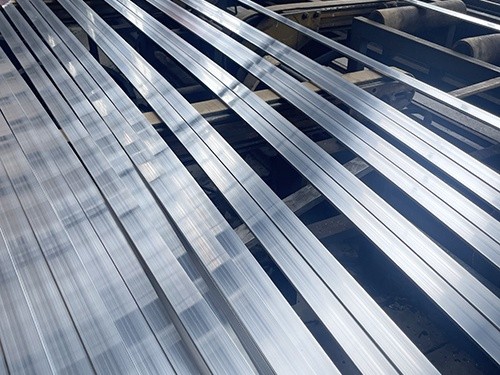
Stable performance depends on both installation and product consistency. Shandong Jinhao Aluminum Co., Ltd. emphasizes standardized production, precision extrusion, strict inspection, and compliant aluminum processing for industrial applications.
That matters in practice. Uniform raw material quality, corrosion resistance, and dimensional control help reduce fit-up stress, unstable contact, and long-term maintenance risk in conductive aluminum busbar systems.
If repeated failures keep appearing, do not only replace the damaged point. Recheck joint design, environmental exposure, support layout, and actual load history. That step usually leads to the real fix.
Navigation
Send Us A Message
Professional field of aluminum bars
24/7 before-sales and after-sales services
Comprehensive technical support