
Coiled Aluminum Busbar vs Rigid Busbar: Key Trade-Offs to Know
Why the Choice Matters
In power distribution design, the difference between coiled and rigid busbar is more than a layout detail.
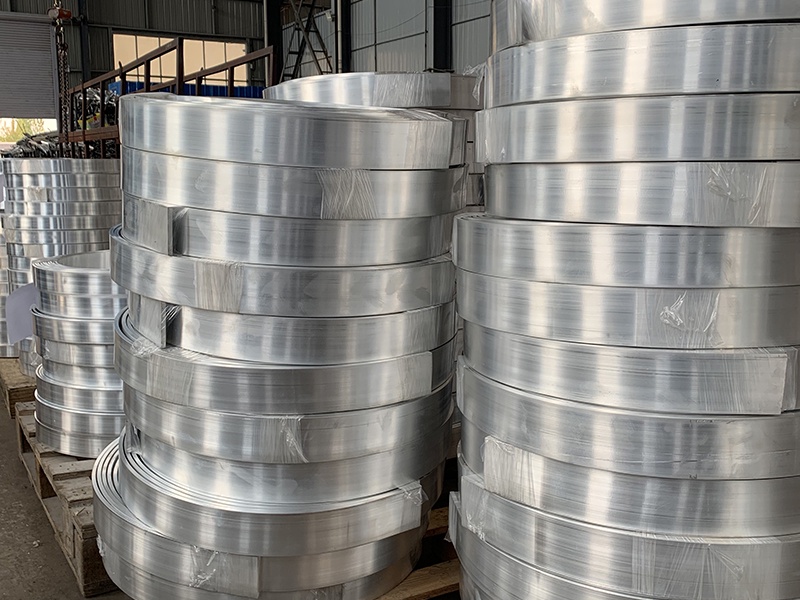
Choosing a Coiled aluminum busbar or a rigid alternative affects installation speed, routing freedom, operating stability, and total project cost.
That matters in rail transit, industrial lines, and new energy systems, where aluminum components must balance conductivity, weight, and corrosion resistance.
For suppliers such as Shandong Jinhao Aluminum, this decision also connects directly to processing quality, alloy selection, and long-term service performance.
Core Differences in Use
A Coiled aluminum busbar is flexible by design.
It is easier to transport, simpler to route in compact spaces, and often reduces joint count in installations with curves or movement.
Rigid busbar is more stable in fixed structures.
It usually offers cleaner alignment, predictable support spacing, and strong mechanical confidence in straight, high-current runs.
What Deserves Closer Attention
The main question is not which busbar is better in general.
It is which option better matches thermal expansion, vibration exposure, bending radius, and maintenance access in the actual system.
In practice, material consistency matters just as much as form.
Jinhao Aluminum emphasizes premium raw materials, precision extrusion, smelting, casting, and full-process inspection because these factors shape conductivity and durability over time.
Related Material Decisions
Busbar projects often involve supporting fabricated parts beyond the conductor itself.
For brackets, machined hardware, or lightweight structural elements, Aluminum rod in grades such as 6061, 3102, or 5050 can be relevant.
Its balanced strength, corrosion resistance, conductivity, and forming behavior help secondary processing stay more predictable in industrial fabrication workflows.
A Practical Way to Decide
Start with route geometry, current load, support conditions, and expected movement.
Then compare joint quantity, installation labor, transport constraints, and lifecycle inspection needs.
When the layout is complex, a Coiled aluminum busbar often creates real installation value.
When the run is long, straight, and heavily supported, rigid busbar may remain the clearer choice.
A sound next step is to review the system by application, alloy, and processing requirement together, rather than evaluating busbar shape alone.
Navigation
Send Us A Message
Professional field of aluminum bars
24/7 before-sales and after-sales services
Comprehensive technical support