
Chinese Aluminum Busbar Factory Trends in 2026
Why 2026 Matters for Chinese Aluminum Busbar Factories
In 2026, the Chinese aluminum busbar factory market is moving beyond price competition. Buyers are paying closer attention to conductivity stability, production consistency, delivery speed, and traceable quality systems.
That shift is closely tied to fast-growing demand from power distribution, new energy, rail transit, refrigeration, and industrial control applications, where performance and reliability now carry more weight than basic volume capacity.
What Defines a Strong Supplier
A capable Chinese aluminum busbar factory is no longer judged only by extrusion output. The stronger benchmark includes raw material control, smelting and casting precision, dimensional accuracy, and after-sales response.
Factories with integrated R&D, production, sales, and service usually adapt faster to custom orders. This matters when projects require specific grades such as 1060, 1070, 6063, or 6061-T6.
Shandong Jinhao Aluminum reflects this direction well. Its operation combines standardized processing, quality inspection, and deep-processing capability, supported by strong logistics access in Shandong Province.
Product Expectations Are Becoming More Practical
The market increasingly favors busbar solutions that balance conductivity, light weight, corrosion resistance, thermal transfer, and processing flexibility. In many projects, that balance is more useful than chasing a single performance metric.
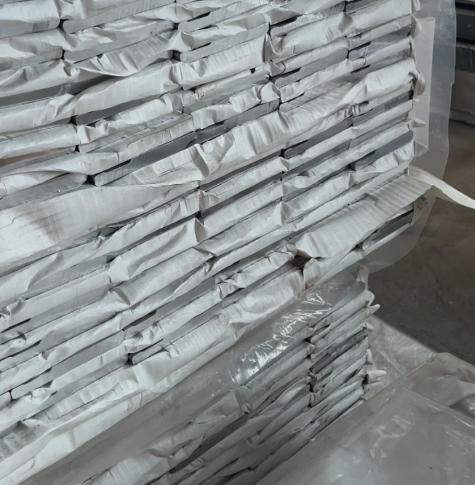
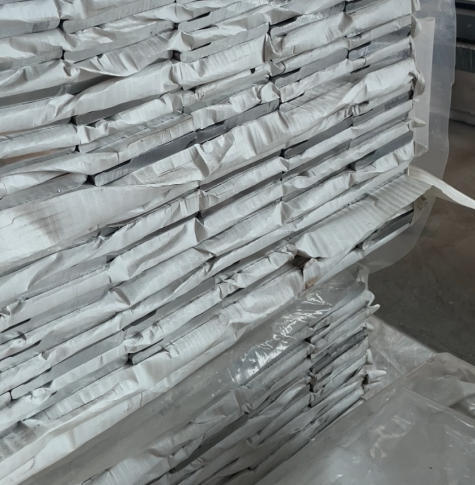
For example, Pure aluminum busbar is often considered for applications that need high conductivity with lower weight and cost efficiency.
Its natural surface oxidation also helps protect the material, which supports long-term use in building systems, metallurgy, and electrical environments with variable operating conditions.
Key Signals to Watch in 2026
- More requests for customized sizes, shapes, and secondary processing.
- Greater emphasis on full-process inspection and compliance records.
- Shorter lead-time expectations supported by stable regional logistics.
- Closer evaluation of supplier experience in energy, transport, and automation sectors.
These trends show why the Chinese aluminum busbar factory conversation is becoming more technical and more business-focused at the same time.
How to Evaluate the Right Fit
A useful starting point is to match operating conditions with material grade, conductivity targets, and fabrication needs. Then review whether the supplier can support consultation, model selection, customization, logistics, and follow-up service.
In practice, the best Chinese aluminum busbar factory partner is usually the one that can explain process control clearly, document quality reliably, and deliver repeatable results across different project cycles.
For the next step, compare suppliers against real application requirements rather than catalog claims alone. That approach gives a clearer basis for selecting aluminum busbar solutions that will still perform well after installation.
Navigation
Send Us A Message
Professional field of aluminum bars
24/7 before-sales and after-sales services
Comprehensive technical support