
Chamfered Aluminum Busbar vs Standard Busbar: What Changes
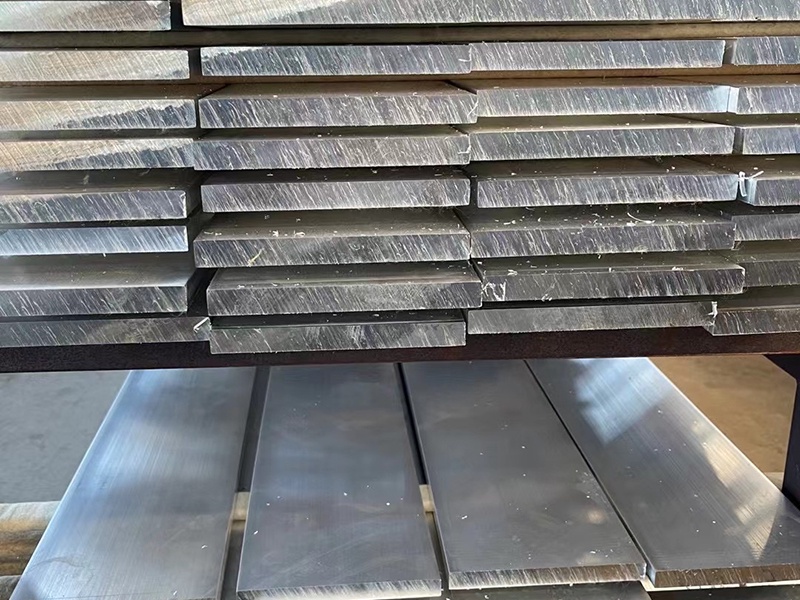
Chamfered Aluminum Busbar vs Standard Busbar: What Changes
When comparing a Chamfered aluminum busbar with a standard busbar, small design changes can reshape safety, assembly speed, and service life.
That matters when power distribution layouts, equipment interfaces, and custom aluminum systems must stay reliable under real operating pressure.
In practice, the right choice depends less on appearance and more on installation risk, edge protection, and long-term maintenance cost.
What a Chamfered Aluminum Busbar Actually Changes
A standard busbar usually keeps sharp or near-square edges after cutting and machining.
A Chamfered aluminum busbar removes part of that edge through angled finishing.
This simple adjustment can reduce burr-related issues, improve handling, and support cleaner contact transitions in compact assemblies.
From a project perspective, that often means fewer installation delays and less rework during final fit-up.
Safety and Assembly Impact
The most visible advantage is safer handling during fabrication and on-site assembly.
Chamfered edges help lower the chance of insulation damage, glove tearing, or accidental scratching of nearby components.
That is especially useful in dense cabinets, rail systems, industrial control panels, and new energy equipment.
- Less risk of edge-related injury during installation
- Lower chance of damaging coatings or insulating sleeves
- Easier alignment in tight routing spaces
- Cleaner finishing for visible system sections
Performance and Cost Considerations
A chamfer does not completely redefine conductivity, but it can improve practical usability.
More importantly, it supports consistency where repeated assembly, maintenance access, or edge-sensitive insulation are involved.
If your application values light weight, good corrosion resistance, and processing flexibility, Pure aluminum busbar options in 1060, 1070, 6063, or 6061-T6 can be worth reviewing.
For many buyers, the extra machining cost of a Chamfered aluminum busbar is often offset by fewer edge corrections and smoother field assembly.
When Standard Busbar Still Makes Sense
A standard busbar remains suitable for less complex layouts or protected internal installations.
If the assembly process already includes deburring, edge treatment, and strong insulation controls, the benefit gap may narrow.
This is common in stable production lines with fixed tooling and limited manual adjustment.
In those cases, selection should focus on current load, thermal behavior, corrosion exposure, and fabrication tolerance.
A Practical Selection Checklist
- Choose a Chamfered aluminum busbar for tight spaces, exposed edges, or fast on-site installation
- Use standard busbar where post-processing is already controlled and repeatable
- Check whether insulation, brackets, and terminals are edge-sensitive
- Compare machining cost against rework, handling risk, and downtime
- Match alloy and finish to the actual environment, not just the drawing
A Chamfered aluminum busbar is not always mandatory, but it often becomes the smarter decision when safety, assembly efficiency, and finish quality directly affect project performance.
Navigation
Send Us A Message
Professional field of aluminum bars
24/7 before-sales and after-sales services
Comprehensive technical support