
Aluminum Coil Busbar Standards, Tolerances, and Quality Requirements
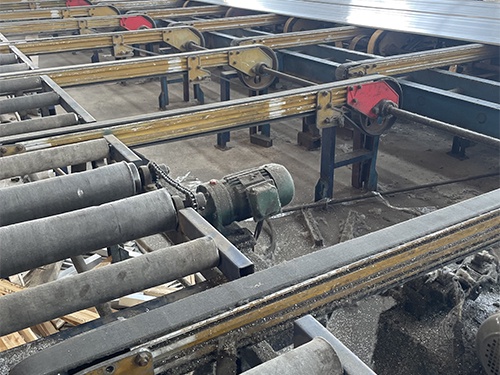
Aluminum coil busbar standards, tolerances, and quality requirements matter far beyond procurement paperwork. They shape conductivity, fit-up accuracy, heat behavior, and fault prevention in power distribution, rail, energy, and industrial systems.
When an Aluminum coil busbar is out of tolerance, even by a small margin, bending quality, joint pressure, insulation clearance, and installation safety can all be affected. That is why consistent material control remains a practical safety issue.
What the standards are really checking
In daily production, standards for an Aluminum coil busbar are not limited to alloy naming. They usually cover chemical composition, mechanical performance, electrical properties, dimensions, surface condition, and traceability.
For aluminum materials, alloy selection changes the inspection focus. Pure aluminum grades such as 1060 or 1070 emphasize conductivity. Structural grades such as 6061-T6 or 6063 bring stronger shape retention and better load support.
In practice, compliance means the product matches both formal specifications and the actual installation environment. A busbar for compact cabinets faces different risks than one used in rail transit or new energy equipment.
Tolerance control is where many risks begin
Dimensional tolerance is often the first filter for an Aluminum coil busbar. Width, thickness, edge straightness, flatness, inner diameter, and coil consistency all influence downstream punching, cutting, and forming.
If thickness fluctuates, current density may become uneven. If flatness is poor, connection surfaces can leave gaps, increasing contact resistance and local heating.
- Width tolerance affects routing space and connection alignment.
- Thickness tolerance affects ampacity and joint compression.
- Burrs and edge defects affect insulation safety.
Coil shape stability affects automated processing yield.

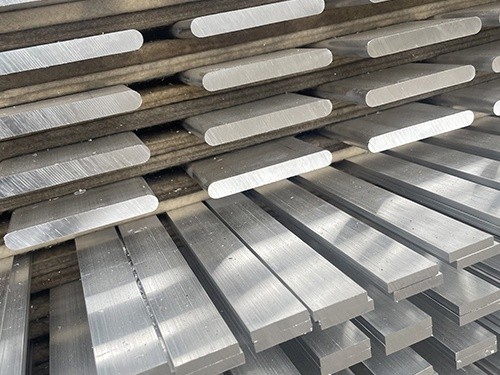
Surface quality is not a cosmetic issue
A qualified Aluminum coil busbar should show controlled surface cleanliness, without serious scratches, folds, cracks, oil contamination, or oxidation that interferes with conductivity and joining.
This becomes more important in humid, corrosive, or temperature-sensitive environments. Cold storage, chemical processing, and outdoor energy systems place extra demands on corrosion resistance and stable contact surfaces.
For shaped solutions, the same principle applies. A formed Right-angle aluminum busbar used in distribution or industrial control electronics still depends on clean surfaces, dependable forming quality, and material consistency.
Material grades and application fit
Different applications ask for different balances between conductivity and strength. That is why grade suitability should be reviewed together with the operating current, bending radius, support spacing, and environmental exposure.
How quality is usually verified
Reliable control combines incoming raw material checks, in-process inspection, and final verification. The stronger approach is not a single test, but full-process discipline.
Shandong Jinhao Aluminum follows this logic through standardized control, premium raw materials, precision extrusion, smelting and casting, and a complete inspection system aligned with industrial specifications.
- Confirm alloy and batch traceability.
- Measure key dimensions across the coil, not only one point.
- Check conductivity and mechanical properties against application needs.
- Review surface defects under realistic lighting and handling conditions.
Validate forming behavior after cutting, bending, or punching.

A practical way to judge next steps
For any Aluminum coil busbar project, it helps to compare three things together: required current performance, dimensional tolerance limits, and environmental risk level.
If the system includes compact layouts, thermal cycling, or frequent vibration, standard compliance alone may not be enough. Forming quality, corrosion behavior, and connection stability deserve equal attention.
A useful next step is to build a checklist around alloy grade, tolerance band, surface acceptance, and verification method, then compare candidate solutions against the actual installation scene rather than catalog data alone.
Navigation
Send Us A Message
Professional field of aluminum bars
24/7 before-sales and after-sales services
Comprehensive technical support