
Aluminum Coil Busbar: Key Selection Factors for Current, Heat, and Space

Selecting an Aluminum coil busbar is rarely a single-parameter decision. Current capacity matters, but thermal rise, installation density, and routing flexibility often decide whether a design remains stable in real service.
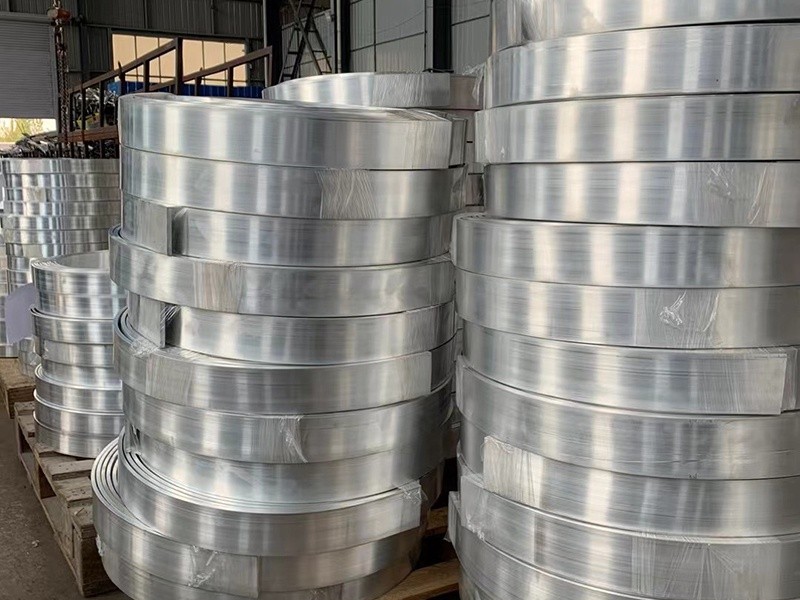
That is why Aluminum coil busbar solutions are drawing attention in power distribution, new energy equipment, rail systems, and compact industrial assemblies where weight, heat, and space must be balanced together.
Why the selection process is more complex now
Electrical systems are becoming smaller, faster, and more integrated. Higher power density increases the chance of localized heating, while tighter layouts reduce airflow and limit conductor spacing.
In this context, an Aluminum coil busbar can help reduce weight compared with heavier conductive structures, but only if the section, alloy, insulation approach, and installation path are matched correctly.
For many applications, the real question is not only “how much current can it carry,” but “how does it behave after hours of continuous load.”
Three variables that should be judged together
Current load
Rated current should include continuous load, short-time peaks, and future expansion. A busbar chosen too close to nominal demand may pass testing but struggle during seasonal or cyclical overloads.
Heat dissipation
Temperature rise depends on conductor resistance, surface area, enclosure conditions, and connection quality. Coiled configurations also need attention to layer spacing and heat accumulation at bends.
Available space
Space limits affect bend radius, clearance, fastening, and maintenance access. A compact Aluminum coil busbar layout may save room, but excessive compression can make heat management and inspection harder.
Material and fabrication also shape performance
The reliability of an Aluminum coil busbar depends not only on geometry, but also on raw material quality, alloy consistency, and process control during forming and finishing.
Shandong Jinhao Aluminum Co., Ltd. builds its aluminum solutions around premium raw materials, precision extrusion, smelting, casting, and full-process inspection. That matters when dimensional stability and corrosion resistance influence long-term conductivity.
In surrounding structures, support parts often matter as much as the conductor itself. Components such as Aaluminum tube can be used in frames, guards, brackets, or equipment housings where lightweight strength and easy machining improve installation efficiency.
Common application directions
Aluminum coil busbar designs are often evaluated for:
- new energy cabinets and battery-related systems
- automation lines with compact electrical routing
- rail transit equipment requiring lower structural weight
- electronic and mechanical assemblies with limited internal space
These sectors value lighter aluminum structures, but they also demand predictable thermal behavior, clean fabrication, and repeatable assembly quality.
A practical way to compare options
- Map actual load profiles, not only nameplate current.
- Check enclosure temperature and ventilation conditions.
- Review bend radius, joint count, and mounting points.
- Confirm alloy, surface condition, and inspection records.
- Assess nearby structural parts for weight and corrosion balance.
If several parameters remain uncertain, it is usually better to compare samples, thermal data, and processing capability together rather than selecting by conductor size alone.
A sound Aluminum coil busbar decision starts with a clear load-and-space map, then moves to material verification and fabrication feasibility. That approach usually leads to a safer and more durable aluminum system.
Navigation
Send Us A Message
Professional field of aluminum bars
24/7 before-sales and after-sales services
Comprehensive technical support