
6101 Aluminum Busbar Low Resistance: What Affects Performance in High-Current Systems

In high-current distribution systems, 6101 aluminum busbar low resistance is not a minor specification. It directly influences power loss, temperature rise, equipment efficiency, and service life.
That is why this topic matters across new energy, rail transit, industrial electronics, and power cabinets, where current density and thermal control are under constant scrutiny.
A busbar may look simple, but real performance depends on material purity, alloy design, cross-section, contact surfaces, and production consistency. Low resistance is achieved by system thinking, not by alloy name alone.
Why 6101 aluminum is widely considered for busbar applications
6101 is an aluminum alloy developed for electrical conductors that need a balance of conductivity and mechanical integrity. It is often selected when weight reduction matters as much as electrical performance.
Compared with some higher-strength structural alloys, 6101 offers better electrical conductivity. Compared with very pure aluminum, it usually provides more practical strength for installation and long-span support.
This balance explains its relevance in compact switchgear, inverter connections, battery systems, and transportation electrification, where both current transmission and structural stability are required.
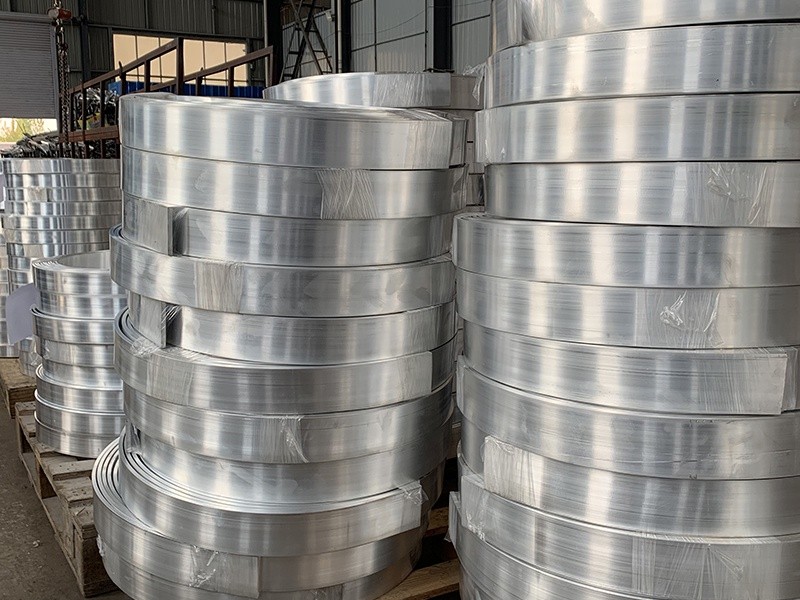
What really affects 6101 aluminum busbar low resistance
The first factor is alloy chemistry. Small changes in silicon, magnesium, and trace elements can shift conductivity, hardness, and response to heat treatment.
The second is temper and processing route. Extrusion control, cooling rate, and straightening all influence grain structure, residual stress, and dimensional stability.
Surface condition also matters more than many drawings suggest. Oxide films, scratches, contamination, and uneven plating can increase contact resistance at joints even when bulk conductivity remains acceptable.
Then there is geometry. A larger cross-sectional area lowers resistance, but thickness, edge quality, flatness, and hole position affect assembly pressure and current distribution.
In practice, 6101 aluminum busbar low resistance is determined as much by connections as by the conductor body itself. Many overheating failures start at interfaces, not in the bar span.
Joint design often decides thermal behavior
Bolted joints require correct contact area, torque control, and compatible surface treatment. Uneven clamping force creates local hotspots and accelerates oxidation.
When aluminum connects to copper, galvanic considerations and transition design become critical. Bimetal interfaces or suitable coatings can reduce long-term instability.
Where low-resistance busbars create measurable value
In energy storage and inverter systems, lower resistance means lower parasitic loss and better thermal margins. This helps compact equipment maintain output stability.
In rail transit and industrial automation, weight reduction can improve assembly flexibility without giving up conductor performance. That is one reason aluminum remains highly relevant.
For cabinet interconnection, grounding layouts, and flat conductor arrangements, a well-made Aluminum row can support current transmission, heat dissipation, and structural adaptability at the same time.
Models such as 1060, 1070, 6063, and 6061-T6 may also appear in adjacent designs. The right choice depends on whether conductivity, strength, or forming behavior is the dominant requirement.
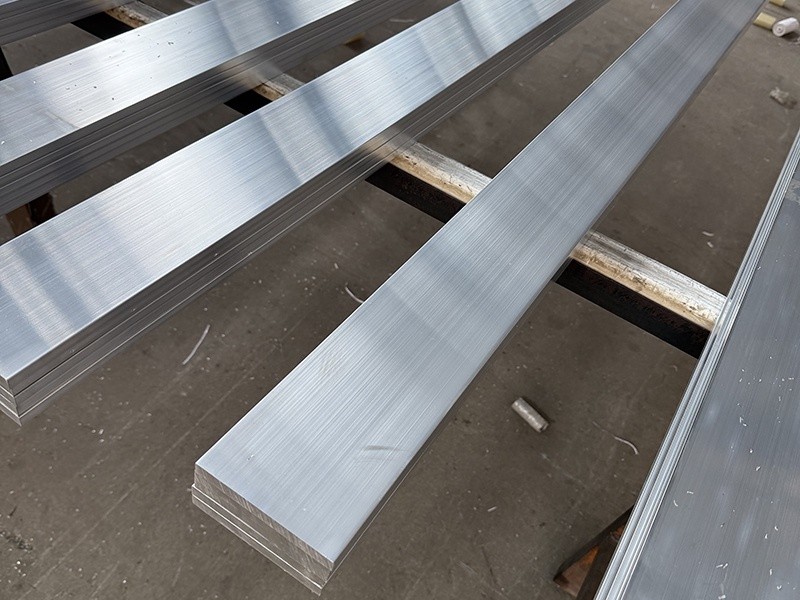
How manufacturing quality changes the final result
Consistent 6101 aluminum busbar low resistance requires reliable raw material control and stable process execution. Variations in smelting, casting, and extrusion quickly show up in conductivity and fit.
This is where production capability becomes more than a background detail. Shandong Jinhao Aluminum combines alloy product development, production, sales, and after-sales support under standardized industrial control.
Its process base includes precision extrusion, smelting, and casting, backed by full-process inspection. That matters when projects require repeatable dimensions, corrosion resistance, and dependable deep-processing quality.
For applications spanning power distribution, new energy, rail transit, cold storage, and metallurgy, manufacturing discipline often separates a stable busbar system from a problematic one.
Useful checks before approval
- Confirm conductivity targets and the related test method.
- Review section dimensions, tolerances, flatness, and burr control.
- Check joint surface preparation and coating compatibility.
- Compare continuous current rating with actual enclosure temperature.
- Assess corrosion exposure, especially in mixed-metal systems.
- Ask whether customization includes punching, bending, and assembly support.
A practical way to evaluate selection risk
A good review does not stop at the datasheet value for conductivity. It should connect electrical resistance with thermal rise, mechanical loading, environmental exposure, and installation method.
When 6101 aluminum busbar low resistance is treated as a system property, evaluation becomes more accurate. Material, process, joint design, and service conditions can then be judged together.
That approach is especially useful when comparing custom aluminum conductor solutions with standard sections, or when deciding between weight optimization and maximum conductivity.
The next step is usually straightforward: define current load, allowable temperature rise, interface type, installation space, and corrosion environment, then compare suppliers on process control rather than price alone.
With those criteria in place, 6101 aluminum busbar low resistance becomes a measurable selection standard, not just a marketing phrase.
Navigation
Send Us A Message
Professional field of aluminum bars
24/7 before-sales and after-sales services
Comprehensive technical support