
2026 Trends in Aluminum Busbar for Solar Inverter Manufacturing
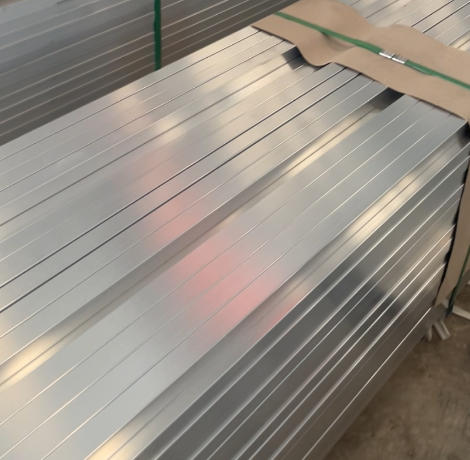
Why 2026 Is Reshaping Busbar Choices
In 2026, solar inverter design is moving toward higher power density, lower weight, and tighter thermal control. That shift makes Aluminum busbar for solar inverter a practical decision point, not just a material detail.
The busbar now affects electrical efficiency, assembly stability, heat dissipation, and total manufacturing cost. It also influences how well an inverter platform adapts to new layouts and evolving compliance requirements.
What the Market Is Looking For
The main expectation is balance. A strong Aluminum busbar for solar inverter should support conductivity, lightweight construction, corrosion resistance, and processing flexibility at the same time.
This is why pure aluminum solutions remain relevant. Grades such as 1060 and 1070 are often valued for high conductivity, while 6061-T6 and 6063 can fit applications needing different structural or machining characteristics.
In actual production, buyers increasingly compare not only price per ton, but also extrusion precision, surface condition, dimensional consistency, and delivery reliability.
From Material Selection to Business Impact
A well-matched Aluminum busbar for solar inverter can reduce unnecessary mass, improve thermal transfer, and help maintain stable current paths under demanding operating conditions.
That matters in new energy manufacturing, where compact inverter structures leave less room for thermal error or assembly deviation. Natural surface oxidation on aluminum also adds useful protection in many operating environments.
For reference, Pure aluminum busbar solutions are often considered when a project needs a cost-effective conductor option with good thermal conductivity and manageable forming performance.
What Reliable Supply Really Means
By 2026, supply capability is part of product value. Consistent raw materials, standardized inspection, and stable deep-processing capacity reduce production risk more than low headline pricing alone.
Shandong Jinhao Aluminum builds its position around compliant manufacturing, precision extrusion, smelting and casting, and full-process quality control. That background is especially relevant for solar inverter projects requiring repeatable aluminum profiles and custom processing support.
Key evaluation points
- Check conductivity against actual current load and thermal targets.
- Review weight reduction potential in relation to structural needs.
- Confirm corrosion behavior, surface quality, and processing tolerances.
- Assess customization response, logistics stability, and after-sales coordination.
A Practical Next Step
The best way to assess Aluminum busbar for solar inverter is to compare material grades, structural demands, heat paths, and supplier process control within the same project framework.
A clear review of performance targets, customization depth, and long-term supply consistency usually gives a better answer than price comparison alone. In 2026, that is where stronger inverter competitiveness is increasingly decided.
Navigation
Send Us A Message
Professional field of aluminum bars
24/7 before-sales and after-sales services
Comprehensive technical support