
1060 Coiled Aluminum Busbar for Battery Packs: Design Tips for Flexible Connections and Heat Control
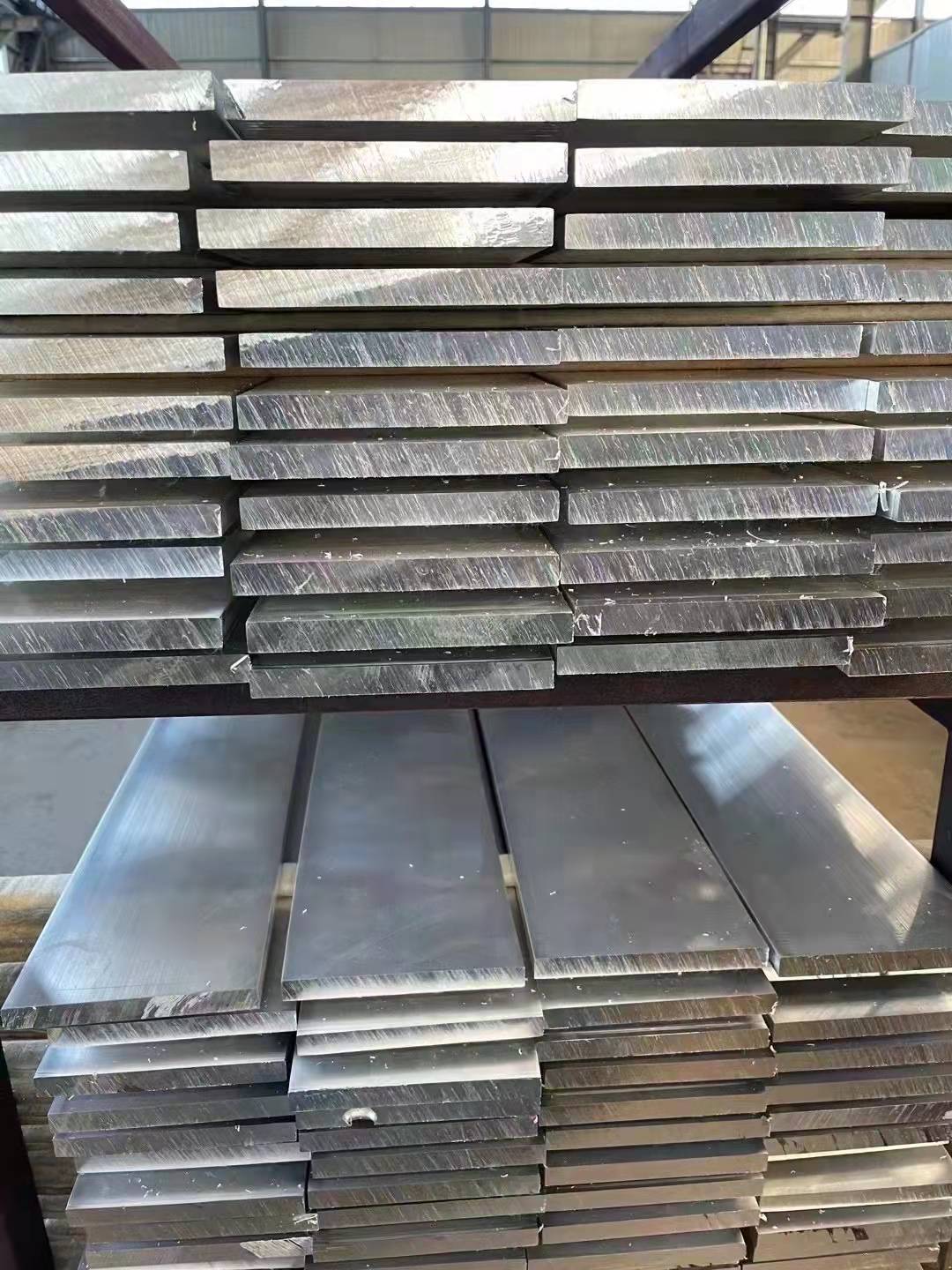
Why 1060 Coiled Aluminum Busbar Performs Differently Across Battery Pack Layouts
In battery packs, connection design is rarely just about conductivity.
A 1060 coiled aluminum busbar often works best when flexibility, weight control, and thermal behavior must be balanced together.
That is why the same material can perform very differently in compact modules, vibration-prone systems, or high-current assemblies.
In practical aluminum applications, the key question is not whether 1060 coiled aluminum busbar is suitable in general.
The real question is how the connection will move, heat up, and age in service.
With experience in aluminum alloy processing, precision extrusion, casting, and deep-processing control, Shandong Jinhao Aluminum pays close attention to those operating differences rather than only nominal specifications.
Compact Packs Usually Need Flexibility More Than Extra Thickness
In dense battery enclosures, installation tolerance is often the first hidden issue.
Cells, brackets, and cooling parts rarely align perfectly after full assembly.
Here, 1060 coiled aluminum busbar helps absorb small offset errors without forcing stress into terminals.
A common mistake is choosing a stiffer section only to reduce resistance on paper.
That can transfer assembly strain into welds or bolted joints, which later affects reliability.
For compact new energy modules, coil radius, edge condition, and joining method usually deserve more attention than simple thickness increase.
Where vibration changes the design priority
Mobile battery systems face another pattern.
Repeated micro-movement can fatigue a rigid connector long before its conductivity becomes a concern.
In this setting, 1060 coiled aluminum busbar is valued for strain relief.
More useful design checks include bend consistency, fastening support, and enough free movement near connection points.
If the pack also integrates flat conductor arrangements or cabinet interconnection sections, designers may compare it with Aluminum row solutions for adjacent power distribution zones.
High-Current Sections Put Heat Control at the Center
Not every battery pack stresses the busbar in the same way.
Fast charge systems and high-discharge applications make thermal rise a daily operating issue.
In those cases, 1060 coiled aluminum busbar is selected not only for lightweight current transmission.
Its thermal conductivity also helps spread localized heat when contact design is well managed.
The weak point is often at interfaces rather than along the aluminum itself.
Surface treatment, contact pressure, and transition resistance matter more than many teams expect.
Different Aluminum Choices Fit Different Parts of the System
A 1060 coiled aluminum busbar is not automatically the best answer for every conductive path.
Pure aluminum grades such as 1060 or 1070 support high conductivity and low weight.
Other areas may require more structural rigidity, especially in equipment assembly or grounding layouts.
That is why system design often mixes flexible connectors with more rigid aluminum components.
Jinhao Aluminum’s broader product coverage, including bars, rods, and custom processed profiles, is useful in projects where electrical and structural requirements overlap.
- Use high-conductivity aluminum where current path efficiency is the top priority.
- Use stronger alloy sections where deformation resistance matters more.
- Review corrosion exposure, especially in mixed indoor and outdoor operating conditions.
- Match the connector form to service life, not just initial assembly convenience.
What Often Gets Misjudged Before Production
One frequent misjudgment is treating similar battery projects as identical.
A stationary storage cabinet and a moving energy platform may share current ratings, yet need very different connection behavior.
Another issue is focusing on raw material cost while ignoring replacement difficulty, thermal drift, or long-term fastening stability.
For 1060 coiled aluminum busbar, the lowest-risk approach is to confirm actual load cycles, temperature rise limits, routing space, and joining process before finalizing geometry.
Where projects extend into rail transit, industrial electronics, or power distribution, interface compatibility with surrounding conductor systems should also be checked early.
A More Reliable Way to Decide the Right Configuration
A good starting point is to map the connection by movement, heat, and maintenance exposure.
Then compare whether 1060 coiled aluminum busbar is serving as a flexible bridge, a thermal path, or both.
If the system also includes busbar systems, grounding structures, or flat conductors beyond the pack core, it helps to review related aluminum formats together rather than in isolation.
The next practical step is to define current level, allowable temperature rise, bend space, connection method, and environmental exposure in one selection sheet.
That usually leads to a more stable and manufacturable result than choosing by conductivity alone.
Navigation
Send Us A Message
Professional field of aluminum bars
24/7 before-sales and after-sales services
Comprehensive technical support