
Can Aluminum Busbars Replace Copper Without Redesign?
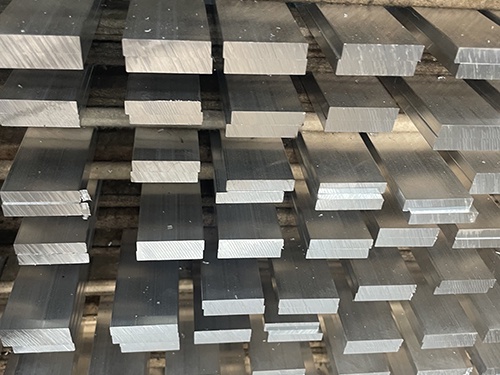
Can aluminum busbars truly replace copper without a full system redesign? For engineers, buyers, and project decision-makers evaluating Aluminum row solutions, the answer depends on conductivity, thermal performance, joint design, and total lifecycle cost. This article explores when aluminum is a practical substitute, what technical adjustments may be required, and how to assess the trade-offs for reliable industrial applications.
In many power distribution, switchgear, rail transit, automation, and new energy projects, copper has long been treated as the default busbar material. However, aluminum busbars are increasingly considered when teams need to reduce weight, control raw material cost, or improve supply flexibility across medium- to high-volume production.
The key question is not whether aluminum can conduct electricity well enough in theory. The real issue is whether an existing copper-based design can maintain electrical safety, acceptable temperature rise, mechanical reliability, and service life after substitution. In some cases, the answer is yes with limited adjustment. In others, redesign is unavoidable.
For technical evaluators and procurement teams, material selection should go beyond price per kilogram. Cross-sectional area, connection method, plating choice, installation envelope, maintenance interval, and field environment all influence whether aluminum busbars can replace copper without compromising system performance.
When Aluminum Busbars Can Replace Copper Directly
Aluminum can replace copper most successfully in projects where the system still has dimensional margin, temperature rise is not already close to the limit, and joint interfaces can be reviewed. In low-voltage distribution cabinets, battery interconnection systems, inverter assemblies, and industrial equipment frames, designers often have enough space to increase busbar section by 1.5 to 1.7 times to offset aluminum’s lower conductivity.
From an electrical standpoint, aluminum’s conductivity is roughly 61% of copper based on IACS reference values, while its density is only about 30% of copper. This means an aluminum busbar with a larger cross-section can deliver similar current performance at significantly lower weight. In transport-sensitive applications, a 40% to 50% weight reduction may support easier handling and lower structural load.
Direct replacement becomes more realistic when the original copper design was conservative. If the busbar temperature rise under rated current stayed 15°C to 25°C below the project limit, engineers may have room to switch material while maintaining acceptable thermal behavior. If the design already runs near threshold, even a small increase in resistance can force a layout revision.
Mechanical and environmental conditions also matter. Indoor installations with controlled humidity, low contamination, and stable vibration are easier candidates than offshore cabinets, chemical plants, or outdoor substations. In harsh environments, corrosion protection, joint sealing, and bimetal interfaces deserve far more attention before approving material substitution.
Typical replacement-friendly scenarios
- New equipment platforms where busbar geometry can be adjusted during the prototype stage within 2 to 4 weeks.
- Battery pack, ESS, or inverter systems where weight reduction directly improves handling, transport, or installation efficiency.
- Industrial cabinets with spare installation space of 10 mm to 30 mm, allowing wider or thicker aluminum sections.
- Applications using bolted joints that can be revalidated for contact pressure, plating, and anti-oxidation treatment.
The table below summarizes where direct substitution is often practical and where redesign risk is higher.
The practical conclusion is simple: aluminum busbars can replace copper without a full redesign only when electrical margin, physical space, and connection quality are all sufficient. If any one of these 3 factors is constrained, substitution should be treated as an engineering change rather than a material swap.
Key Technical Differences That Affect Performance
The first technical difference is conductivity. Since aluminum carries less current per unit area than copper, designers usually compensate by increasing width or thickness. A common rule of thumb is to use an aluminum cross-section about 1.6 times the copper section for comparable current carrying capacity, although exact values depend on allowable temperature rise, enclosure ventilation, and duty cycle.
The second difference is thermal behavior. Aluminum has lower electrical conductivity but relatively good thermal conductivity, so heat spreads differently through the bar and joint area. In practice, the hottest point is often not the straight conductor body but the connection interface. If the contact resistance at a bolted joint increases even slightly, the local temperature can rise faster than the busbar body itself.
The third issue is oxide formation. Aluminum naturally forms an oxide layer almost immediately after exposure to air. This layer protects the base metal, but it also affects contact quality if the joint is not prepared correctly. Surface cleaning, suitable plating, oxide-inhibiting compounds, and controlled assembly torque are therefore not optional details. They are core reliability measures.
Mechanical properties also deserve review. Aluminum has lower modulus and different creep behavior compared with copper, especially under long-term thermal cycling. In busbar systems exposed to daily current fluctuation, repeated heating from 30°C to 90°C can gradually reduce bolt preload if the joint design is not optimized. Spring washers or specific clamping systems may be needed to maintain stable contact pressure.
Material comparison at a glance
The following comparison helps engineers and sourcing teams assess whether a simple material change is enough or whether joint and layout review should be included in the project scope.
These differences explain why material substitution decisions should never be based on resistivity alone. Reliable aluminum busbar performance depends on conductor sizing, interface engineering, and controlled manufacturing processes such as precision extrusion, surface preparation, and standardized inspection. That is also why experienced aluminum suppliers with deep-processing capability can reduce development risk more effectively than traders handling only raw stock.
A common evaluation checklist
- Confirm rated current, overload profile, and allowable temperature rise.
- Check if busbar width or thickness can increase by 20% to 70% within the enclosure.
- Review every bolted or welded joint, especially copper-to-aluminum transitions.
- Validate torque settings, plating, and anti-oxidation measures through sample testing.
- Run thermal verification before volume procurement.
What Usually Needs Adjustment Even Without a Full Redesign
In most real projects, “without redesign” still means “without changing the whole system architecture,” not “without changing anything.” Several targeted adjustments are commonly required. The most frequent are busbar section increase, joint hardware review, surface treatment selection, and assembly process control. These changes are usually manageable and far less disruptive than a complete enclosure or electrical redesign.
Joint design is the first priority. Aluminum-to-aluminum and aluminum-to-copper interfaces should be treated differently. For mixed-metal joints, a bimetal transition, compatible plating, or specially designed connector can reduce galvanic risk and stabilize contact resistance. This is especially important in systems with 24-hour operation, frequent load cycling, or humidity above 70% for extended periods.
The second adjustment is assembly discipline. Aluminum busbars are less forgiving of inconsistent torque than copper in many applications. If one production shift tightens bolts at 18 N·m and another at 28 N·m, contact performance may vary significantly. Standard work instructions, calibrated tools, and inspection records are therefore part of electrical reliability, not just factory management.
The third adjustment is dimensional matching with insulation and mounting supports. A thicker or wider busbar may still fit electrically, but it can interfere with spacers, sleeves, or terminal windows. Project managers should check at least 4 dimensions during conversion: conductor width, total stack height, hole location tolerance, and minimum electrical clearance.
Typical adjustments in a copper-to-aluminum conversion
The table below shows what teams usually review during a substitution project and whether the change can remain local or may trigger wider redesign work.
The main takeaway is that aluminum busbars often require controlled adaptation, not complete redesign. Manufacturers with integrated R&D, extrusion, and deep-processing capacity can help shorten this phase by supplying custom sections, machining support, and production consistency. Companies such as Shandong Jinhao Aluminum Co., Ltd., which combine aluminum raw material control, precision processing, and full-cycle service, are well positioned for these conversion-oriented projects.
Procurement and engineering should align on 5 points
- Target current and overload profile for each busbar section.
- Allowed dimensional change in mm, not just general “same size” expectations.
- Surface finish and joint interface requirements before RFQ release.
- Sample validation plan, ideally within 7 to 15 days after drawing confirmation.
- Inspection checkpoints for flatness, hole tolerance, burr control, and conductivity consistency.
In some sourcing workflows, teams also evaluate customized profile or bar options through suppliers offering 无. Even when product references are broad, the important point is to verify manufacturability and interface compatibility before batch conversion.
How to Evaluate Cost, Risk, and Lifecycle Value
A frequent mistake is comparing copper and aluminum only by unit material price. That approach ignores machining, transport, support structure, assembly effort, and maintenance exposure. A better method is to evaluate total lifecycle cost across at least 5 dimensions: raw material, processing, logistics, installation, and field reliability. In many medium- to large-volume projects, aluminum becomes attractive because savings continue beyond the purchase order.
For example, if an aluminum busbar solution reduces component weight by 35% to 50%, it may lower manual handling effort, reduce shipping mass, and simplify installation in multi-cabinet systems. If the same project requires additional interface treatment and validation testing, those costs should still be counted. The decision should be based on net project value, not isolated line items.
Risk evaluation is equally important. The biggest hidden costs usually come from overheating joints, inconsistent assembly, or poor corrosion management rather than from the conductor body itself. A failed connection can create unplanned shutdown, service labor, and reputation loss. For that reason, technical approval should include pilot samples, thermal checks, and torque-controlled assembly verification before full-scale rollout.
Lifecycle thinking is especially useful for distributors, OEM buyers, and project owners managing multiple applications. One standardized aluminum busbar platform, if properly validated, can improve supply flexibility across several product lines. That can shorten replenishment cycles and reduce dependence on a single metal price trend over the next 6 to 12 months.
Decision factors for buyers and project owners
- Calculate equivalent performance, not equal dimensions.
- Estimate validation cost for samples, testing, and tooling updates.
- Review installation and logistics savings from lower weight.
- Assess service risk in humid, high-vibration, or mixed-metal environments.
- Choose suppliers able to support consultation, machining, logistics, and after-sales response in one chain.
For many B2B customers, the value of an aluminum supplier is not only material supply but also implementation support. A manufacturer with standardized control from smelting and casting to extrusion and inspection can help reduce variation between trial order and repeat batch. That matters when annual demand moves from hundreds of parts to several thousand units.
If your application includes industrial aluminum profiles, aluminum bars, rods, or custom deep-processing, consolidating procurement through one capable source can simplify communication and shorten lead times. In such cases, a conversion project may create broader sourcing efficiency rather than serving as a one-off material change.
Implementation Steps, Common Mistakes, and Practical FAQ
A disciplined conversion process reduces both engineering uncertainty and procurement risk. Most successful projects follow 4 stages: application review, sample design, validation testing, and controlled batch release. Depending on drawing complexity and finishing requirements, the full process often takes 2 to 6 weeks. Rushing directly into volume production is usually where avoidable failures begin.
The first mistake is assuming equal dimensions mean equal performance. Because aluminum needs more section area, direct one-to-one substitution without calculation can create higher resistance and unacceptable temperature rise. The second mistake is ignoring joint quality. Even a well-sized aluminum busbar can underperform if the contact interface is poorly prepared or badly torqued.
The third mistake is treating supplier capability as a pure price issue. Busbar projects often require machining accuracy, flatness control, surface finishing, packaging protection, and delivery coordination. Suppliers with integrated service can usually respond faster when drawings change, tolerances tighten to ±0.5 mm, or mixed application sectors require multiple alloy forms in one order.
For companies sourcing from China, logistical stability and process transparency also matter. An enterprise based in Shandong with access to mature aluminum resources, extrusion expertise, and convenient transport routes can support both standard and customized requirements more efficiently, particularly for industrial equipment, automation lines, rail transit, electronics, and new energy sectors.
Recommended implementation workflow
- Step 1: Confirm current, voltage class, operating environment, and allowable temperature rise.
- Step 2: Convert copper design to equivalent aluminum section and review installation space.
- Step 3: Define joint treatment, hardware, plating, and torque standards.
- Step 4: Produce samples and run thermal, fit-up, and assembly verification.
- Step 5: Release pilot batch first, then move to regular production after field feedback.
FAQ: Do aluminum busbars always need plating?
Not always, but many industrial applications benefit from surface treatment at joint areas. The need depends on connection method, environment, mating material, and maintenance expectations. Indoor aluminum-to-aluminum systems with controlled assembly may use simpler treatments, while mixed-metal or humid conditions often require more robust interface control.
FAQ: Can existing copper terminals be kept?
Sometimes yes, but direct contact between dissimilar metals should be reviewed carefully. A transition solution may be necessary to reduce galvanic effects and maintain low contact resistance over time. This is especially important when service life targets exceed 5 years under fluctuating load.
FAQ: What should buyers ask before placing an order?
At minimum, ask for alloy recommendation, dimensional tolerance, processing route, joint preparation guidance, inspection items, and expected delivery cycle. For custom work, confirm whether the supplier can handle consultation, model selection, machining, logistics, and after-sales support in one process. If needed, you may also review options linked as 无 during internal comparison.
Aluminum busbars can replace copper without a full redesign in many applications, but not by default and not without verification. The best candidates are systems with dimensional margin, manageable joint updates, and clear thermal headroom. For buyers and engineers, the winning approach is to assess equivalent electrical performance, connection reliability, lifecycle cost, and supplier execution capability together.
Shandong Jinhao Aluminum Co., Ltd. supports global customers with aluminum profiles, bars, rods, custom processing, and one-stop service covering consultation, model selection, customization, logistics, and after-sales coordination. If you are evaluating whether aluminum busbars can replace copper in your project, contact us to discuss drawings, application conditions, and a practical custom solution.
Navigation
Send Us A Message
Professional field of aluminum bars
24/7 before-sales and after-sales services
Comprehensive technical support