
Why Chinese 6101 Aluminum Busbar Appeals to Global Buyers Seeking Cost Efficiency
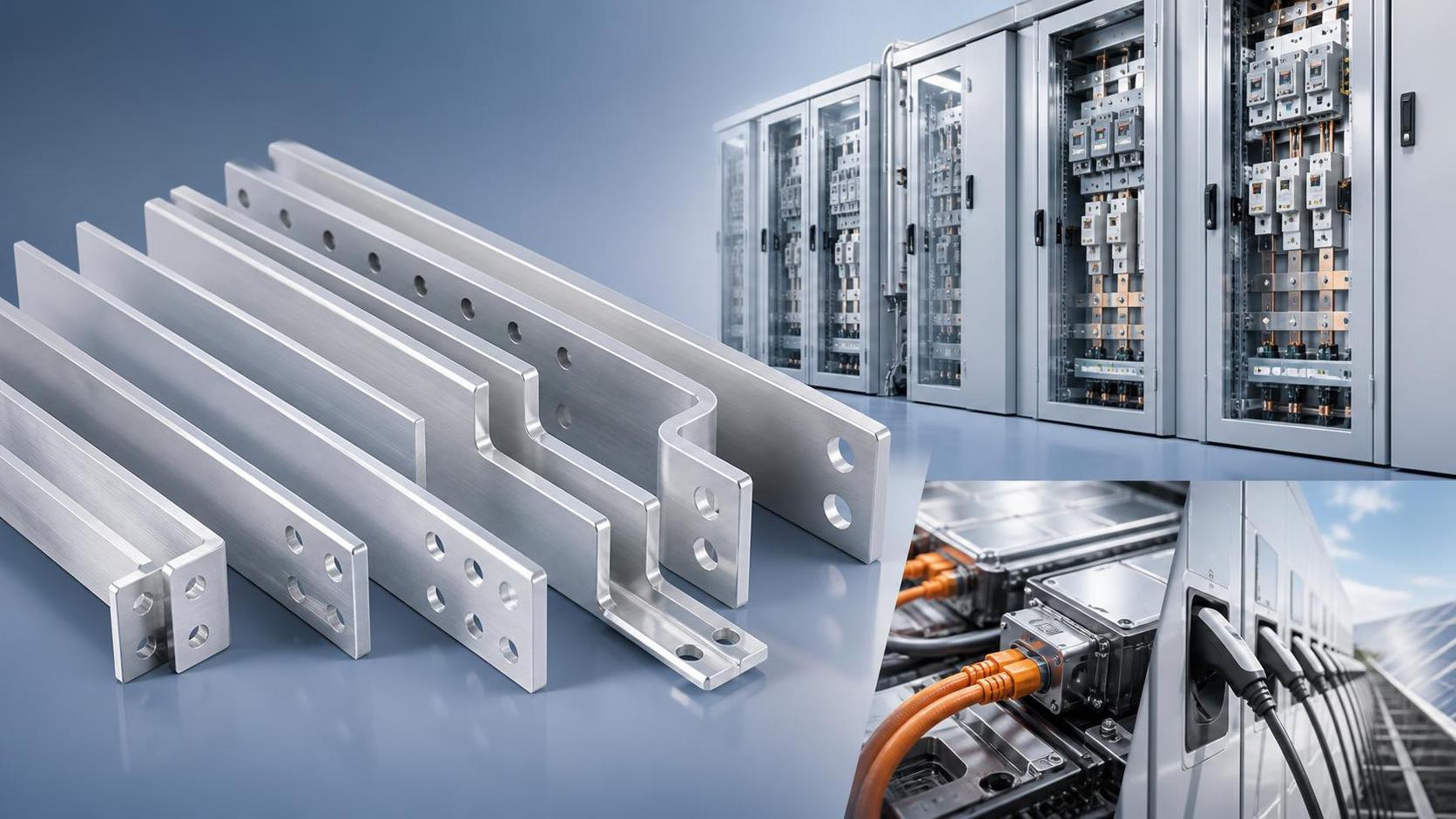
For procurement teams comparing conductive materials on landed cost rather than headline price alone, Chinese 6101 aluminum busbar has become a serious sourcing option. The appeal is not mysterious: it usually offers a workable balance of conductivity, weight, corrosion resistance and manufacturing economics, especially in projects where copper pricing puts pressure on budgets. In power distribution, renewable energy systems, industrial equipment and transport-related applications, that balance matters more than any single material property.
The real buying question is not whether 6101 is “good.” It is whether it delivers enough electrical and mechanical performance for the application while reducing total procurement cost without creating quality or compliance risk.
Why 6101 draws attention when cost pressure rises
Global buyers often turn to 6101 when copper alternatives are being evaluated but a standard structural alloy would not provide sufficient conductivity. That places 6101 in a useful middle ground. It is not chosen simply because it is aluminum; it is chosen because it was developed for electrical applications where conductivity matters, but weight, fabrication efficiency and corrosion behavior also affect project economics.
For purchasers, the cost advantage usually comes from several layers rather than one discount line:
- Lower raw material cost exposure compared with copper-based busbar solutions in many market periods
- Reduced weight, which can improve freight, handling and installation efficiency
- Mature Chinese extrusion and processing capacity, supporting competitive conversion costs
- Scalable production for standard and semi-custom dimensions
In other words, Chinese 6101 aluminum busbar appeals not only because of factory pricing, but because it can lower the total cost stack across sourcing, shipping and downstream assembly.
Why Chinese supply is competitive beyond labor cost
Some buyers still view China’s advantage mainly through low-cost manufacturing. That is outdated. In aluminum busbar procurement, the stronger advantage is industrial completeness: alloy sourcing, melting and casting, extrusion, machining, surface treatment and export logistics are all relatively mature. That integrated supply environment can shorten lead times and reduce coordination cost, particularly for buyers needing multiple dimensions or secondary processing.
This is also why many overseas buyers request deeper processing rather than raw profiles alone. Drilling, bending, cutting and customized packaging can remove work from the buyer’s side and reduce installation waste. For standard conductive applications where ultra-high conductivity is not the main constraint, some buyers may also review alternatives such as 6063 aluminum busbar, especially where machinability, corrosion resistance and practical fabrication convenience are prioritized over higher electrical performance targets.
What procurement teams should verify before chasing the lowest quote
The most common mistake in busbar sourcing is assuming alloy name alone defines performance. In practice, buyers need to confirm at least four things with the supplier:
- Actual chemical composition and temper condition
- Electrical conductivity requirements and test method
- Dimensional tolerances, straightness and surface quality
- Machining scope, including holes, bends, deburring and edge condition
A low quote may hide process inconsistency. If conductivity is acceptable but tolerance control is weak, assembly labor rises. If the profile is dimensionally correct but burrs or surface defects are common, rework costs appear later. Cost-efficient sourcing only works when the supplier can maintain repeatability, not just produce one acceptable sample.
Certification, standards and compliance are part of cost control
For international buyers, compliance risk can erase any apparent savings. Required standards depend on market and end use, so procurement teams should ask for applicable material specifications, test reports and quality records early in the sourcing cycle. If a project involves public infrastructure, energy systems or transport equipment, internal approval may also require traceability records, inspection documentation and sometimes third-party verification. Where a standard or certification claim cannot be independently confirmed, it should be treated as 【待核实】.
This is especially important when buyers compare multiple aluminum grades. A lower-cost option may be suitable for general conductive applications, power distribution cabinets, building infrastructure or electronic equipment, but not for every high-load electrical environment. For example, 6063-based solutions are often valued for balanced conductivity, light weight, corrosion resistance and easy machining, making them practical in many standard installations, but buyers should not substitute grades purely on price without checking electrical and mechanical fit.
How experienced buyers assess supplier reliability
Supplier evaluation should go beyond catalog range. The practical questions are operational:
- Can the supplier hold stable alloy quality across batches?
- Can they support custom lengths, punching or bending without excessive scrap?
- Do they have a documented inspection process for conductivity, dimensions and appearance?
- Can they package busbars to prevent transit damage and oxidation issues?
- How do they handle claim response and replacement if a batch fails incoming inspection?
Companies with integrated production and standardized process control tend to be better positioned here. In aluminum products, quality problems are often process problems: raw material inconsistency, extrusion instability, poor cutting accuracy or insufficient final inspection. Buyers who audit these points usually get better long-term value than those who negotiate only on unit price.
What makes 6101 a rational choice today
The market logic is straightforward. Buyers are under pressure to reduce material cost, preserve performance and secure dependable supply. Chinese 6101 aluminum busbar fits that requirement in many mainstream industrial scenarios because it offers a credible performance-to-cost ratio, supported by broad manufacturing capacity and customization flexibility.
That does not mean it is automatically the right choice for every project. It means it deserves serious consideration where conductivity requirements are meaningful, weight matters, and cost discipline is non-negotiable. The best procurement outcomes usually come from comparing not just alloy prices, but conversion capability, compliance readiness, logistics execution and the supplier’s ability to deliver consistent batches over time.
Navigation
Send Us A Message
Professional field of aluminum bars
24/7 before-sales and after-sales services
Comprehensive technical support