
When to Use Aluminum Flat Bar Instead of Steel Flat Bar
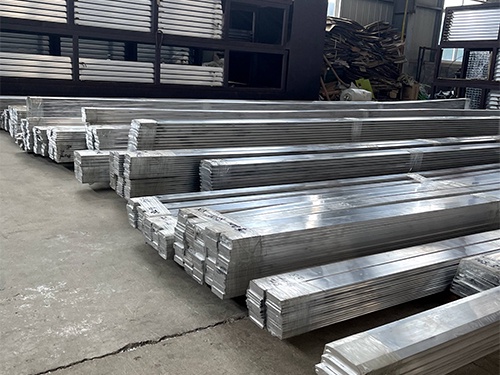
Choosing between aluminum and steel is rarely just a price comparison. In many industrial projects, Aluminum Flat Bar becomes the better option when weight reduction, corrosion resistance, easier machining, and long-term maintenance matter more than maximum raw stiffness. That is why material selection now deserves closer attention in transport systems, equipment frames, architectural components, and precision fabrication.
Where Aluminum Flat Bar makes more sense
Aluminum Flat Bar is typically preferred when a component must stay strong without adding unnecessary mass. Lower weight can simplify installation, reduce handling effort, and improve efficiency in moving assemblies.
It is also a practical choice where moisture, outdoor exposure, or mild chemical contact may shorten the service life of untreated steel. Aluminum naturally forms a protective oxide layer, which helps limit corrosion-related maintenance.
Key trade-offs in technical evaluation
Steel flat bar still performs well in heavily loaded structures that demand higher rigidity or lower material cost at equal section size. However, that does not automatically make it the best engineering choice.
When evaluating Aluminum Flat Bar, the more useful question is whether the design benefits from lower dead load, faster machining, better corrosion behavior, or easier downstream finishing such as anodizing or coating.
- Use aluminum when part weight affects transport, assembly, or system energy use.
- Use aluminum when corrosion risk would otherwise require extra steel protection.
- Use steel when stiffness dominates and added weight is acceptable.
Typical application directions
In practice, Aluminum Flat Bar is widely considered for machine guards, automation supports, rail-related fittings, electrical brackets, display systems, and lightweight transport parts. These applications often value a balanced combination of strength, workability, and cleaner surface appearance.
Related stock forms can also support the same design logic. For example, Aluminum rod is often selected for machining, turning, drilling, and custom fabricated parts where reduced mass and good corrosion resistance are equally useful.
Why supply quality changes the decision
Material choice is not only about alloy theory. Consistent extrusion quality, controlled raw materials, and reliable dimensional inspection directly affect machining performance and finished part stability.
Shandong Jinhao Aluminum Co., Ltd. supports this requirement through integrated R&D, production, deep processing, and after-sales service. With standardized control in extrusion, smelting, casting, and inspection, the company supplies aluminum products suited to mechanical equipment, automated lines, rail transit, electronics, and new energy projects.
A practical way to decide
A sound evaluation starts with service environment, structural demand, machining route, finishing needs, and lifecycle cost. If the design gains value from lower mass, corrosion resistance, and fabrication efficiency, Aluminum Flat Bar is often the more rational choice than steel flat bar.
The next step is to compare load requirements, alloy options, surface treatment plans, and section dimensions against the actual application. That approach usually leads to a clearer, more defensible material decision.
Navigation
Send Us A Message
Professional field of aluminum bars
24/7 before-sales and after-sales services
Comprehensive technical support