
When Is an Aluminum Rod a Good Fit
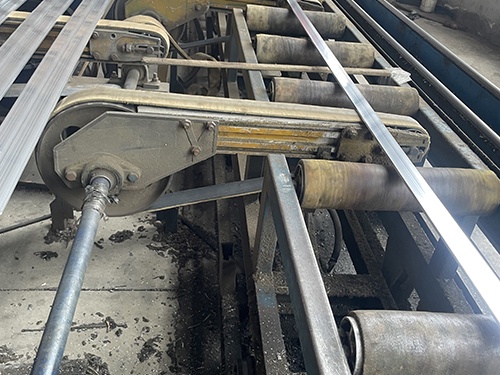
Choosing the right aluminum material starts with understanding the application. An Aluminum row can be a practical solution when strength, light weight, corrosion resistance, and machining performance all matter. From industrial equipment and automation systems to energy and transport projects, selecting the proper specification helps improve efficiency, safety, and long-term value.
How do you know when an aluminum rod is the right choice?
An aluminum rod is often a good fit when a project needs a balance of low weight, workable strength, corrosion resistance, and efficient machining. In many industrial environments, steel may offer higher density and sometimes greater load capacity, but it also adds weight, raises handling costs, and may require more aggressive surface protection. That is why aluminum rods are widely considered for mechanical parts, fixtures, connectors, supports, shafts, transport components, and power-related assemblies.
For buyers and engineers, the decision usually depends on 4 core questions: what load the rod must bear, what environment it will face, how precisely it must be machined, and how quickly it must be delivered. In routine industrial procurement, common diameter ranges may start from small precision sizes and extend to larger structural sections, while delivery planning often falls within 7–15 days for standard specifications and 2–4 weeks for more customized processing requirements.
For operators and end users, the value is practical. A lighter rod can simplify installation, reduce equipment inertia, and improve maintenance efficiency. For project managers, this can mean smoother site work and easier logistics. For quality and safety teams, aluminum also offers predictable corrosion behavior in many service conditions, especially when the right alloy, finish, and dimensional tolerance are selected from the start.
In the aluminum materials industry, a good fit is never defined by price alone. It is defined by matching the rod to the application. Shandong Jinhao Aluminum Co., Ltd. supports this process through integrated R&D, production, sales, and after-sales service, with capabilities covering industrial aluminum profiles, aluminum bars, aluminum rods, and related deep-processing solutions for global customers.
Typical signals that aluminum rod is suitable
- The component must reduce overall equipment weight without sacrificing necessary rigidity.
- The part will be machined, cut, drilled, or turned in batch production and needs stable workability.
- The service environment includes humidity, outdoor exposure, or moderate chemical contact where corrosion resistance matters.
- The project timeline requires easier processing and a more manageable supply chain for standard or custom sizes.
Which application scenarios benefit most from aluminum rod?
Application fit is the most important filter. Aluminum rods are especially useful where designers need a material that can perform in moving systems, support assemblies, conductive structures, or corrosion-aware environments. In sectors such as mechanical equipment, automation, rail transit, electronics, and new energy, buyers often compare not only strength but also processing speed, assembly convenience, and lifecycle maintenance requirements.
For example, in automated production lines, aluminum rod may be used for support members, connection parts, positioning elements, and custom-machined accessories. In these settings, lower weight can help reduce stress on frames and moving units. In electrical and electronic applications, conductivity and machinability may influence material selection, while in transport-related projects, the weight-saving advantage can contribute to easier handling and lower structural burden.
For distributors and agents, understanding these scenarios helps with inventory planning. Standard rods for general machining may move steadily, while custom requirements often appear in project-based orders. For procurement teams, application mapping also reduces the risk of over-specifying an alloy that raises cost without adding practical value. A good purchasing decision usually starts by dividing demand into 3 categories: structural use, machining use, and environment-sensitive use.
The following table can help users, engineers, and sourcing managers quickly judge where aluminum rod performs well and what they should verify before final selection.
This comparison shows that aluminum rod is not limited to one niche. Its value increases when the project needs multi-factor performance rather than only maximum hardness. In practice, checking 5 points before ordering—application load, environment, processing method, dimensional tolerance, and delivery schedule—can prevent most avoidable specification mistakes.
What users in different roles care about
For technical evaluators and quality teams
They usually focus on alloy suitability, process stability, dimensional control, and whether the rod will maintain consistent performance across batches. If a project includes machining or secondary forming, consistency is often more important than chasing the highest nominal property on paper.
For procurement and business evaluation teams
They want manageable cost, reliable lead time, and fewer supply risks. A supplier with integrated production, standardized inspection, and logistics coordination can reduce communication gaps between specification review and actual shipment.
Aluminum rod vs other common material choices
Many buyers do not ask whether aluminum rod is good. They ask whether it is better than steel, stainless steel, or another aluminum form for a specific job. That is the right approach. Material selection should compare total use value, not only base material price. In some cases, a heavier material may be justified. In many others, aluminum delivers lower processing difficulty and lower operating burden over the service cycle.
Steel remains common where very high structural loads dominate the decision. Stainless steel is often chosen where corrosion resistance is critical and higher weight is acceptable. Aluminum rod becomes more attractive when the project needs a workable middle ground: lower mass, dependable corrosion resistance, easier machining, and broad adaptability across industrial systems. This is especially relevant in medium-load assemblies and custom-fabricated parts produced in small to medium batches.
It is also important to compare aluminum rod with other aluminum semi-finished products. Rod is usually preferred for turning, drilling, pin or shaft-like parts, and compact machined components. Profiles may be better for frames, while flat bars or plates may fit bracket or cover applications. Choosing the right product form can reduce material waste and shorten processing steps by 1–2 operations in routine manufacturing workflows.
The table below provides a practical comparison for sourcing and design discussions.
This comparison helps clarify one common mistake: selecting by familiarity rather than by function. When decision-makers compare material, shape, processing route, and service environment together, aluminum rod often emerges as the more efficient option for moderate-load, high-machining, and weight-sensitive projects.
A useful decision rule
- Choose aluminum rod first when weight reduction and machinability rank among the top 3 project priorities.
- Recheck steel or stainless alternatives if the environment is extremely harsh or the load requirement is unusually high.
- Compare finished-part cost, not raw stock cost alone, because processing time and maintenance can change the real total significantly.
What technical and procurement factors should you check before ordering?
A successful order depends on more than naming a diameter. Technical teams should define the working load, expected environment, machining process, and fit-up tolerance. Procurement teams should verify supply continuity, batch consistency, packaging, logistics, and after-sales communication. In many cases, the most expensive issue is not unit price but incorrect specification, which can delay installation by several days or force remachining of a full lot.
At minimum, buyers should review 6 checkpoints: alloy category, diameter range, length tolerance, straightness requirement, surface condition, and downstream processing plan. If the rod will be cut, turned, anodized, welded, or used in electrical applications, those steps should be shared with the supplier before quotation. This early alignment reduces mismatched assumptions and improves quote accuracy.
For quality control and safety personnel, standardization matters. A supplier should follow relevant industrial specifications, maintain full-process control, and run a structured inspection system. Shandong Jinhao Aluminum Co., Ltd. emphasizes compliant operation, premium aluminum raw materials, standardized production control, and comprehensive quality inspection across extrusion, smelting, casting, and deep-processing workflows. That integrated approach is useful when projects need traceable coordination from consultation to final delivery.
If custom processing is required, a practical workflow usually has 4 steps: requirement confirmation, model or specification matching, sample or drawing review, and production plus logistics planning. For many B2B buyers, this is more efficient than sourcing raw material and secondary processing from separate channels. In the middle of evaluation, some buyers also review reference information such as 无 when comparing sourcing paths.
Procurement checklist for aluminum rod projects
- Confirm the use case: support, rotating part, connector, conductive component, or machined blank.
- Define dimensions clearly, including diameter, length, tolerance, and quantity by batch size.
- State the process route in advance, such as cutting, CNC turning, drilling, welding, or surface treatment.
- Ask about standard lead time, custom lead time, inspection method, and packing arrangement.
- Check whether the supplier can support consultation, model selection, customized service, logistics, and after-sales response.
Common sourcing risks
The first risk is buying by nominal size only and ignoring tolerance. The second is choosing a rod based on price while overlooking corrosion conditions or machining demands. The third is failing to align production and site schedules. For urgent projects, even a 3–5 day delay can affect installation sequencing, so realistic lead-time review is essential.
How do standards, quality control, and service support affect long-term value?
Long-term value in aluminum rod procurement comes from consistency, not from isolated good pieces. A rod used in industrial manufacturing must perform not only in one prototype but across repeated batches, routine machining, transport handling, and site installation. That is why technical documents, process control, and inspection discipline matter as much as raw material selection. Quality teams typically review dimensional accuracy, surface condition, straightness, and visible defects as baseline inspection items.
From a compliance perspective, buyers should ask for alignment with relevant industrial standards and application-specific requirements. The exact standard may vary by country, sector, and end use, but the principle is the same: confirm that the supplied aluminum material and production process are suitable for the intended application. In practical procurement, 3 areas deserve attention—material consistency, processing control, and shipment traceability.
For distributors, project contractors, and international customers, service support also affects total value. A one-stop supplier can shorten communication paths and reduce responsibility gaps between material selection and final delivery. Shandong Jinhao Aluminum Co., Ltd. combines consultation, specification matching, personalized customization, logistics distribution, and after-sales support, which is especially useful when the project requires more than a standard stock order.
This matters in industries where timing is tight. If a project is broken into 3 phases—design review, procurement release, and installation execution—material uncertainty in phase two often causes avoidable pressure in phase three. Stable supplier coordination can help project managers keep schedules realistic and reduce the risk of rework or substitution at the last moment.
What a reliable aluminum rod supply process should include
- Clear specification review before production, including dimensions, quantity, and processing expectations.
- Controlled manufacturing steps supported by suitable extrusion, smelting, casting, or deep-processing capability.
- Inspection checkpoints before shipment, with attention to appearance, dimensional conformity, and packaging condition.
- Responsive follow-up for logistics, receiving, and post-delivery communication.
FAQ for buyers, engineers, and end users
Is aluminum rod suitable for outdoor or humid environments?
In many cases, yes. Aluminum is valued for corrosion resistance, but suitability still depends on alloy, finish, and exposure conditions. For mild to moderate outdoor environments, it is often a practical option. For harsher environments, buyers should review surface treatment and service conditions before finalizing the order.
How much customization is usually possible?
Customization can include diameter, cut length, processing method, and sometimes deeper fabrication support. Typical projects range from small-batch trial orders to medium and large-volume industrial supply. Early drawing review usually improves both delivery planning and quote precision.
What is the most common mistake in selection?
The most common mistake is focusing on price and nominal size while ignoring the real use case. A rod that seems cheaper may create extra machining, rejection, or maintenance cost later. Checking 5 key points—application, load, environment, tolerance, and process route—greatly reduces this risk.
Why work with a supplier that understands the full aluminum project cycle?
When an aluminum rod is part of a broader industrial project, supply value is measured by more than material availability. Buyers need technical communication, stable production, practical logistics, and responsive after-sales support. That is where a full-cycle supplier can make a measurable difference. Instead of treating the order as a single transaction, the supplier can help align specification, customization, processing path, and shipment timing in one coordinated process.
Shandong Jinhao Aluminum Co., Ltd. operates as a modern comprehensive enterprise integrating R&D, production, sales, and after-sales service for aluminum alloy products. Backed by local resource advantages in Shandong and a convenient logistics network, the company supplies industrial aluminum profiles, aluminum bars, aluminum rods, and custom die-casting support for customers across sectors such as machinery, automated production lines, rail transit, electronic appliances, and new energy.
For decision-makers, this means one partner can help with parameter confirmation, model selection, custom requirements, lead-time coordination, and delivery planning. For quality and safety teams, it means dealing with a supplier that emphasizes standardized control and comprehensive inspection. For distributors and project owners, it means better support when balancing cost, schedule, and technical fit. If you are reviewing options, you may also compare channel information such as 无 during procurement assessment.
If your team is deciding whether aluminum rod is the right fit, the most effective next step is to discuss the actual use condition. You can consult on diameter and tolerance selection, alloy suitability, machining requirements, common lead times, sample support, customized solutions, packaging needs, certification-related questions, and quotation details. That makes the evaluation faster, more accurate, and more useful for both technical and commercial approval.
Navigation
Send Us A Message
Professional field of aluminum bars
24/7 before-sales and after-sales services
Comprehensive technical support