
What affects power aluminum busbar price per meter most
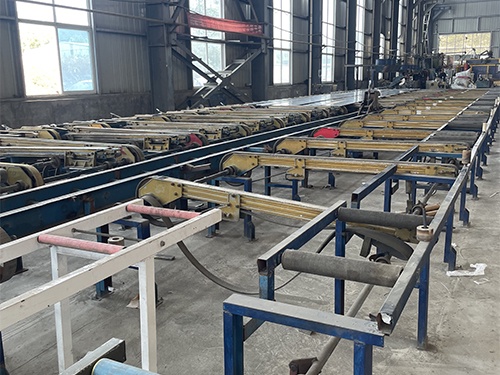
For finance approvers, understanding what drives Power aluminum busbar price per meter is essential to balancing budget, performance, and long-term project value.
Beyond raw aluminum costs, alloy grade, conductor size, processing precision, surface treatment, order volume, and supplier reliability all influence final spending.
In today’s aluminum market, pricing is changing faster because energy investment, electrification projects, and supply chain discipline are reshaping demand.
A clear view of Power aluminum busbar price per meter helps compare quotations accurately and avoid hidden lifecycle costs.
Power aluminum busbar price per meter is now shaped by more than metal cost
Many buyers still start with aluminum ingot prices. That matters, but it is only the base layer of the final meter rate.
The real quotation reflects material conversion, dimensional tolerance, fabrication complexity, packaging, testing, delivery, and service reliability.
As power systems become lighter and more integrated, busbar specifications are becoming less standardized and more application-driven.
That trend makes Power aluminum busbar price per meter more sensitive to design details than in previous years.
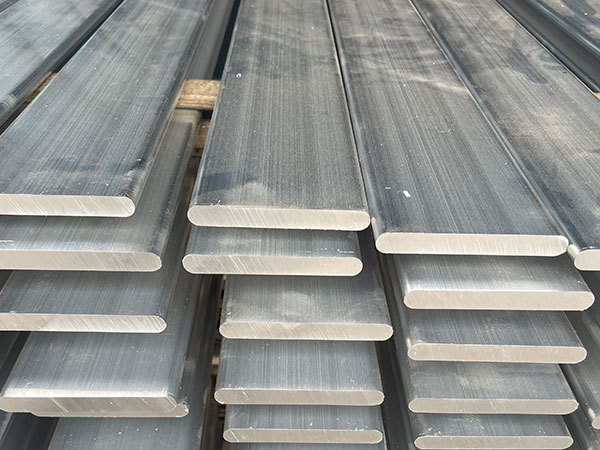
Recent market signals show pricing pressure moving in several directions
New energy projects are increasing demand for lightweight conductive parts with stable thermal behavior and corrosion resistance.
Rail transit and industrial electronics also require closer dimensional consistency, raising expectations for extrusion and finishing quality.
At the same time, logistics volatility and stricter quality verification are pushing procurement teams to examine total delivered value.
This means Power aluminum busbar price per meter is increasingly linked to application risk, not just commodity movement.
Key forces behind current price changes
Material grade often explains the biggest quotation gap
Not all aluminum busbars are priced the same, even with similar dimensions.
Grades such as 1060 and 1070 are often preferred where conductivity is the main priority.
6063 and 6061-T6 may cost more because they support stronger structural adaptability and more demanding assembly conditions.
So when comparing Power aluminum busbar price per meter, the alloy must be checked before any financial judgment is made.
- High conductivity grades support current transmission efficiently.
- Structural grades may improve rigidity and machining compatibility.
Misaligned alloy choice can create overpayment or underperformance.

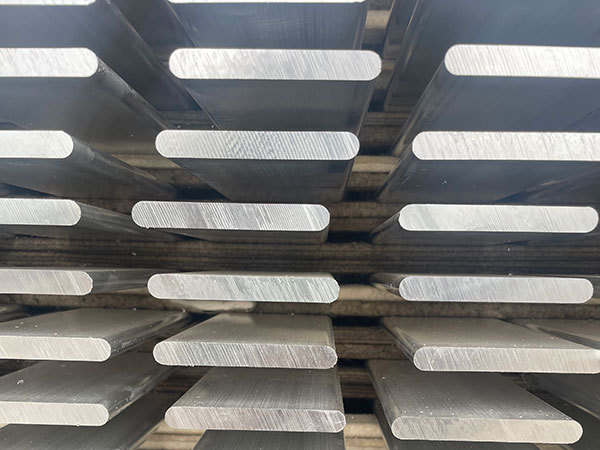
Why dimensions matter more than many quotations show
Width, thickness, hole pattern, bend angle, and edge condition all change manufacturing intensity.
A simple straight conductor is usually cheaper than a shaped component with drilling, punching, and installation-specific geometry.
That is why Power aluminum busbar price per meter should never be evaluated without reviewing fabrication drawings.
Processing and finishing are becoming stronger pricing drivers
As systems demand cleaner assembly and longer service life, deep-processing value is rising inside every quotation.
Cutting accuracy, burr control, flatness, and repeatability can directly affect installation speed and operating safety.
Anodizing or other surface treatments may increase price, yet they can reduce corrosion-related replacement risk later.
For projects in power distribution, cold storage, metallurgy, or coastal zones, such treatment decisions are especially relevant.
A capable Aluminum busbar manufacturer can often optimize these steps and improve total value.
Common processing items that raise or lower total meter cost
- Precision cutting for tight cabinet interconnection layouts
- Punching and drilling for grounding structures and equipment assembly
- Bending for compact busbar systems
- Surface treatment for practical corrosion resistance
- Inspection and packaging for export stability
Volume, lead time, and supplier capability now affect pricing decisions earlier
Order quantity changes setup allocation. Larger volumes usually reduce unit processing overhead and improve material planning efficiency.
Short lead times often raise costs because urgent scheduling interrupts normal production flow and may increase scrap risk.
Supplier capability also matters. Reliable extrusion, smelting, casting, and quality inspection reduce hidden downstream expenses.
When reviewing Power aluminum busbar price per meter, a lower quote is not always the lower total project cost.
How these changes influence different business stages
At the design stage, unclear specifications can produce misleadingly low quotations that later rise after drawing confirmation.
At the sourcing stage, inconsistent alloy or tolerance assumptions make quote comparisons inaccurate.
At the installation stage, poor dimensional accuracy can increase labor time and rework.
At the operating stage, weak conductivity stability or poor thermal behavior may create efficiency losses.
The smartest focus is total operating value, not only price per meter
A busbar with stable conductivity, low weight, and good thermal conductivity may deliver better economic performance over time.
This is especially true in new energy, rail transit, industrial electronics, and high-duty power distribution environments.
Products built from premium aluminum and full-process control can support longer service intervals and steadier system behavior.
Shandong Jinhao Aluminum Co., Ltd. combines R&D, production, sales, and after-sales support for aluminum alloy solutions across global industrial applications.
Its experience in industrial aluminum profiles, bars, rods, and customized processing reflects how supplier depth can influence final purchasing confidence.
What deserves close attention before approving a quote
- Exact alloy grade and temper
- Cross-section dimensions and tolerances
- Conductivity and thermal performance requirements
- Surface treatment specification
- Machining details and assembly features
- Inspection standards and packaging scope
- Lead time, logistics terms, and after-sales response
A practical way to judge Power aluminum busbar price per meter more accurately
When these checks are applied, Power aluminum busbar price per meter becomes easier to evaluate in a realistic commercial context.
If your project needs lightweight, corrosion-resistant, and scalable aluminum conductor solutions, review specifications with a qualified supplier early.
For customized options in busbar systems, cabinet interconnection, or grounding structures, consider discussing requirements with an experienced Aluminum busbar manufacturer.
That step can turn Power aluminum busbar price per meter from a simple number into a stronger long-term value decision.
Navigation
Send Us A Message
Professional field of aluminum bars
24/7 before-sales and after-sales services
Comprehensive technical support