
What Standards and Test Items Matter When Buying 1060 Coiled Aluminum Busbar?
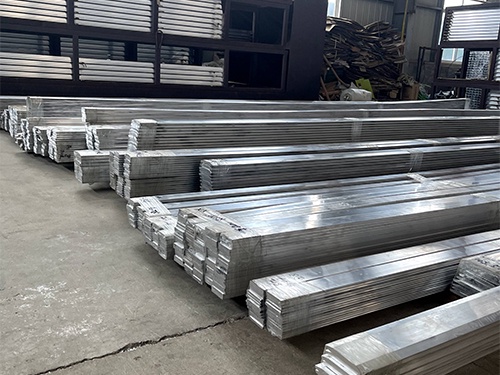
Buying 1060 coiled aluminum busbar is rarely a simple price decision. Conductivity, coil stability, surface condition, and compliance all affect whether the material performs smoothly in power distribution, electrical equipment, and automated production systems.
That is why the most useful evaluation starts with standards and test items. A qualified 1060 coiled aluminum busbar should match the required chemical purity, dimensional tolerance, mechanical behavior, and electrical performance, not just look acceptable on delivery.
Why standards matter in aluminum busbar sourcing
1060 aluminum is valued for high aluminum content and strong electrical conductivity. In coiled busbar form, it is often selected for applications that also require bending, stamping, slitting, or further insulation processing.
In actual business use, standards reduce uncertainty. They help confirm that one batch will behave like the next batch, which matters when installation schedules, downstream forming, and electrical safety all depend on consistency.
For suppliers with full-process control, standard compliance is also a sign of production discipline. This is one reason companies such as Shandong Jinhao Aluminum emphasize standardized inspection, stable raw materials, and traceable processing across aluminum alloy products.
The core specifications to check first
Before reviewing test reports, it helps to confirm the specification framework behind the 1060 coiled aluminum busbar order.
- Alloy grade and temper, because softness or hardness influences forming and installation.
- Thickness and width tolerance, which affect fit, contact quality, and automated processing.
- Coil inner diameter, outer diameter, and winding neatness, especially for continuous production lines.
- Surface finish requirements, including cleanliness, scratches, oil marks, burrs, and edge condition.
- Applicable standard references, such as ASTM, GB, EN, or customer-specific technical agreements.
Simple paperwork checks often prevent later disputes. If the standard is vague, the acceptance result usually becomes vague as well.
Test items that deserve close attention
Not every project needs the same inspection depth, but several test items are widely relevant when evaluating 1060 coiled aluminum busbar suppliers.
Chemical composition
The alloy should meet the composition range for 1060 aluminum. High purity supports conductivity, while excessive impurity levels can reduce performance and consistency.
Electrical conductivity
This is one of the most important indicators. Conductivity testing shows whether the busbar can deliver the expected current-carrying performance with acceptable energy loss.
Mechanical properties
Tensile strength and elongation matter when the coil will be bent, punched, or laminated. Material that is too hard may crack. Material that is too soft may deform during assembly.
Dimensional inspection
Thickness variation, width accuracy, flatness after uncoiling, and edge quality directly influence downstream yield. These checks are especially important for automated cutting and punching lines.
Surface and internal quality
A visual inspection should confirm a clean surface without serious dents, oxidation, wave marks, or roll defects. Where application risk is higher, internal defects may also need verification.
How to read quality beyond the certificate
A test report is necessary, but it is not the whole story. It is also worth asking how the coil is produced, how often samples are tested, and whether batch traceability is available.
For aluminum products used in fabrication and industrial systems, process control often decides real-world stability. The same principle is visible in products like Aluminum square tube, where surface quality, dimensional consistency, and ease of processing strongly affect downstream results.
That comparison matters because it shifts attention from nominal grade alone to production reliability. In other words, a good 1060 coiled aluminum busbar should be easy to process, predictable in use, and consistent across repeat orders.
Practical evaluation points before placing an order
- Match the temper to the required forming process, not only to the drawing specification.
- Request sample testing if the busbar will be bent tightly or used in high-current assemblies.
- Confirm packaging, corrosion protection, and transport conditions for coil delivery.
- Check whether the supplier can maintain the same standard in future volume orders.
- Review support capability, including customization, logistics response, and after-sales follow-up.
These points are especially relevant when sourcing from a full-service aluminum enterprise. Integrated capabilities in production, inspection, and delivery can reduce commercial risk as much as technical risk.
A better next step for comparison
A sound comparison sheet for 1060 coiled aluminum busbar should include alloy standard, conductivity target, dimensional tolerance, mechanical test values, surface criteria, and traceability terms.
Once those points are defined, quotations become easier to compare on real value rather than headline price alone. That usually leads to a more dependable supply decision and fewer surprises after the order is placed.
Navigation
Send Us A Message
Professional field of aluminum bars
24/7 before-sales and after-sales services
Comprehensive technical support