
What Is 6101 Earthing Flat Aluminum and Why Do Grounding Engineers Specify It?
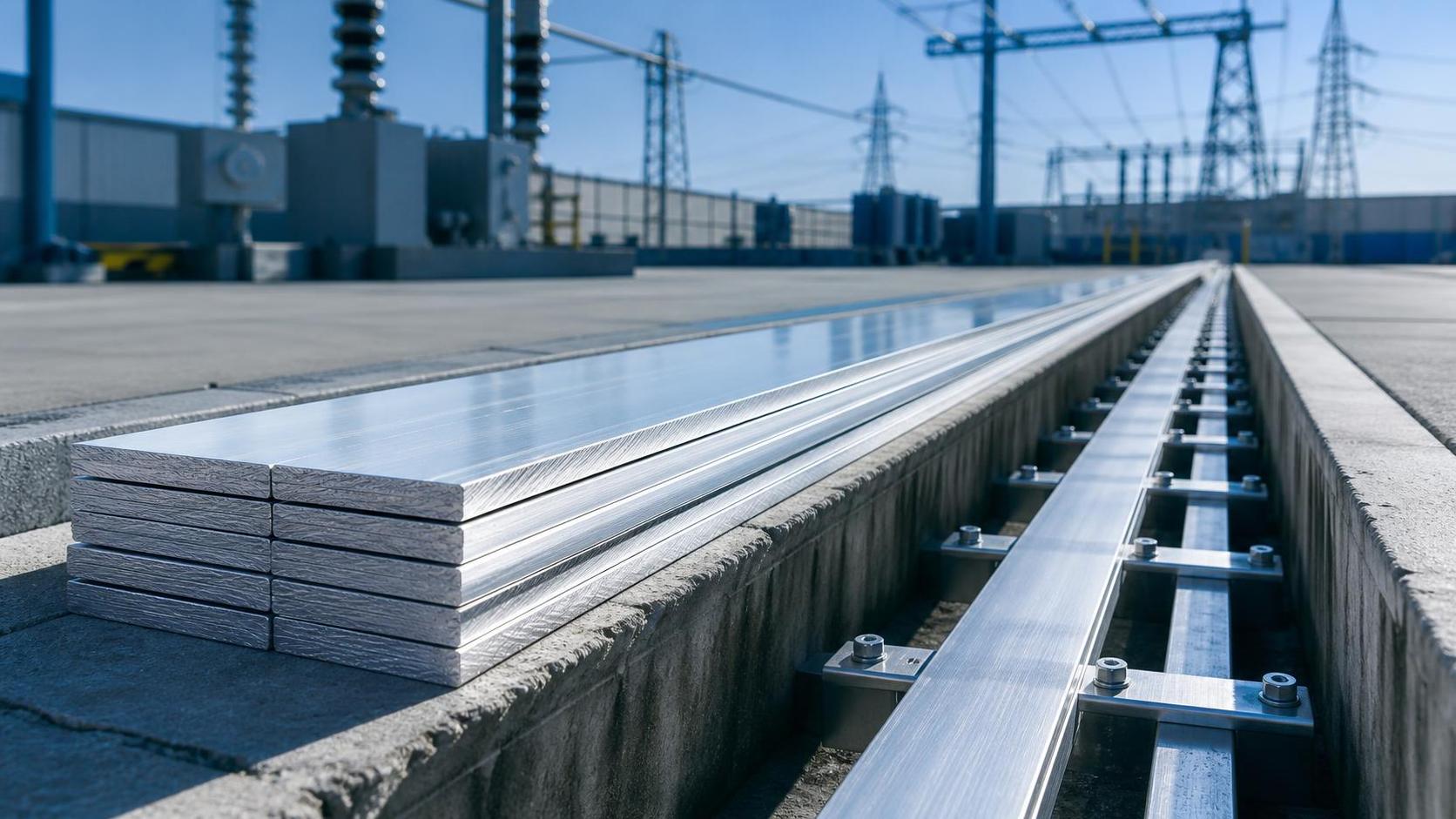
If you are comparing grounding materials, the key question is usually simple: will it carry fault current reliably and keep doing so after years of outdoor service? That is exactly why 6101 earthing flat aluminum gets specified so often. It is an aluminum alloy flat conductor used in grounding and earthing systems where engineers want a practical mix of electrical conductivity, corrosion resistance, manageable weight, and easier installation than heavier alternatives.
In real projects, people sometimes assume all aluminum flats are basically the same. They are not. For earthing work, alloy choice matters because the conductor is expected to perform under fault conditions, survive in exposed environments, and stay consistent across long installation runs. 6101 is commonly selected because it was developed for electrical applications, not just structural use.
What 6101 earthing flat aluminum actually is
6101 earthing flat aluminum is a flat-shaped aluminum alloy conductor, usually supplied for grounding grids, substations, utility installations, industrial plants, and similar electrical infrastructure. The “6101” part refers to the alloy grade. In practice, this grade is known in the market for offering better electrical conductivity than many general-purpose aluminum alloys while still keeping the usual advantages aluminum is valued for: low weight, good corrosion behavior, and workable mechanical strength.
A short answer is this: 6101 earthing flat aluminum is used when the grounding system needs to be conductive, durable, and easier to handle over long distances without paying for unnecessary material performance that the job does not need.
Why grounding engineers specify it
The first reason is conductivity. In an earthing system, the conductor is there to provide a low-resistance path for fault current and help stabilize system potential. Engineers do not choose material only by price per kilogram. They look at the total electrical function. 6101 is attractive because it is widely recognized as an electrical-grade aluminum alloy, so it fits the purpose better than many alloys chosen mainly for appearance or general fabrication.
The second reason is weight. On paper that may sound like a convenience issue, but on site it becomes a labor, transport, and installation issue. Long grounding runs, trench layouts, and grid assemblies are easier to move and position when the conductor is lighter. That can reduce handling difficulty, especially in utility yards or industrial expansions.
Then there is corrosion resistance. In many environments, aluminum forms a protective oxide layer that helps it perform well over time. That does not mean it is the right answer for every soil, every connection method, or every chemical exposure. It does mean that in many standard outdoor and industrial applications, 6101 can be a durable choice when the system is properly designed.
Engineers also like predictability. A grounding material that is available in consistent dimensions, produced under controlled manufacturing conditions, and checked against relevant industrial requirements is easier to specify with confidence. That is one reason manufacturers with stable process control matter. Companies such as Shandong Jinhao Aluminum, which focus on aluminum alloy production, extrusion, deep processing, and full-process quality inspection, are typically better positioned to support projects that need material consistency rather than just low initial cost.
Where it works well, and where people should slow down
6101 earthing flat aluminum is a sensible option for power and utility grounding, industrial earthing networks, and large installations where conductor length, installation efficiency, and corrosion behavior all matter.
But there are a few common mistakes.
One is treating alloy selection as the whole decision. Connection quality is just as important. A good conductor can still become a weak grounding system if joints, terminations, or bimetallic interfaces are poorly handled.
Another is ignoring the service environment. Highly aggressive chemical exposure, unusual soil conditions, or mixed-metal contact may require a closer review. In those cases, the correct answer should be verified against project standards and actual environmental data, not assumed from a product name alone.
People also confuse earthing flats with general conductive bars used inside equipment. For example, if the application is inside power distribution cabinets, electronic assemblies, or standard conductive components rather than outdoor grounding grids, a product like 6063 aluminum busbar may be more relevant. It offers good conductivity, light weight, corrosion resistance, and easier machining for cutting, drilling, bending, and assembly, which suits many routine power distribution and building infrastructure uses. That does not replace 6101 earthing flat aluminum in grounding design; it simply shows that material choice should follow the application, not the other way around.
What to check before choosing
If you are still in the research stage, focus on a few practical questions:
- Is the material intended for electrical service rather than only structural use?
- What environment will it see: open air, buried installation, industrial atmosphere, or chemically aggressive exposure?
- How will joints and transitions to other metals be made?
- Do the required dimensions, conductivity expectations, and compliance needs match the project specification?
That is usually where better decisions come from. Not from chasing the lowest price, and not from picking the strongest-sounding alloy number.
So, why do grounding engineers specify 6101 earthing flat aluminum? Because in many real earthing systems, it gives a useful balance: electrical-grade performance, lower handling weight, solid durability in many environments, and practical project efficiency. If the grounding design, connection method, and installation environment are all considered together, 6101 earthing flat aluminum remains a very reasonable material to specify.
Navigation
Send Us A Message
Professional field of aluminum bars
24/7 before-sales and after-sales services
Comprehensive technical support