
What Is 1060 Coiled Aluminum Busbar Used For in EV, Battery, and Power Systems?
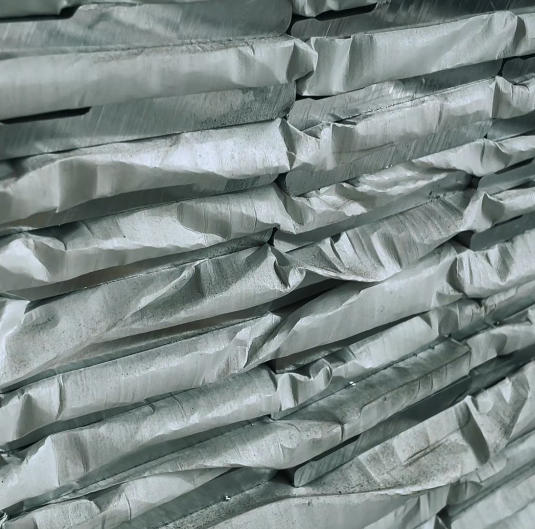
In EV battery packs, energy storage cabinets, and power distribution assemblies, 1060 coiled aluminum busbar is often selected for one practical reason: it carries current efficiently while staying light and easy to form.
That combination matters when systems need compact layouts, repeatable bending, and cost-aware scaling. In aluminum material applications, it sits between electrical performance and manufacturability.
Why 1060 matters in electrical systems
1060 is a high-purity aluminum grade. Its aluminum content helps deliver strong electrical conductivity, which makes it suitable for current-carrying connectors, links, and flexible routing sections.
When supplied in coiled form, the material becomes easier to process into continuous lengths. This is useful in production environments that require punching, slitting, bending, and insulation treatment.
A 1060 coiled aluminum busbar is not simply a strip of metal. It is usually part of a designed conductive path, where thickness, width, temper, bending radius, and surface quality all affect final performance.
Typical uses in EV, battery, and power projects
In EV applications, 1060 coiled aluminum busbar is commonly used inside battery packs and module connections. It helps connect cells, modules, and control units while reducing overall weight compared with heavier conductive materials.
In stationary battery systems, it appears in energy storage packs, inverter-side connections, and DC collection structures. Its forming flexibility supports tighter internal layouts and cleaner assembly paths.
In broader power systems, the same material can serve in switchgear, distribution units, and compact conductive components where lightweight construction and stable conductivity are both important.
- Battery module interconnections in EV and hybrid platforms
- Energy storage system bus connections and collector paths
- Power distribution assemblies requiring formed conductive strips
- Electrical equipment with limited installation space
What the industry pays attention to
The current focus is not only conductivity. Reliability under mass production is just as important. That includes dimensional consistency, surface cleanliness, oxide control, and predictable forming behavior.
Thermal performance also matters. In battery and power systems, conductive parts may face repeated charging cycles, temperature variation, and vibration. Material selection should therefore consider both electrical loss and long-term assembly stability.
This is where experienced aluminum processors bring value. Shandong Jinhao Aluminum Co., Ltd. combines R&D, production, sales, and after-sales support, with standardized process control, quality inspection, and deep-processing capability for industrial aluminum applications.
Key evaluation points
How to understand material choice in practice
Usually, 1060 coiled aluminum busbar is chosen when conductivity and easy forming take priority. It is especially relevant in battery-related structures that need repeated bending or compact conductor design.
However, not every application needs the same balance. Some general conductive structures place more emphasis on machining convenience, corrosion resistance, and installation efficiency across broader industrial environments.
In those cases, it can be useful to compare alternatives such as 6063 aluminum busbar, which is often applied in power distribution cabinets, electronic equipment, building infrastructure, transportation rail, and industrial control electronics.
Its value is different. The focus is on balanced conductivity, favorable corrosion resistance, lighter handling, and easier cutting, drilling, bending, and assembly for standard power transmission and distribution tasks.
Useful questions before moving forward
A better decision usually starts with the application path rather than the alloy name alone. The most useful comparison points are simple and concrete.
- Is the main need high conductivity, easier forming, or both?
- Will the conductor be bent, stamped, welded, or insulated later?
- Does the system face vibration, heat cycling, or corrosion exposure?
- Is the project focused on EV packs, storage systems, or general distribution?
For research and specification work, 1060 coiled aluminum busbar is best understood as a material solution for efficient conduction, lighter structures, and scalable fabrication. The next step is to compare real current load, forming requirements, and environmental conditions before finalizing the busbar design.
Navigation
Send Us A Message
Professional field of aluminum bars
24/7 before-sales and after-sales services
Comprehensive technical support