
US Tightens Aluminum Import Traceability Rules
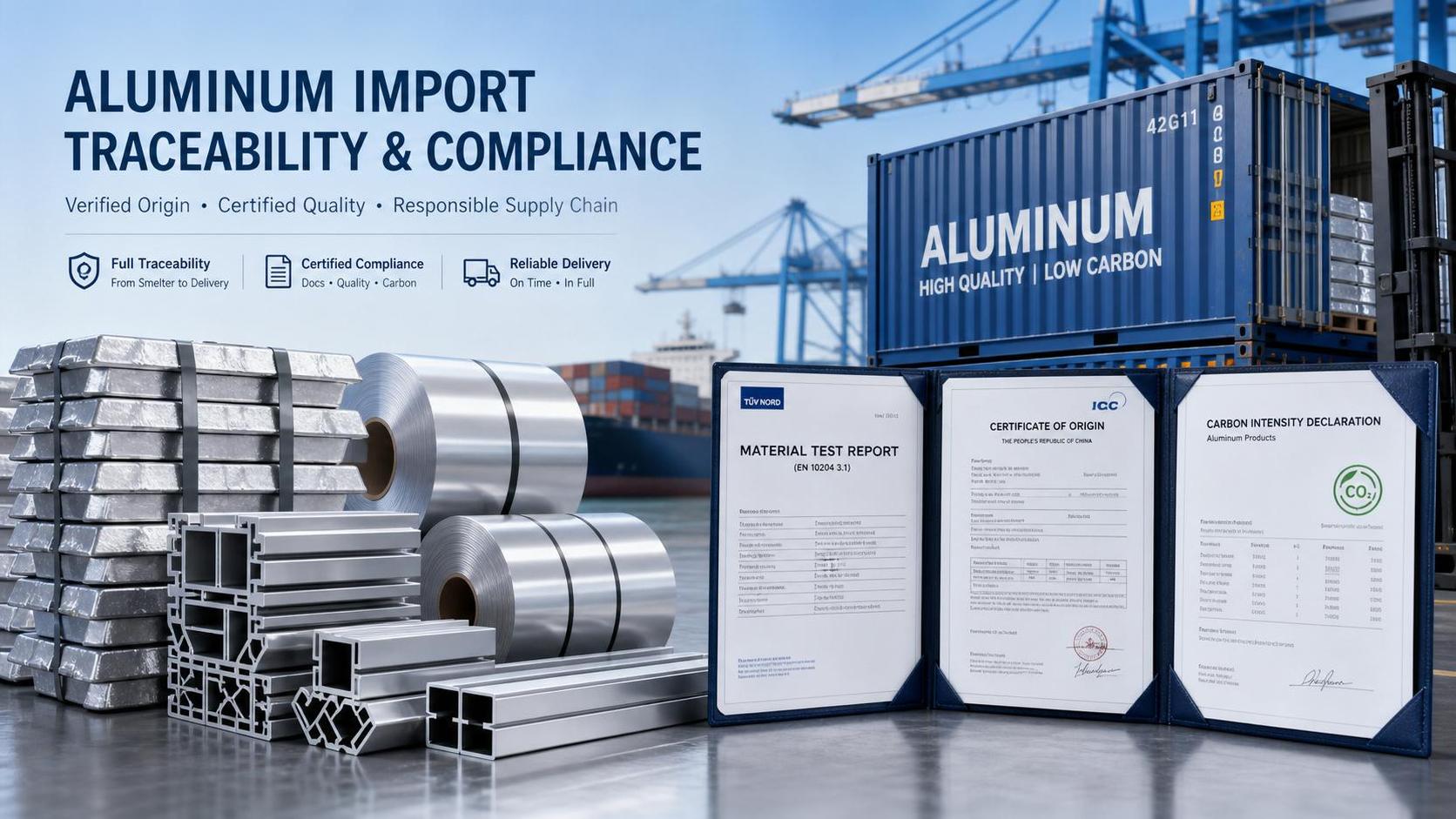
On June 29, 2026, U.S. Customs and Border Protection (CBP) released a new advisory that raises documentation requirements for aluminum imports under HTS codes 7601–7616, with the new requirement taking effect on July 15, 2026. The change is not only about customs paperwork; it also brings carbon-intensity information into the import process. For overseas buyers importing aluminum from China, this directly affects supplier onboarding, sourcing documentation, shipment preparation, and delivery planning, making it a practical compliance issue for companies working across procurement and trade flows.
What the new advisory requires
According to the information provided, CBP now requires enhanced origin documentation and carbon-intensity data for aluminum imports classified under HTS codes 7601–7616. The advisory was issued on June 29, 2026, and becomes effective on July 15, 2026.
The requirement is described as aligned with upcoming U.S. Clean Procurement Standards and as a signal of growing interoperability between U.S. and EU carbon accountability frameworks.
For overseas buyers importing aluminum from China, the required preparation now includes verified mill test reports, energy source declarations, and smelting route disclosures. The summary provided states that these requirements directly affect sourcing workflows, lead times, and supplier qualification.
Where the pressure will appear first in the supply chain
Importers and direct trading companies will face a tighter document threshold
From an industry perspective, the first impact falls on companies that are directly responsible for customs filing and shipment readiness. The rule change matters because origin evidence and carbon-related disclosures are now part of the import documentation burden for covered aluminum products. In practice, these firms need to pay closer attention to whether supplier files are complete, verifiable, and consistent before cargo moves.
What deserves closer attention is the risk of disruption at the documentation stage. Where sourcing teams previously focused mainly on commercial terms, product specifications, and standard shipping documents, they now also need to check whether mill test reports, energy source declarations, and smelting route disclosures can be assembled in time for import processing.
Procurement teams will need deeper supplier-level traceability
For raw material buyers and procurement managers, the advisory changes the practical threshold for supplier qualification. The issue is not simply whether aluminum can be purchased at the required grade or price, but whether the supplier can support origin and carbon-related traceability with the required records.
Analysis shows that this may shift procurement review toward document readiness and production-path transparency. Buyers relying on aluminum sourced from China should pay attention to whether existing supplier approval processes adequately capture mill documentation, declared energy inputs, and smelting route information, because these items now have direct relevance to import compliance and planning reliability.
Processors and manufacturers may see knock-on effects in lead time and handoff quality
Processing manufacturers and downstream users may not always be the customs declarant, but they can still be affected through supply timing and material qualification. If upstream documentation is incomplete or delivered late, the effect may appear in production scheduling, inventory planning, and customer delivery coordination.
Observably, the rule change also increases the importance of clean information handoff across the chain. Where multiple parties are involved in trading, processing, and shipment arrangement, document gaps can become operational bottlenecks even if product quality itself is not in dispute.
Supply chain and compliance service providers will need to adapt their support scope
Companies supporting trade execution, supplier audits, testing coordination, or compliance review may also face a broader workload. The advisory points to a more integrated requirement set in which origin traceability and carbon-related information are moving closer to the center of trade processing.
For these service roles, the practical issue is whether current review workflows, document collection procedures, and supplier communication processes are sufficient for the new import expectation. The summary provided does not give detailed enforcement mechanics, so this should be treated as an area requiring close monitoring rather than a fully settled operating standard.
What companies should review now
Check whether current supplier files can support the new import requirement
Analysis shows that companies importing covered aluminum products should begin with a document readiness review. The immediate question is whether existing supplier records already include verifiable mill test reports, energy source declarations, and smelting route disclosures in a form that can support import processing after July 15, 2026.
Reassess sourcing lead times and shipment preparation steps
The summary provided explicitly notes an impact on sourcing workflows and lead times. It is therefore more appropriate to understand this as an operational change as well as a compliance change. Companies should pay attention to whether procurement timelines, booking schedules, and pre-shipment checks need adjustment when additional origin and carbon-intensity information must be gathered and reviewed.
Watch how qualification standards may shift in buyer-supplier relationships
Because supplier qualification is directly mentioned in the event summary, buyers should look at whether their current approval standards are still sufficient. Observably, suppliers that can provide complete and credible traceability materials may become easier to work with under the new requirement, while suppliers with weak documentation practices may create higher execution risk. This is an analytical observation, not a confirmed market outcome.
Follow further official wording and market implementation signals
The information provided confirms the advisory and its effective date, but it does not include detailed implementation guidance, document format rules, or case-level enforcement language. For that reason, companies should continue tracking later official wording, customer document requests, procurement specifications, and market feedback before treating every practical detail as settled.
Why this looks like an execution signal, not just a policy headline
From an industry perspective, this development is more meaningful as an execution signal than as a standalone policy statement. The advisory has a clear effective date and identifies specific documentation categories tied to import handling. At the same time, it also points to a broader regulatory direction in which carbon accountability and origin traceability are becoming more interconnected across jurisdictions.
Analysis shows that the most important takeaway is not to overstate the scope, but to recognize the direction of travel. The linkage to upcoming U.S. Clean Procurement Standards and the reference to growing interoperability with EU carbon accountability frameworks suggest that trade compliance, procurement review, and supplier transparency are becoming more closely linked. Even so, the exact pace and consistency of market execution still require observation.
How this update is best understood at this stage
At this stage, the advisory is best understood as a real near-term compliance change with broader strategic implications. It already matters because it sets a July 15, 2026 effective date and introduces specific documentation expectations for covered aluminum imports. It also deserves ongoing attention because the way companies, buyers, and service providers apply these requirements in practice may continue to evolve.
A neutral reading is that this is neither a routine paperwork adjustment nor a fully defined long-term framework on its own. It is a concrete rule signal that companies dealing in aluminum imports, especially those sourcing from China, should treat seriously in current procurement and shipment preparation.
Basis of this article and what still needs verification
This article is based on the user-provided news title, event date, and event summary. The content has been written from that provided information and does not rely on additional unverified details.
For events of this type, commonly relevant source categories may include official notices, regulatory agency releases, customs or trade authority publications, industry association updates, standards body materials, and reporting by established trade or business media. A specific official source link was not provided in the input, so the exact official publication path still needs to be verified on an ongoing basis.
What still merits continued observation includes any later policy detail, implementation wording, document review practice, procurement specification changes, industry feedback, and how companies actually execute supplier documentation and qualification under the new requirement.
Navigation
Send Us A Message
Professional field of aluminum bars
24/7 before-sales and after-sales services
Comprehensive technical support