
Key Performance Factors to Check Before Specifying 6101 Aluminum Busbar
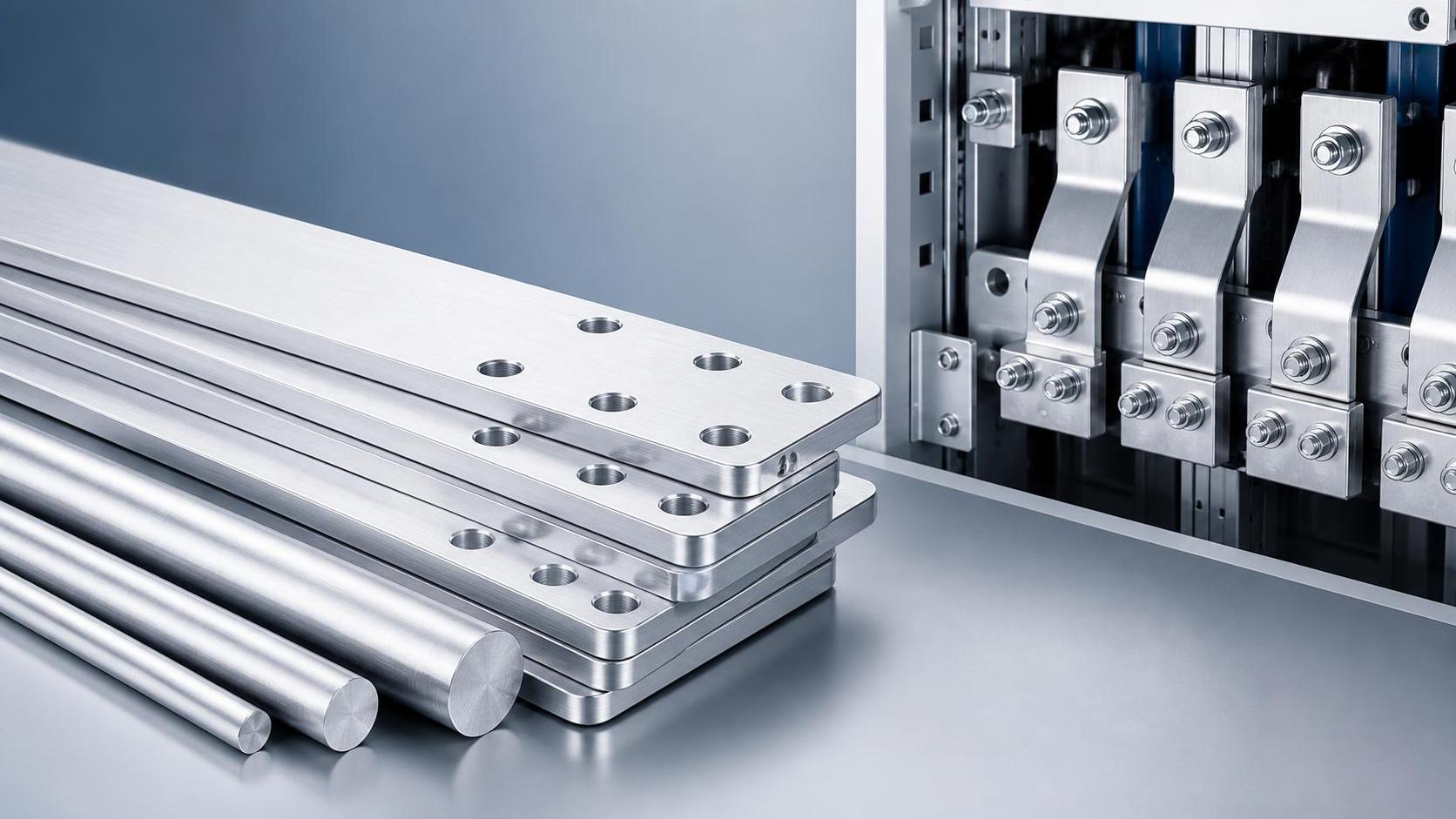
It often starts with a simple assumption: the conductivity looks acceptable, the size seems right, and the material is listed as 6101, so the busbar should be fine. But once a power distribution project moves from drawings to procurement and installation, small oversights can turn into delays, rework, or long-term reliability concerns. Many teams discover too late that a 6101 aluminum busbar is not just a line item on a material list. Its actual performance depends on several linked factors that affect both installation and service life.
A common problem is that selection is made from one headline property alone, usually electrical conductivity, while mechanical behavior, fabrication quality, and dimensional consistency receive less attention. That works until bending becomes difficult, bolt connections feel inconsistent, or surface conditions raise concerns about corrosion in service. If you are specifying material for a switchgear enclosure, feeder system, or equipment interconnection, it helps to review the busbar as a working component, not only as an alloy grade.
Start with the service conditions, not the catalog line
Before comparing suppliers or tempers, clarify where the busbar will actually operate. Indoor dry rooms, humid utility spaces, coastal exposure, vibration-prone equipment rooms, and compact assemblies all place different demands on the material. A 6101 aluminum busbar chosen for one environment may need a different finish, temper, or fabrication route in another.
This first step matters because conductivity alone does not tell you whether the part will remain stable after punching, bending, fastening, or thermal cycling. In practice, service conditions usually decide which performance factors deserve the closest review.
The checks that usually matter most
Electrical performance: confirm that the material is suitable for the required current-carrying function, but do not stop at nominal conductivity. Ask whether the supplied condition is consistent across the full batch and whether the section size matches the real thermal and load assumptions of the design.
Mechanical strength and temper: this is where many selection issues appear. A busbar may have acceptable conductivity but still create problems if the temper is not appropriate for bending, punching, or maintaining shape under fastening pressure. If the layout includes multiple formed sections or field adjustments, the forming behavior should be checked early rather than after delivery.
Dimensional accuracy: width, thickness, straightness, edge condition, and flatness all affect assembly speed. Slight dimensional variation can lead to poor fit-up at connection points, uneven contact pressure, and avoidable modification on site. For long runs or stacked assemblies, dimensional control becomes even more important.
Surface quality and corrosion behavior: aluminum naturally offers good corrosion resistance, but the real question is whether the surface condition supports the intended environment and joint design. Scratches, contamination, rough edges, or inconsistent finish can complicate contact preparation and protective treatment. In mixed-material assemblies, galvanic considerations should also be reviewed.
Where fabrication quality changes the decision
Even when the alloy is correct, poor downstream processing can reduce confidence in the final part. Holes that are slightly out of position, burrs at cut edges, or distortion after machining can all affect installation. That is why many engineers review manufacturing capability together with material properties.
For support parts, connection accessories, spacers, or custom-machined round components used around the same electrical assembly, a practical stock material such as Aluminum rod may be considered where light weight, corrosion resistance, and good machinability help simplify secondary fabrication. It is not a replacement for busbar selection, but it can be useful in related mechanical parts where clean machining and easier handling are needed.
A more reliable way to evaluate before specifying
One useful approach is to review the 6101 aluminum busbar through three stages. First, compare the design requirement with the supplied temper, size tolerance, and expected fabrication route. Second, confirm whether the connection method, such as bolting or clamping, places extra demands on flatness and edge quality. Third, check whether the installation environment introduces moisture, chemical exposure, or repeated thermal movement.
This method usually reveals whether the material is genuinely project-ready or only technically acceptable on paper. It also helps separate issues caused by alloy choice from issues caused by machining, handling, or finishing.
Questions worth asking before final approval
Can the material hold its required shape after bending or punching? Are tolerances suitable for the connection hardware and spacing design? Is the surface condition appropriate for the planned contact treatment and environment? Will field installation require cutting or drilling, and if so, is the supplied condition compatible with that work? These questions are simple, but they often catch the problems that cause the most disruption later.
In some projects, related structural or support elements are produced from machinable aluminum stock rather than steel to reduce handling effort and maintain corrosion resistance in the surrounding assembly. In those cases, Aluminum rod can fit general fabrication needs for brackets, fixtures, or custom support components without adding unnecessary weight.
Specifying a 6101 aluminum busbar is usually less about finding the “best” alloy on paper and more about checking whether the delivered material matches the real electrical, mechanical, and fabrication demands of the job. When those checks are done early, teams tend to avoid the familiar late-stage problems: difficult forming, inconsistent fit, uncertain joints, and preventable installation delays.
Navigation
Send Us A Message
Professional field of aluminum bars
24/7 before-sales and after-sales services
Comprehensive technical support