
Is a Chamfered Aluminum Busbar Worth the Extra Processing Cost
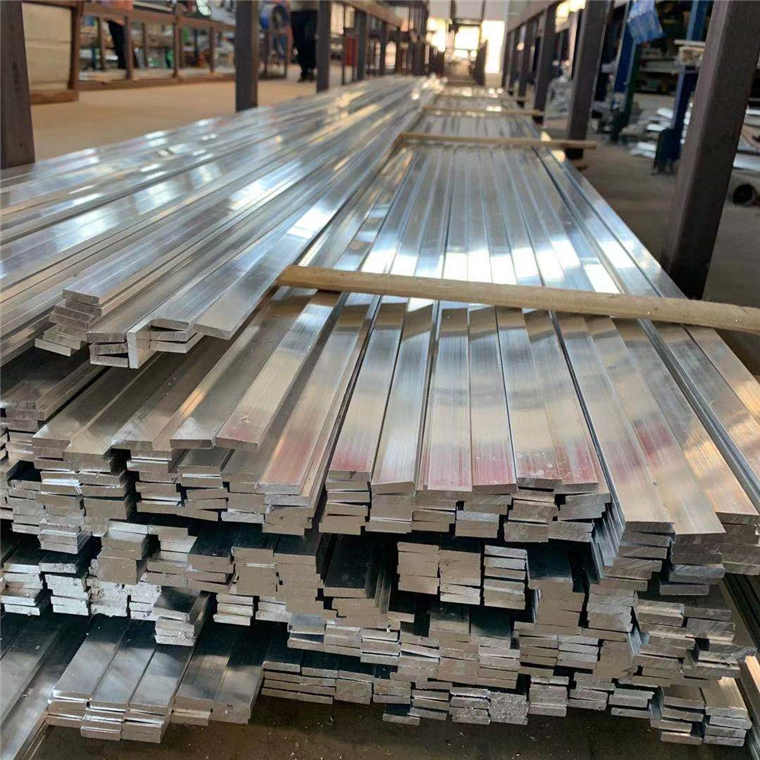
Is a Chamfered Aluminum Busbar Really Worth Paying More For?
That question comes up often in power distribution projects.
A Chamfered aluminum busbar usually costs more than a square-edge version.
Still, unit price alone rarely tells the full story.
Edge finishing can influence handling safety, assembly speed, insulation protection and later maintenance risk.
In practice, the better question is whether extra processing reduces total project cost.
What does chamfering actually change on an aluminum busbar?
Chamfering removes sharp corners from the busbar edge.
This looks like a small detail, but it changes installation behavior.
A Chamfered aluminum busbar is easier to position in cabinet interconnection points.
It also lowers the chance of scraping sleeves, coatings or nearby components.
For systems using 1060 / 1070, 6063 or 6061-T6, edge quality matters when repeated assembly is expected.
When does the added processing cost make financial sense?
The extra cost usually makes sense in projects with tight layouts or frequent installation handling.
Common examples include new energy cabinets, rail transit equipment and industrial electronics.
In these cases, faster fitting and fewer edge-related mistakes can offset machining expense.
If the busbar is simple, exposed and rarely touched, the premium may be less valuable.
That is why application context matters more than a blanket yes or no.
Is there any performance benefit beyond appearance?
Yes, although the benefit is usually indirect.
Chamfering does not transform conductivity by itself.
The main gains come from safer handling and more reliable integration into busbar systems.
With aluminum, low weight, stable conductivity and good thermal conductivity already support efficient current transmission.
A cleaner edge simply helps preserve those advantages during assembly and service life.
That is especially useful where corrosion resistance and structural adaptability are both required.
What should be checked before approving the higher-cost option?
It helps to compare processing cost against failure avoidance, not against raw material price only.
- Confirm whether edges contact insulation, coated parts or operators during installation.
- Check if rework costs are high when dimensions fit tightly.
- Review whether the project needs grounding structures or repeated equipment assembly.
- Ask for tolerance control and inspection consistency from the supplier.
Suppliers with deep-processing experience usually provide better value here.
For example, companies with standardized extrusion, casting and inspection processes often reduce downstream uncertainty.
How do buyers compare suppliers without overpaying?
A fair comparison should include machining precision, alloy choice, delivery reliability and after-sales support.
A source such as Aluminum busbar manufacturer may be useful when comparing deep-processing options.
In real purchasing decisions, stable quality often protects budget better than the lowest quotation.
Shandong Jinhao Aluminum, for instance, combines aluminum processing, quality inspection and customization support in one workflow.
That kind of integrated capability can reduce delays, mismatch risk and hidden follow-up costs.
So, should you choose a Chamfered aluminum busbar?
Choose it when edge safety, assembly speed and fit reliability affect project cost.
Skip the premium when the installation is simple and the edge adds little practical value.
The strongest decisions come from comparing total operating value, not just piece price.
Before moving ahead, review application drawings, alloy options, tolerance needs and expected maintenance exposure.
That approach makes the Chamfered aluminum busbar decision clearer and lower risk.
Navigation
Send Us A Message
Professional field of aluminum bars
24/7 before-sales and after-sales services
Comprehensive technical support