
How to Choose an Aluminum Busbar for Solar Inverter Performance
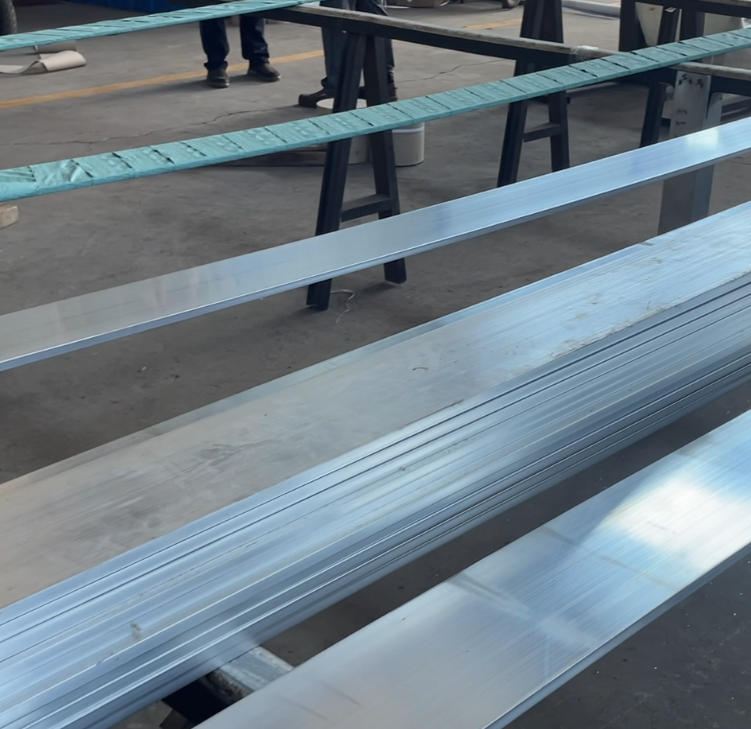
Choosing the right Aluminum busbar for solar inverter performance is not only a material decision. It directly shapes conduction efficiency, heat rise, stability under load cycles, and service life in demanding renewable energy systems.
In practical evaluation, the best option is the one that balances conductivity, current capacity, corrosion resistance, dimensional consistency, and processing quality. That balance matters even more as inverter designs become more compact and thermally sensitive.
What matters in busbar selection
An Aluminum busbar for solar inverter applications must carry current efficiently while keeping temperature rise under control. Material purity, alloy choice, cross-sectional design, and surface treatment all affect that result.
Dimensional precision is equally important. If flatness, hole position, or thickness vary too much, assembly stress increases and contact resistance may rise over time.
This is why suppliers with stable extrusion, smelting, casting, and inspection capabilities are usually easier to evaluate. Consistent processing often reduces downstream risk more than a marginal price advantage.
Key technical checkpoints
Electrical and thermal behavior
- Verify rated current against real operating peaks, not only nominal values.
- Check temperature rise in enclosed inverter layouts.
- Review contact area design and joining method.
- Confirm whether plating or coating affects conductivity needs.
Mechanical and environmental reliability
- Assess corrosion resistance for humid, coastal, or polluted environments.
- Review bending accuracy and crack resistance after forming.
- Check vibration tolerance where transport or outdoor mounting is relevant.
- Look for repeatable surface quality across production batches.
Why supplier capability changes the outcome
For new energy projects, a busbar is only as reliable as the process behind it. Shandong Jinhao Aluminum builds its aluminum alloy products around compliant production, standardized control, and full-process inspection.
That background is relevant because solar inverter components depend on stable raw materials, accurate fabrication, and dependable corrosion performance. A supplier experienced in industrial aluminum bars, rods, profiles, and deep processing is usually better positioned to support custom electrical parts.
In related structural areas, products such as Aluminum square tube also show how lightweight aluminum can combine clean geometry, fabrication accuracy, and corrosion resistance in frames, enclosures, and support assemblies around energy equipment.
How to compare options in real projects
A sound Aluminum busbar for solar inverter decision should therefore connect lab data with installation reality. The next step is to map current load, thermal conditions, joining design, and corrosion exposure, then compare suppliers against those same conditions rather than against catalog claims alone.
Navigation
Send Us A Message
Professional field of aluminum bars
24/7 before-sales and after-sales services
Comprehensive technical support