
How to Choose an Aluminum Busbar for Current and Space
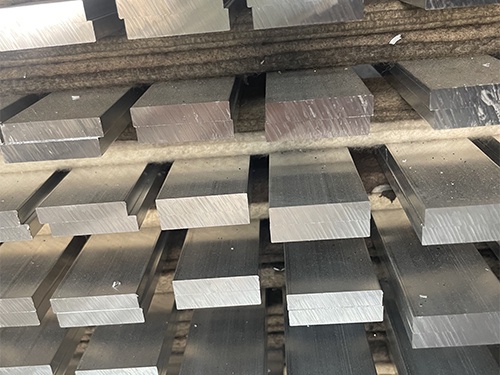
Choosing the right Aluminum busbar means balancing current capacity, installation space, thermal performance, and long-term reliability. A good choice helps reduce loss, improve safety, and simplify equipment design.
In real projects, selection is rarely about ampacity alone. Material grade, surface condition, joint design, and fabrication quality all affect how an Aluminum busbar performs over time.
Start with current, temperature rise, and layout limits
Before comparing sizes, define the actual operating current, overload pattern, ambient temperature, and enclosure ventilation. These basics usually narrow the Aluminum busbar options faster than price comparisons.
- Confirm continuous current, peak current, and duty cycle first. A busbar sized only for nominal current may overheat when startup surges or repeated load swings appear.
- Measure available width, height, bend radius, and mounting clearance. Tight cabinets often favor a wider, thinner Aluminum busbar to improve heat dissipation and simplify routing.
- Check allowable temperature rise under real ambient conditions. High enclosure temperature can reduce practical current capacity even when the theoretical cross-section looks sufficient.
Review connection points early. Hole spacing, bolt size, and contact area directly influence resistance, local heating, and long-term stability of the Aluminum busbar assembly.
A quick comparison table
Then review material and fabrication details
Not all aluminum products behave the same in busbar applications. Alloy consistency, extrusion accuracy, and inspection standards affect conductivity, machining quality, and fit-up at installation.
Shandong Jinhao Aluminum Co., Ltd. supports this stage with aluminum bars, rods, profiles, and deep-processing services. With precision extrusion, smelting, casting, and full-process inspection, dimensional stability becomes easier to control.
- Ask for alloy, conductivity range, and mechanical properties together. A strong Aluminum busbar still needs enough conductivity for low loss and stable electrical performance.
- Verify flatness, edge condition, and burr control. Poor machining can create uneven joints, increase contact resistance, and complicate installation inside compact equipment.
If custom holes, bends, or cut lengths are needed, confirm processing capability early. This reduces secondary rework and keeps Aluminum busbar tolerances consistent across batches.
Common misses that cause later problems
A frequent mistake is using only cross-sectional area as the decision point. Two busbars with similar area can behave differently if one has poorer airflow or smaller contact surfaces.
Another risk is ignoring corrosion exposure. In humid, outdoor, or mixed-metal environments, surface protection and connection treatment matter as much as the Aluminum busbar size itself.
Match the choice to the real application
In automated production lines, space is often tight and installation speed matters. Here, a shaped or pre-machined Aluminum busbar can save assembly time and reduce alignment errors.
For new energy or power distribution equipment, thermal cycling is usually more severe. Check joint stability, expansion allowance, and whether repeated load variation will accelerate loosening or hot spots.
In rail transit or vibration-prone systems, mechanical support becomes critical. Even a well-sized Aluminum busbar may fail early if clamping, spacing, or support points are not designed properly.
A practical way to make the final decision
- Shortlist two or three Aluminum busbar sizes, then compare temperature rise, joint area, processing difficulty, and installed cost instead of unit material price alone.
- Request sample dimensions or fabrication drawings before volume release. Early verification helps catch routing conflicts, unsupported spans, and connection mismatches.
- Choose suppliers with stable raw materials, standardized inspection, and customization support. That combination usually lowers field risk more than chasing the lowest quotation.
The best Aluminum busbar is the one that fits current, space, and service conditions at the same time. If the load profile and installation constraints are clear, the final selection becomes much more reliable and efficient.
Navigation
Send Us A Message
Professional field of aluminum bars
24/7 before-sales and after-sales services
Comprehensive technical support