
How 6101 Aluminum Busbar Improves Weight and Cost Control in Substation Projects
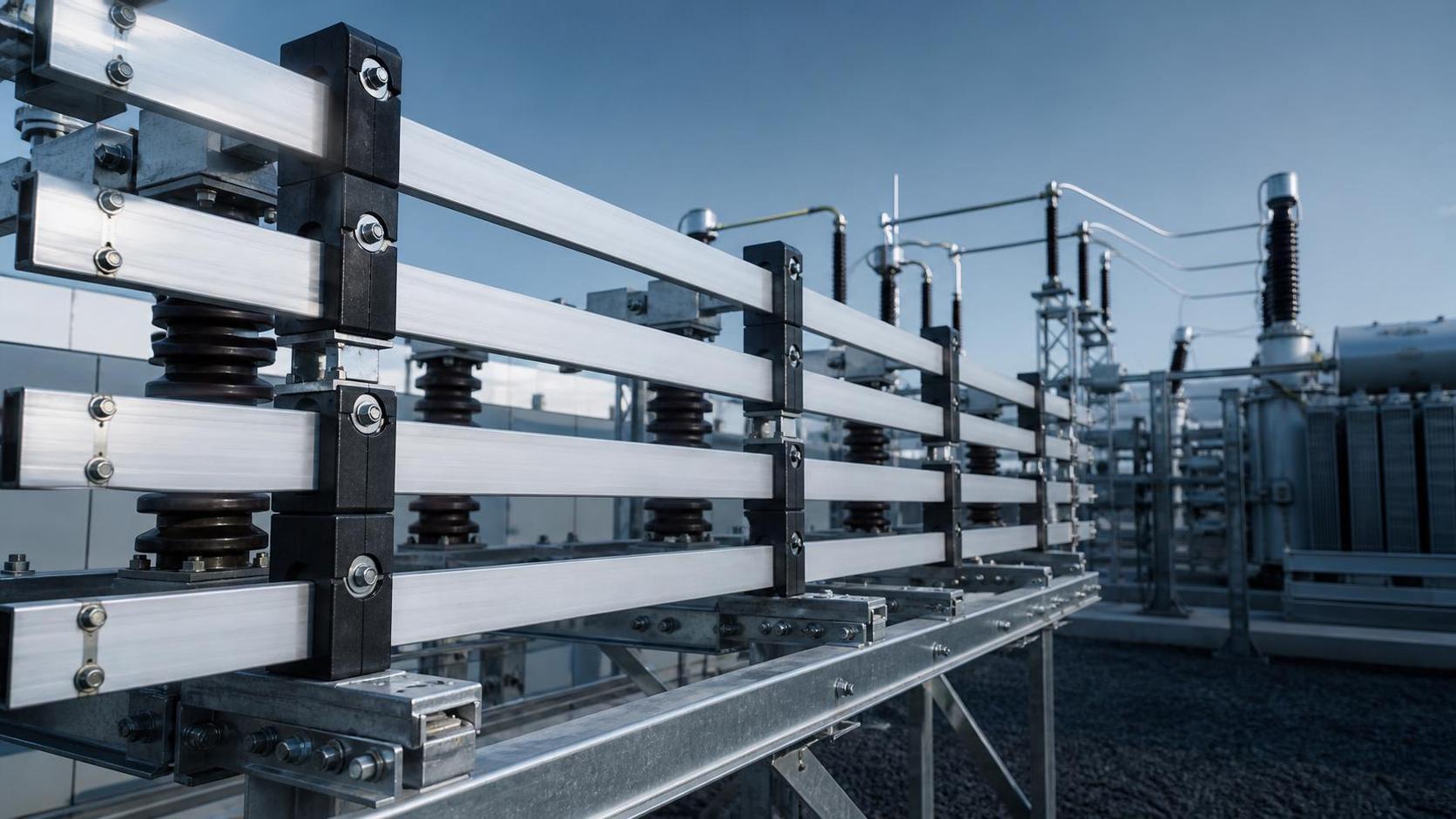
If you are trying to reduce both structural load and total installed cost in a substation project, 6101 aluminum busbar deserves serious attention. It is often chosen not because it is simply “lighter than copper,” but because that lower weight can affect the whole project: easier support design, less handling effort, faster installation, and lower transport burden. When the layout, current requirements, connection method, and environment are matched correctly, 6101 aluminum busbar can improve cost control without pushing the project into unnecessary performance risk.
That is usually the real decision point. Most buyers are not asking whether aluminum can conduct electricity at all. They are asking whether it can deliver acceptable electrical performance, reliable service life, and a cleaner budget outcome across procurement, fabrication, installation, and maintenance. In many substation applications, the answer is yes.
Why 6101 aluminum busbar is used in substations
6101 is widely considered a practical electrical-grade aluminum alloy for busbar applications. It gives project teams a useful balance: good conductivity, relatively low weight, and corrosion resistance that supports outdoor or semi-exposed service when the design is done properly.
For decision-makers, the weight issue is not a small detail. A lighter conductor can reduce demands on support structures, brackets, insulators, and handling equipment. On large projects, that can simplify logistics and shorten installation time. Even when the unit material comparison is not enough on its own to close the case, the system-level savings often make the difference.
In plain terms: 6101 aluminum busbar helps control cost best when the project is sensitive to mass, span loading, installation labor, and long-term corrosion exposure.
Where the cost savings really come from
A common mistake is to look only at the price per kilogram or price per meter. That is too narrow. In actual substation work, cost control usually comes from several smaller gains working together.
First, lighter busbars are easier to move, position, and align on site. That matters more than many purchasing teams expect, especially when installation conditions are tight or crane time is limited.
Second, lower weight can reduce some structural and support costs. The exact impact depends on span, configuration, and project standard, so it should be verified in design rather than assumed. Still, this is one of the main reasons aluminum busbar remains attractive in utility and industrial power projects.
Third, corrosion behavior can improve lifecycle economics. Aluminum naturally forms a protective oxide layer. In the right environment and with proper joint treatment, that can help reduce maintenance pressure compared with materials that need more aggressive protection.
There is another cost factor people often miss: fabrication efficiency. Suppliers with mature extrusion, casting, and quality-control capability tend to deliver more consistent dimensions and surface condition, which reduces rework during assembly. This is where manufacturing discipline matters more than marketing language. Companies such as Shandong Jinhao Aluminum, which combine raw material control, precision extrusion, deep processing, and inspection across the production cycle, are usually better positioned to support projects that need both compliance and customization.
Weight reduction helps more than transportation
Many teams initially connect “lightweight” with shipping savings only. That is only part of the picture.
In substations, lower conductor weight can influence installation rhythm, support arrangement, and the practical difficulty of assembly. Crews spend less effort handling long sections. Positioning becomes more manageable. Secondary steel and connection supports may also benefit, depending on the design approach.
This is why experienced engineers usually assess busbar material in the context of the whole assembly, not as an isolated commodity. A cheaper material that causes more site difficulty is not truly cheaper.
What 6101 aluminum busbar does not solve by itself
This is the part that deserves a sober look. 6101 aluminum busbar is not the best answer in every scenario.
If your project has extremely tight space constraints and needs maximum conductivity in the smallest possible cross-section, copper may still be the stronger option. If the joint design is poor, if dissimilar-metal interfaces are ignored, or if installation crews treat aluminum connections casually, the expected benefits can be lost quickly. Contact surfaces, fastening practice, and connector compatibility matter a lot.
Another misconception is that “lighter” automatically means “weaker.” In reality, what matters is whether the alloy, section design, and support layout meet the mechanical and electrical demands of the application. That judgment should come from the project specification and engineering review, not from a shortcut assumption.
For buyers comparing suppliers, it also helps to ask what upstream aluminum stock and processing capability support the final busbar product. In some fabrication chains, round stock such as Aluminum rod is used for related support components, machined connectors, or custom-engineered auxiliary parts where low weight, corrosion resistance, and machinability are useful. That does not replace the busbar selection itself, but it does show whether a supplier can support broader substation metalwork consistently.
What to confirm before you approve the material
Before making a final decision, check these points with your engineering and procurement teams:
- Required conductivity and allowable temperature rise
- Installation environment, including humidity, pollution level, and corrosion exposure
- Connection method, especially at bolted joints and any dissimilar-metal transitions
- Mechanical loading, span, and support design
- Supplier quality system, material traceability, and standards compliance
If those five items are handled well, 6101 aluminum busbar usually becomes a very rational option rather than a compromise choice.
For many substation projects, the best result is not achieved by chasing the lowest initial material price. It comes from choosing a conductor that keeps electrical performance dependable while reducing weight-related burden across design, transport, installation, and service life. That is where 6101 aluminum busbar often proves its value.
FAQ
Is 6101 aluminum busbar always cheaper than copper busbar?
Not in every comparison. The better question is total project cost, including supports, handling, installation time, and maintenance considerations.
Does lower weight mean lower reliability?
No. Reliability depends on correct alloy selection, cross-section design, joint quality, and environmental suitability.
Is 6101 suitable for outdoor substations?
It often is, provided the design accounts for corrosion exposure, joint treatment, and applicable project standards.
What is the biggest risk when switching to aluminum busbar?
Poor connection design and careless installation. Most avoidable problems show up at joints, not in the base material itself.
Internal Link Anchor Text Suggestions
- aluminum busbar material selection: product category or technical guide page
- electrical grade aluminum alloys: alloy overview or knowledge base page
- custom aluminum extrusion solutions: service or manufacturing capability page
- substation conductor support components: application solution page
- machined aluminum parts for industrial projects: deep-processing product page
External Authority Source Suggestions
- industry association standards for aluminum electrical conductors
- government or grid-operator technical specification pages
- official technical literature from recognized conductor or alloy standard organizations
Navigation
Send Us A Message
Professional field of aluminum bars
24/7 before-sales and after-sales services
Comprehensive technical support