
Common Installation Mistakes That Shorten Aluminum Busbar Life
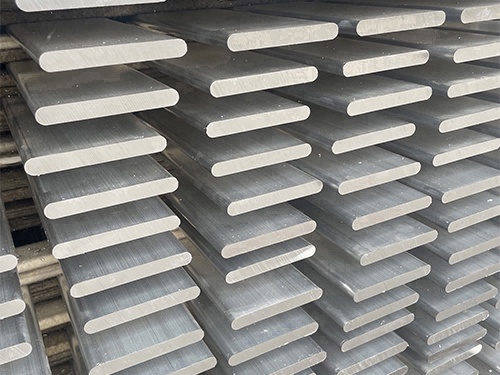
Even high-quality aluminum busbar products can fail early when installation details are overlooked. From poor fastening and improper spacing to weak surface protection, small errors can reduce conductivity, increase heat buildup, and shorten service life. For engineers, buyers, and operators evaluating aluminum busbar performance, understanding these common installation mistakes is the first step toward safer, longer-lasting, and more cost-effective system operation.
In power distribution systems, switchgear assemblies, rail transit equipment, new energy cabinets, and industrial automation lines, aluminum busbars are valued for their light weight, strong conductivity-to-weight ratio, and corrosion resistance. However, service life is not determined by material selection alone. In many projects, 70% of early connection failures are linked more to installation practice than to the base material itself.
This article explains the most common installation mistakes that shorten aluminum busbar life, why they matter in real operating environments, and how project teams can reduce risk during design review, procurement, assembly, and maintenance. It is written for technical evaluators, buyers, operators, project managers, and distribution partners who need practical guidance rather than generic advice.
Why Installation Quality Matters as Much as Material Quality
Aluminum busbars work under combined electrical, thermal, and mechanical stress. A well-produced bar may still underperform if the joint pressure is uneven, the contact surface is contaminated, or the thermal expansion allowance is ignored. In systems carrying 200A, 800A, or even above 3000A, small resistance increases at a joint can create disproportionate temperature rise over time.
Compared with some other conductive components, busbars require careful attention to contact integrity. Aluminum naturally forms an oxide layer on the surface. That layer is thin, but if it is not properly managed during installation, contact resistance can increase. In enclosed cabinets with ambient temperatures of 35°C to 45°C, poor installation can push local hot-spot temperatures much higher than design expectations.
For procurement teams, this means product evaluation should include installation compatibility, not only alloy grade, section size, and price. For operators, it means routine inspection should focus on joints, supports, clearance, and signs of thermal discoloration. For project owners, the cost of a preventable installation error may appear later as downtime, rework, or shortened replacement cycles.
Typical consequences of poor installation
- Higher contact resistance, leading to local overheating within 3 to 12 months of operation.
- Mechanical loosening caused by vibration, thermal cycling, or inadequate torque control.
- Accelerated corrosion in humid, coastal, or chemically exposed environments.
- Insulation damage or flashover risk when spacing and support design are insufficient.
The table below shows how common installation factors directly affect aluminum busbar life in practical applications.
The key point is simple: aluminum busbar life depends on the full system. Material quality creates the baseline, but installation quality determines whether that baseline is preserved in actual operation.
The Most Common Installation Mistakes in Aluminum Busbar Systems
Some mistakes appear minor during assembly, but they have a cumulative effect after hundreds or thousands of heating and cooling cycles. In industrial plants running 8 to 24 hours per day, even one weak joint can become the starting point of system instability. The following issues are among the most frequent causes of shortened aluminum busbar life.
1. Incorrect torque during fastening
Over-tightening can deform the contact area or damage hardware, while under-tightening can leave micro-gaps that increase resistance. The correct torque depends on bolt size, joint design, washer selection, and surface condition. A difference of even 10% to 20% from the recommended torque range may affect long-term stability, especially under vibration or thermal expansion.
2. Poor contact surface preparation
Contact surfaces should be clean, flat, and prepared immediately before assembly when required by the design. If oxidation, moisture, grease, or machining debris remains on the joint area, actual conductive contact becomes smaller than the nominal contact area. That can lead to concentrated current paths and localized heating.
3. Ignoring thermal expansion and contraction
Aluminum expands and contracts with temperature changes. In long busbar runs, rigid fixing without expansion allowance may generate mechanical stress. This is especially important in outdoor substations, energy storage systems, or workshops where temperature swings may exceed 20°C to 30°C between day and night or between idle and full-load conditions.
4. Improper spacing and support intervals
If support spacing is too wide, the bar can vibrate, sag, or move under electrodynamic forces during surge or fault events. If phase clearance is too small, insulation performance may be compromised. These risks are higher in compact cabinets where designers try to save installation space without reassessing heat dissipation and electrical clearance.
5. Mixing unsuitable connection materials
Direct aluminum-to-copper joints, unsuitable washers, or incompatible hardware coatings can trigger galvanic effects or unstable joint pressure. Where dissimilar metals are unavoidable, transition connectors or approved surface treatments should be used. This is a common issue in retrofit projects where old copper systems are partially upgraded with aluminum busbars.
The checklist below helps teams identify where the installation process usually breaks down.
For both new projects and replacement orders, these issues should be discussed before shipment and again before on-site assembly. Product quality and site execution must be aligned, not treated as separate tasks.
How to Install Aluminum Busbars Correctly for Long Service Life
A reliable installation process should be systematic. It is not enough to rely on operator experience alone, particularly when the project involves multiple cabinet types, customized shapes, or busbars with drilled, bent, or surface-finished sections. Standardized work steps reduce variation and help maintain predictable performance over 5, 10, or more years of operation.
Pre-installation preparation
Before assembly starts, check dimensions, hole position tolerance, surface finish, and packing condition. Confirm that busbars have not been scratched, twisted, or contaminated in storage or transport. In many factories, keeping components in a dry, enclosed area for 24 to 48 hours before installation helps prevent condensation-related issues.
Recommended installation workflow
- Verify drawing, part number, and orientation for each bar and connector.
- Inspect contact surfaces and clean them according to the joint requirement.
- Check support position, alignment, and phase spacing before fastening.
- Tighten hardware in sequence using a calibrated torque tool.
- Carry out visual inspection and, where relevant, temperature monitoring after energization.
In high-current systems, a follow-up inspection after the first 72 hours to 168 hours of operation is often useful. It helps detect early loosening, abnormal heat signatures, or stress points caused by installation deviation. This is especially relevant in applications such as energy storage inverters, low-voltage switchboards, and automated production equipment.
Pay attention to coatings, insulation, and environment
Where busbars are insulated, coated, or used in corrosive settings, installers should avoid damaging the protective layer during handling and clamping. Scratches, exposed edges, and poor sealing can create failure points over time. If the project requires customized deep-processing solutions, clear communication with the supplier is essential. In some sourcing discussions, buyers review options such as 无 alongside fabrication support to simplify model selection and installation planning.
Manufacturers with experience in aluminum extrusion, smelting, casting, and standardized process control can support more consistent product fit and downstream assembly efficiency. Shandong Jinhao Aluminum, for example, focuses on aluminum alloy products, customized processing, and full-cycle service support, which is especially valuable when projects require industrial aluminum profiles, aluminum bars, rods, or tailored busbar-related fabrication for multiple application sectors.
A good installation method protects the conductivity advantage of aluminum rather than forcing maintenance teams to compensate for avoidable assembly defects later.
Inspection, Maintenance, and Procurement Controls That Reduce Failure Risk
Installation quality must be supported by inspection and procurement discipline. Many failures are not the result of a single serious error, but of 3 or 4 smaller oversights that accumulate: wrong hardware selection, incomplete torque records, no first-load thermal check, and delayed maintenance. A preventive approach gives better life-cycle value than repeated emergency correction.
What maintenance teams should inspect
- Joint temperature trend during full or near-full load operation, especially at 60%, 80%, and 100% load stages.
- Discoloration, oxidation marks, insulation cracks, or signs of mechanical movement.
- Condition of bolts, washers, support brackets, and protective covers.
- Environmental factors such as dust, humidity, condensation, and chemical exposure.
For critical installations, infrared temperature checks every 3 to 6 months are a practical option. In less severe indoor environments, annual visual inspection may be acceptable, provided load growth and ambient conditions remain stable. If system load has increased by more than 15% since commissioning, inspection frequency should usually be reviewed.
Procurement teams should also understand that service life starts before installation. Dimensional consistency, alloy suitability, machining accuracy, packaging protection, and delivery coordination all affect on-site performance. When a supplier provides consultation, model selection, personalized customization, logistics support, and after-sales response in one chain, installation risk often decreases because technical gaps between design and delivery are reduced.
Procurement evaluation matrix
The table below can be used by purchasing teams, project managers, and technical reviewers when comparing aluminum busbar or related aluminum processing suppliers.
A supplier that combines manufacturing experience with application understanding is often better positioned to support safe installation, particularly in sectors like rail transit, electronics, new energy, and automated lines where layout constraints and reliability requirements are strict.
FAQ: Practical Questions About Aluminum Busbar Installation and Life
How often should aluminum busbar joints be inspected after installation?
A common practice is an initial inspection after the first 72 hours to 168 hours of operation, followed by checks every 3 to 6 months in critical systems. For stable indoor applications with moderate load and low vibration, annual inspection may be sufficient. The right interval depends on current load, operating hours, ambient temperature, and whether the equipment sees frequent start-stop cycles.
Is aluminum busbar suitable for high-current applications?
Yes, when the cross-section, alloy, joint design, and installation method are properly matched to the application. The mistake is assuming that conductor size alone determines performance. For currents from several hundred amperes to several thousand amperes, connection quality, cooling conditions, and spacing are just as important as the bar dimensions.
What is the biggest installation error buyers should ask suppliers about?
The most useful question is whether the supplier can support the full chain from material selection to fabrication accuracy and installation guidance. Buyers should ask about contact surface condition, tolerance control, recommended fastening method, support suggestions, and packaging protection. This is more valuable than focusing on price alone, especially in repeat procurement or export projects.
Can customized aluminum processing reduce installation mistakes?
In many cases, yes. Pre-drilled holes, controlled bending, precise cut length, and application-oriented fabrication can reduce on-site modification by 20% to 40%, depending on project complexity. Less rework means fewer surface damages, fewer dimensional mismatches, and better consistency across installation teams.
Aluminum busbar life depends on more than the base metal. Correct fastening, proper surface preparation, adequate spacing, thermal expansion allowance, and ongoing inspection all play a direct role in long-term conductivity and safety. For technical evaluators, buyers, and project leaders, the most effective strategy is to assess both product quality and installation reliability as one integrated system.
With strong aluminum material resources, standardized production control, precision processing capability, and one-stop service support, Shandong Jinhao Aluminum can help customers improve fit, reduce installation risk, and better match aluminum solutions to industrial, energy, transport, and equipment applications. If you are planning a new project or reviewing an existing system, contact us now to discuss specifications, customization, and practical installation solutions.
Navigation
Send Us A Message
Professional field of aluminum bars
24/7 before-sales and after-sales services
Comprehensive technical support