
Chinese Aluminum Busbar Manufacturers for Power Distribution Projects
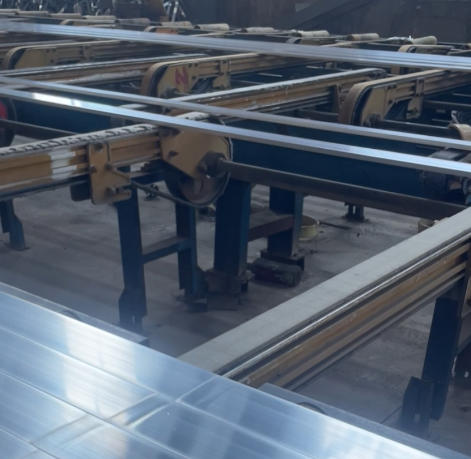
Chinese Aluminum Busbar Manufacturers matter most when site conditions change
Choosing Chinese Aluminum Busbar Manufacturers for power distribution work is rarely just a price decision. Real project performance depends on conductivity stability, dimensional consistency, corrosion resistance, and how reliably parts arrive within the installation window.
In practice, different sites create different priorities. A clean indoor cabinet, a humid cold storage line, and a rail transit assembly all place distinct demands on aluminum busbar design, alloy selection, and processing accuracy.
Shandong Jinhao Aluminum brings value here because its production system combines premium raw materials, precision extrusion, smelting, casting, and full-process inspection. That background supports more dependable matching between specification and application, rather than a one-size-fits-all supply approach.
The same busbar does not fit every distribution environment
For standard power distribution cabinets, the usual concern is stable current transmission with easier installation. Low weight helps on-site handling, while consistent tolerances reduce rework during cabinet interconnection and equipment assembly.
In new energy systems, thermal behavior becomes more visible. Good thermal conductivity and practical corrosion resistance support long operating cycles, especially where load variation and outdoor exposure increase stress on busbar systems.
Rail transit and industrial electronics often require another layer of judgment. Structural adaptability, grounding structure compatibility, and repeatable machining quality usually matter as much as basic conductivity.
Where application differences show up fastest
Useful matching starts with alloy and processing details
A practical review often begins with alloy choice. 1060 / 1070 is commonly considered when conductivity is the leading target. 6063 may suit projects needing balanced forming and surface quality. 6061-T6 is more relevant where added structural strength is required.
This is why experienced Chinese Aluminum Busbar Manufacturers are usually judged by more than catalog range. The ability to coordinate model selection, customized processing, inspection, and logistics often determines whether the material works smoothly at the jobsite.
A useful reference is Aluminum busbar manufacturer, especially when the project needs current transmission, cabinet interconnection, or grounding structures across multiple installation conditions.
Common mistakes appear before installation, not after
- Comparing only unit price, while ignoring replacement frequency and installation efficiency.
- Using one specification across indoor, humid, and vibration-prone environments.
- Checking conductivity figures, but not confirming machining precision or surface condition.
- Overlooking delivery coordination when phased installation depends on exact batch consistency.
A better next step is to define the actual environment, load pattern, connection method, and maintenance cycle first. Then compare Chinese Aluminum Busbar Manufacturers by process control, customization capability, and specification stability, so the selected busbar matches the project over its full service life.
Navigation
Send Us A Message
Professional field of aluminum bars
24/7 before-sales and after-sales services
Comprehensive technical support