
Chamfered Aluminum Busbar Standards and Quality Checks Explained
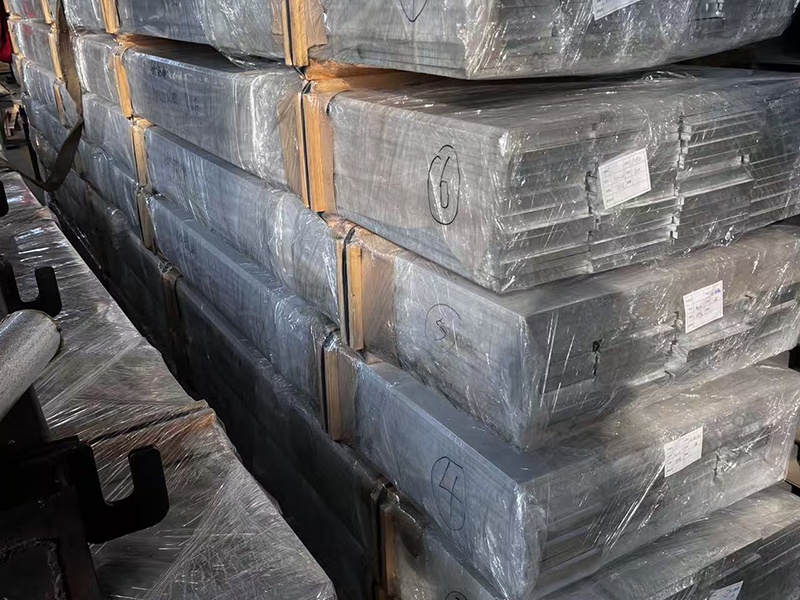
Why do Chamfered aluminum busbar standards matter so much?
Chamfered aluminum busbar quality is not only about appearance.
It directly affects installation safety, contact reliability, and long-term electrical stability.
In practical terms, a poor chamfer can leave sharp edges, uneven contact zones, or local stress points.
Those small defects often lead to handling injuries, assembly difficulty, coating damage, or unstable conductivity.
That is why Chamfered aluminum busbar inspections usually combine dimensional checks, surface review, and process traceability.
Manufacturers with mature extrusion and deep-processing control, such as Shandong Jinhao Aluminum, generally reduce these risks through full-process inspection and compliance-based production.
Which standards are usually checked first?
There is rarely one single global rule covering every Chamfered aluminum busbar detail.
More common practice is to verify four layers together.
- Material grade standards for aluminum alloy composition and temper.
- Dimensional tolerances for thickness, width, length, and chamfer symmetry.
- Surface quality requirements for burrs, scratches, dents, oxidation, and contamination.
- Electrical and mechanical checks linked to application demands.
If the part goes into power distribution cabinets or industrial control electronics, edge consistency becomes especially important.
For many standard conductive applications, 6063 aluminum busbar is considered because it balances conductivity, corrosion resistance, low weight, and easy machining.
How can you judge whether the chamfer is actually qualified?
The quickest mistake is checking only the edge angle.
A qualified Chamfered aluminum busbar should be evaluated as a whole feature, not an isolated cut.
In actual audits, measurement tools should be paired with visual inspection under stable lighting.
What defects are most often missed during routine checks?
Minor rollover at the edge is one of the most overlooked issues.
It may look acceptable, yet it can interfere with fastening or create inconsistent contact pressure.
Another common problem is assuming a clean surface means compliant material quality.
For Chamfered aluminum busbar projects, surface finish must still align with alloy certification, process records, and final dimensions.
Where heat transfer, corrosion resistance, and easy forming are needed together, a 6063 option may be suitable, especially in building infrastructure, rail, refrigeration, and general distribution assemblies.
Does alloy choice change the quality check focus?
Yes, and this point is often underestimated.
Different alloys respond differently to cutting, drilling, bending, and chamfering.
With 6063 aluminum, the balance between moderate hardness and machinability can make edge finishing easier to control.
That helps when stable production and practical installation matter more than over-specifying material performance.
Still, material selection should follow drawings, current load, environment, and assembly method rather than habit alone.
What is the best next step before approving a batch?
A reliable approval process usually starts with three questions.
- Does the Chamfered aluminum busbar match the drawing and tolerance standard?
- Are surface and burr conditions acceptable for safe installation?
- Can material records, process control, and inspection data support compliance?
If any answer is uncertain, the safer choice is to hold the batch for recheck.
A good review does not stop at the edge itself.
It connects alloy selection, machining quality, application risk, and documentation, then turns them into a repeatable acceptance standard.
Navigation
Send Us A Message
Professional field of aluminum bars
24/7 before-sales and after-sales services
Comprehensive technical support