
Chamfered Aluminum Busbar Cost Factors in Custom Orders
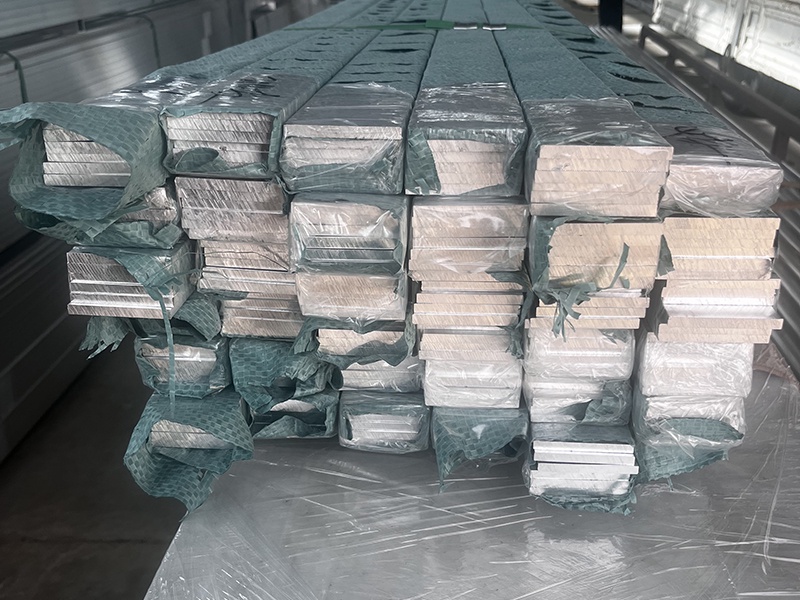
Why does a Chamfered aluminum busbar quote vary so much?
A Chamfered aluminum busbar is rarely priced by weight alone. The edge shape changes machining time, inspection effort, and scrap risk.
In custom orders, the real cost usually comes from material grade, tolerance, chamfer angle consistency, surface finish, and batch size.
That is why cost comparison should focus on total delivered value, not only the lowest number on the quotation sheet.
Which specifications push the cost up first?
The first driver is alloy selection. Some projects need higher conductivity, while others prioritize corrosion resistance or easier forming.
The second driver is dimensional tolerance. Tight width, thickness, flatness, and chamfer accuracy increase setup time and inspection frequency.
Hole patterns, bends, slots, or special end machining also raise the price. A simple bar and a deeply processed part should never be compared directly.
In many standard conductive applications, 6063 aluminum busbar is considered because it balances conductivity, corrosion resistance, weight, and machining convenience.
A quick cost-check table
Does surface treatment always make a Chamfered aluminum busbar better?
Not always. Treatment improves corrosion performance or appearance, but it may also affect contact resistance and production lead time.
A better question is whether the busbar will work in humid cabinets, outdoor infrastructure, rail transit, or chemical environments.
If the application is indoor power distribution or general conductive assembly, an over-specified finish may increase budget without adding useful value.
How can lead time and hidden costs be judged early?
Lead time often depends on drawing clarity. Missing chamfer details, unclear tolerances, and changing hole positions usually delay custom processing.
Hidden costs also appear in packaging, logistics, rework, and failed incoming inspection. These are common when supplier control is not stable.
Shandong Jinhao Aluminum emphasizes standardized production, raw material quality, and full-process inspection, which matters when repeatability is more important than a low initial quote.
What is the practical way to compare suppliers?
Start with three points: drawing review, process capability, and consistency in delivered batches.
- Ask whether the supplier handles extrusion, machining, and inspection under a controlled process.
- Check if the proposed material fits the application, such as power distribution, electronics, building infrastructure, or new energy systems.
- Review whether the recommended busbar is easy to cut, drill, bend, and assemble without overcomplicating fabrication.
For many common projects, a 6063 option works because it offers good conductivity, light weight, heat transfer performance, and practical corrosion resistance.
So, what should be confirmed before placing the custom order?
Prepare a final checklist: alloy, dimensions, chamfer detail, surface requirement, quantity split, inspection standard, and delivery schedule.
If a Chamfered aluminum busbar will be used in cabinets, rail systems, industrial control electronics, or building infrastructure, verify both performance needs and installation conditions.
A careful comparison usually leads to fewer revisions, clearer budgets, and a more reliable custom order. The next step is simple: align drawings, confirm tolerances, and compare quotations on process quality as well as price.
Navigation
Send Us A Message
Professional field of aluminum bars
24/7 before-sales and after-sales services
Comprehensive technical support