
Best Applications of Aluminum Busbar for Solar Inverter Design
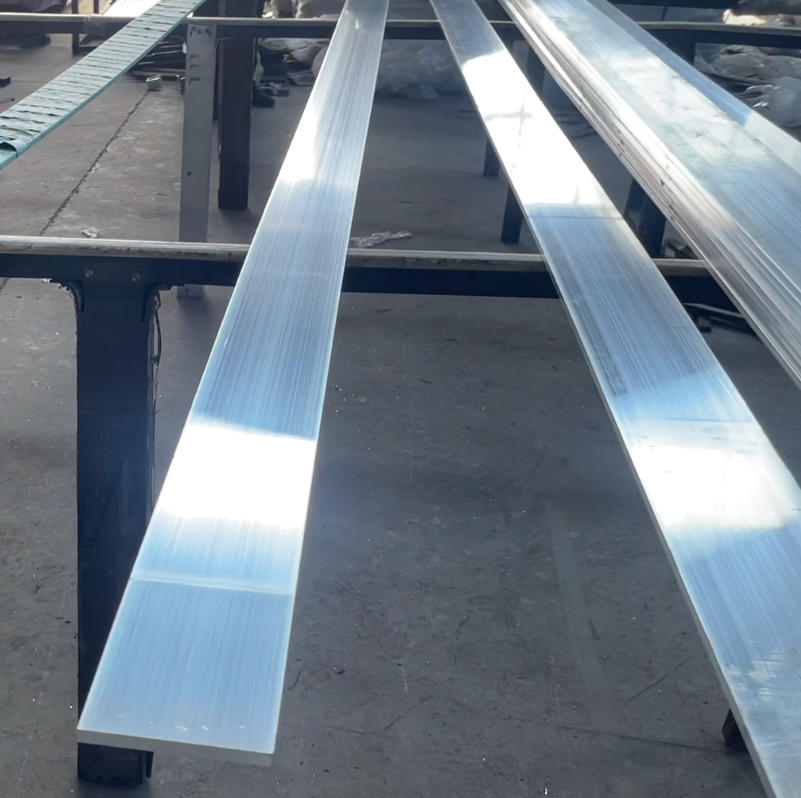
Best Applications of Aluminum Busbar for Solar Inverter Design
Selecting the right Aluminum busbar for solar inverter systems directly shapes efficiency, thermal balance, and long-term reliability.
In real projects, material choice is rarely only about conductivity.
Weight, cost, assembly speed, corrosion resistance, and layout flexibility also matter.
That is why Aluminum busbar for solar inverter design is becoming a practical solution across modern energy systems.
Why Aluminum Busbars Fit Modern Inverter Projects
Aluminum offers an attractive balance between performance and project economics.
It is lighter than copper, easier to handle in larger assemblies, and often more budget-friendly.
For inverter manufacturers, this can reduce structural load and simplify transportation.
With proper design, Aluminum busbar for solar inverter applications can still deliver stable electrical performance and solid heat dissipation.
Best Applications of Aluminum Busbar for Solar Inverter Systems
DC Input Collection
One strong application is the DC side, where multiple PV strings converge.
Here, Aluminum busbar for solar inverter layouts helps create compact routing and cleaner current distribution.
Power Module Interconnection
Busbars are also widely used between IGBT or SiC modules and capacitor banks.
Shorter current paths lower inductance, support switching stability, and improve inverter response.
AC Output Distribution
On the output side, aluminum busbars work well in medium and high-power inverter cabinets.
They help manage current carrying needs while keeping enclosure weight under control.
Key Design Benefits to Consider
- Lower mass supports easier installation and logistics.
- Good corrosion resistance suits outdoor or humid operating conditions.
- Flexible fabrication helps optimize compact inverter packaging.
- Lower raw material cost can improve total project value.
Supporting structures also deserve attention during inverter integration.
For frames, housings, or internal supports, Aluminum square tube can be a smart match.
Its clean geometry, low weight, and corrosion resistance help maintain tidy layouts and easier assembly.
Practical Risks and How to Manage Them
The biggest concern is connection quality.
Aluminum oxide layers can affect contact resistance if joints are not prepared correctly.
This means surface treatment, joint design, and fastening force should be checked early.
Thermal expansion must also be considered, especially in high-load cycling conditions.
Choosing a Reliable Supply Partner
Stable material quality is essential for any Aluminum busbar for solar inverter program.
Shandong Jinhao Aluminum Co., Ltd. provides aluminum alloy products with standardized process control and strong customization capability.
Its experience in extrusion, casting, fabrication, and full-cycle service supports demanding industrial and new energy applications.
When efficiency, manufacturability, and long-term reliability all matter, Aluminum busbar for solar inverter design remains a practical and scalable choice.
Navigation
Send Us A Message
Professional field of aluminum bars
24/7 before-sales and after-sales services
Comprehensive technical support