
Aluminum Coil Busbar Market Trends: What May Change in 2026
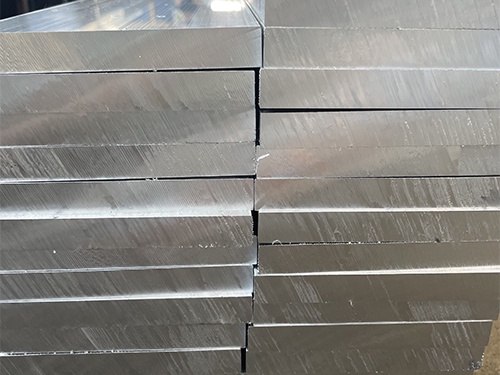
Aluminum Coil Busbar Market Trends Are Entering a More Demanding Phase
The Aluminum coil busbar market is moving beyond simple cost comparison.
By 2026, buyers are likely to judge performance, processing stability, and delivery responsiveness with much greater precision.
That shift is tied to real changes in new energy systems, factory automation, rail transit, and equipment electrification.
Lighter conductive structures still matter, but consistency under application-specific conditions matters more than before.
Why the market signal is getting clearer now
Recent demand suggests that aluminum busbar solutions are no longer evaluated only as metal inputs.
They are increasingly treated as engineered components within broader electrical and structural systems.
This changes the conversation around the Aluminum coil busbar market in three practical ways.
- Voltage and current demands are becoming more application-specific.
- Installation environments are pushing stronger expectations for corrosion resistance and dimensional reliability.
- Production schedules are reducing tolerance for unstable lead times or inconsistent finishing quality.
In other words, 2026 may reward suppliers that combine material know-how with process control.

Demand growth is broad, but standards may split by application
The Aluminum coil busbar market is not expanding in one uniform direction.
Different sectors are pushing different priorities, and that could reshape product specifications.
This is where standardized production alone may no longer be enough.
More projects will ask for deeper processing support and smoother coordination between design and supply.
Pricing may stay sensitive, but value will be judged differently
Raw material volatility will still affect the Aluminum coil busbar market in 2026.
Yet the larger issue may be hidden cost, not headline price.
When machining loss, rework, surface inconsistency, or delayed assembly enters the picture, low initial pricing loses appeal quickly.
That is why integrated aluminum processors with extrusion, smelting, casting, and inspection capabilities may gain an edge.
Shandong Jinhao Aluminum reflects this direction through full-process control, compliant production, and customized deep-processing support.
Those strengths matter more when projects require stable quality across repeated industrial deliveries.
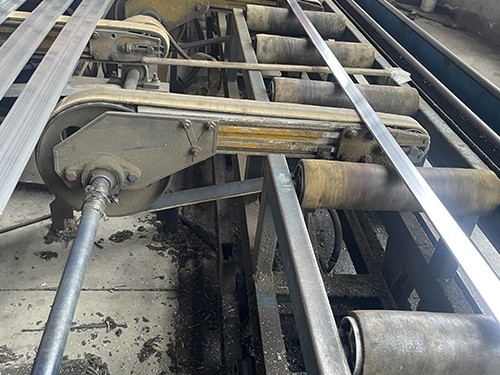
Adjacent aluminum products also reveal what the market is prioritizing
A useful signal comes from related aluminum components used in machining, transport, and equipment support structures.
For example, Aluminum rod remains relevant because buyers increasingly value low weight, corrosion resistance, and reliable machinability together.
That same logic is shaping the Aluminum coil busbar market.
Materials are being selected not only for conductivity, but also for finishing potential, fabrication efficiency, and performance in real installation environments.
What should be watched before 2026 decisions are locked in
The next stage is less about predicting one big market jump.
It is about identifying which requirements are becoming non-negotiable.
- Track whether application standards are tightening around heat, corrosion, and dimensional repeatability.
- Compare suppliers by process stability, not only by quoted tonnage price.
- Review whether customization demand is growing faster than standard stock demand.
- Assess logistics reliability for multi-region projects and phased delivery schedules.
The Aluminum coil busbar market may look more competitive in 2026, but the real separator will likely be execution quality.
A practical next step is to recheck application requirements, test supplier responsiveness, and build a staged sourcing plan before specifications shift further.
Navigation
Send Us A Message
Professional field of aluminum bars
24/7 before-sales and after-sales services
Comprehensive technical support