
Aluminum Busbar vs Copper: When Does It Make Sense?
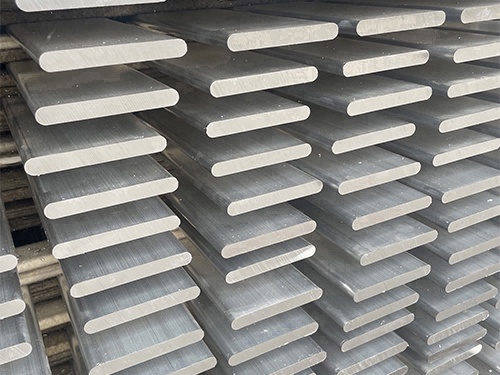
Choosing between aluminum busbar and copper is not just about conductivity—it is about weight, cost, corrosion resistance, installation needs, and long-term project value. For engineers, buyers, and project decision-makers evaluating Aluminum row solutions, understanding when aluminum makes practical and economic sense can help optimize performance while controlling total system cost.
In power distribution, switchgear, battery packs, rail systems, renewable energy equipment, and industrial automation lines, busbar material selection affects not only electrical performance but also project budget, transport efficiency, assembly workload, and lifecycle maintenance. A material that looks economical on a per-kilogram basis may become expensive once weight, connector design, enclosure size, and long cable or bar runs are considered.
For technical evaluators and purchasing teams, the real question is rarely “Which metal is better in all cases?” A more useful question is “Under which operating conditions does aluminum busbar deliver the best balance of conductivity, structural efficiency, manufacturability, and total installed cost?” That is where a practical comparison with copper becomes essential.
Shandong Jinhao Aluminum Co., Ltd. serves global industrial customers with aluminum alloy profiles, bars, rods, and deep-processing solutions backed by standardized production control, precision extrusion, smelting and casting, and complete inspection procedures. For projects that require lighter structures, corrosion-resistant material options, and custom processing support, aluminum busbar selection should be evaluated from both engineering and sourcing perspectives rather than conductivity alone.
Understanding the Core Difference Between Aluminum Busbar and Copper
Copper remains the benchmark for electrical conductivity, which is why it is still widely used in compact, high-current, space-constrained systems. Aluminum, however, offers a very different value profile. It has lower conductivity per unit cross-section, but it is much lighter and usually more cost-efficient per installed system when the design allows a larger busbar section. In many industrial applications, that trade-off is not only acceptable but beneficial.
As a general engineering reference, aluminum conductivity is roughly around 61% of copper by volume, depending on alloy and temper. To carry a similar current, an aluminum busbar typically needs a larger cross-sectional area, often around 1.5 to 1.7 times that of copper. Even with that increase, aluminum can still weigh about 45% to 55% less for equivalent current-carrying performance in many practical designs.
That weight difference matters in long bus runs, rooftop solar systems, battery energy storage, rail transit auxiliary systems, and transport-sensitive equipment. Lower mass can simplify handling, reduce support structure load, and shorten installation time. In projects with 50 m, 100 m, or even longer busbar routes, cumulative weight reduction can become a major design advantage rather than a minor detail.
Another point is corrosion behavior. Copper performs well in many environments, but aluminum naturally forms a protective oxide layer. With proper surface treatment and connector design, aluminum busbar can provide stable service in humid, industrial, or mildly corrosive environments. The key is not to assume material performance in isolation; joint treatment, plating, torque control, and enclosure design all affect long-term reliability.
Key Property Comparison
The table below outlines the most relevant differences for engineers, procurement teams, and project managers assessing aluminum busbar versus copper in industrial applications.
The conclusion is straightforward: copper is not automatically the smarter choice. If the system can accommodate a larger conductor section and if connections are engineered correctly, aluminum busbar can deliver a strong performance-to-cost ratio in many modern industrial and energy projects.
When Aluminum Busbar Makes Practical and Economic Sense
Aluminum busbar makes the most sense when weight reduction, budget control, and scalable fabrication are top project priorities. This is especially true in applications with medium-to-large installation space, long conductor routing, and repeated production volumes. In these cases, the lower density of aluminum helps reduce transport loads, simplify operator handling, and lower support structure requirements.
Projects in solar combiner systems, energy storage cabinets, EV charging infrastructure, rail transit support equipment, and industrial automation lines often benefit from aluminum. If the busbar route is long and the enclosure allows a wider or thicker section, aluminum can reduce overall system weight significantly. On a multi-cabinet project, even a 20% to 30% logistics or handling improvement can influence installation planning and labor allocation.
For procurement teams, aluminum also makes sense when raw material price volatility affects project margins. Copper price swings can materially change the budget of high-volume power distribution equipment. Aluminum offers a more manageable cost structure in many sourcing strategies, particularly when annual demand is measured in hundreds or thousands of pieces rather than one-off prototypes.
For manufacturers and distributors, custom processing capability is another factor. A supplier with extrusion, machining, casting, and inspection capabilities can help turn standard aluminum stock into application-specific busbar components. In some sourcing workflows, buyers review both material feasibility and processing support through a preliminary product page such as 无, then move to drawing confirmation and sample validation before volume release.
Typical Situations Where Aluminum Has an Advantage
- Projects with busbar runs longer than 10–20 m, where cumulative weight becomes a structural and labor issue.
- Battery packs, inverters, or cabinets with enough layout space to increase conductor section without redesigning the full enclosure.
- Applications where corrosion resistance and outdoor exposure require protective material behavior plus appropriate surface treatment.
- High-volume industrial production where raw material optimization can improve total procurement efficiency over 6–12 month cycles.
Applications that commonly favor aluminum
The table below summarizes common scenarios and the reason aluminum busbar is often selected over copper.
In short, aluminum is most compelling where system-level economics matter more than conductor compactness alone. If the project team evaluates material, installation, transport, and service life together, aluminum often becomes a practical option rather than a compromise.
Technical Selection Criteria: Current, Joints, Heat, and Reliability
A sound busbar decision starts with electrical and mechanical requirements, not just material preference. Engineers should first define rated current, overload conditions, allowable temperature rise, installation space, and terminal type. In many designs, the real challenge is not conductor body performance but joint stability over time, especially under thermal cycling and vibration.
For example, if a copper busbar section is 100 mm² for a given current range, an aluminum design may need around 150–170 mm² depending on alloy, temperature limit, enclosure ventilation, and operating duty cycle. This is not a defect; it is a standard design adjustment. The larger section can still produce a lighter and more economical finished assembly.
Joint design requires particular attention because aluminum forms an oxide layer that can increase contact resistance if ignored. Good practice often includes contact surface preparation, suitable plating or bimetal transition solutions where needed, controlled bolt torque, and periodic verification in critical systems. In outdoor or high-humidity conditions, sealing and connector material compatibility can be as important as conductor selection itself.
Heat management should also be assessed at the system level. Higher resistance means more heat for a given geometry, but aluminum busbar designs compensate through section size, spacing, airflow, and surface area. In many cabinets, a 10% to 20% increase in busbar size is acceptable because it improves thermal distribution and still reduces total structure weight compared with copper-heavy layouts.
Five technical checks before approval
- Verify rated current, short-term overload, and allowable temperature rise under actual duty conditions.
- Confirm whether installation space can accept a larger cross-section or modified busbar profile.
- Review all connection interfaces, especially aluminum-to-copper transitions and terminal hardware.
- Assess environmental exposure, including humidity, salt mist risk, dust, vibration, and maintenance interval.
- Request dimensional tolerance, flatness, and surface treatment specifications before mass production.
Selection checkpoints by project role
Different stakeholders focus on different acceptance points. Aligning these early can prevent redesign cycles that add 2–4 weeks to project delivery.
A successful aluminum busbar project is therefore a coordination exercise. If engineering, sourcing, and installation requirements are synchronized from the beginning, aluminum can meet demanding industrial expectations with predictable performance.
Procurement, Fabrication, and Delivery Considerations for B2B Buyers
For B2B buyers, selecting aluminum busbar is not limited to comparing raw material prices. The better decision comes from evaluating the supplier’s fabrication range, tolerance control, alloy consistency, inspection process, logistics response, and customization support. A low-cost quote loses value quickly if the bars arrive with poor flatness, inconsistent drilling, or surface conditions that complicate assembly.
In many industrial purchasing cycles, the workflow includes 4 main stages: drawing review, material and process confirmation, sample validation, and batch delivery. Depending on customization complexity, sample preparation may take around 7–15 days, while production batches may require 2–6 weeks. Projects with special machining, punching, bending, or surface treatment should add review time before release.
This is where a manufacturer with integrated R&D, production, sales, and after-sales support becomes valuable. Shandong Jinhao Aluminum combines aluminum alloy production resources with deep-processing capabilities, standardized quality control, and one-stop service from consultation to logistics distribution. For buyers managing repeated orders or multi-country delivery, that integrated approach helps reduce communication loss between separate material and machining vendors.
In sourcing discussions, buyers may also request access to profile, bar, or machining information through references such as 无. What matters most is that the supplier can interpret technical drawings accurately, recommend suitable aluminum material options, and maintain stable quality from trial pieces to scaled supply.
What procurement teams should verify
- Material consistency: confirm alloy type, temper, and whether the bar is suitable for conductivity and forming needs.
- Processing capability: drilling, punching, bending, cutting, deburring, and surface treatment should be available in one chain where possible.
- Inspection scope: ask about dimensional checks, appearance checks, and whether joint-related surfaces receive special attention.
- Packaging and logistics: long busbars require stable packing to prevent deformation during sea, rail, or truck transport.
- After-sales support: define response time, replacement handling, and traceability for batch issues before placing a volume order.
A practical buyer should compare not only metal cost but also fabrication readiness, defect risk, lead-time reliability, and communication efficiency. In many cases, that broader view is what makes aluminum busbar a stronger commercial choice.
Common Mistakes, FAQ, and How to Make the Right Final Decision
Many poor busbar decisions come from oversimplified assumptions. One common mistake is rejecting aluminum solely because its conductivity is lower than copper. Another is accepting aluminum without redesigning section size, terminals, and contact surfaces. Both approaches are risky. Material choice should be matched to current level, thermal behavior, mounting method, and maintenance plan.
A second mistake is focusing only on purchase price per kilogram. In reality, total project value is shaped by at least 5 factors: conductor mass, support structure load, fabrication cost, installation time, and service reliability. When these are considered together, aluminum can outperform copper economically in many medium- and large-scale systems.
A third mistake is underestimating connection design. Even the best aluminum stock will underperform if joint surfaces are poorly prepared or if incompatible connectors are used. For applications with vibration, outdoor humidity, or high duty cycles, joint integrity should be reviewed as carefully as current rating.
The final decision should therefore be based on system fit. If you have limited installation space, extremely high current density, or legacy copper-only interfaces, copper may still be the better route. If you have layout flexibility, cost pressure, weight targets, or long conductor paths, aluminum busbar often deserves serious consideration.
FAQ 1: Is aluminum busbar safe for long-term industrial use?
Yes, provided it is correctly sized and installed. Long-term reliability depends on section design, contact resistance control, torque management, and environmental protection. In scheduled maintenance environments, connection checks every 6–12 months are common practice for critical systems.
FAQ 2: When should copper still be preferred?
Copper is often preferred when enclosure space is tight, current density is very high, or the project uses legacy components designed around copper dimensions and interfaces. It can also simplify retrofits where changing busbar geometry would trigger broader redesign costs.
FAQ 3: What should buyers ask suppliers before ordering?
Ask for alloy information, recommended cross-section ranges, machining tolerances, surface treatment options, packaging method, and typical lead time. It is also wise to confirm whether samples can be prepared before the first batch and whether the supplier supports application-specific drawing review.
FAQ 4: Can aluminum busbar help reduce project cost beyond material price?
Yes. Cost advantages may come from lower weight, easier handling, reduced structural load, and more efficient transport. In larger installations, these indirect savings can be meaningful, especially over multiple cabinets, long bus runs, or recurring production orders.
Choosing between aluminum busbar and copper is ultimately a project-specific engineering and sourcing decision. Aluminum makes the most sense when the system can accept a larger conductor section and when weight, cost control, corrosion resistance, and scalable fabrication matter as much as conductivity. With reliable material processing, proper joint design, and clear technical review, aluminum busbar can deliver strong long-term value across industrial equipment, energy systems, rail applications, and automation projects.
If you are evaluating custom aluminum busbar, industrial aluminum profiles, bars, or deep-processing support, Shandong Jinhao Aluminum can help you review drawings, assess feasible material options, and build a sourcing plan aligned with your application and delivery schedule. Contact us now to discuss your project, request technical details, or get a tailored aluminum solution for your next order.
Navigation
Send Us A Message
Professional field of aluminum bars
24/7 before-sales and after-sales services
Comprehensive technical support