
Aluminum Busbar for Solar Inverter: Key Standards and Testing
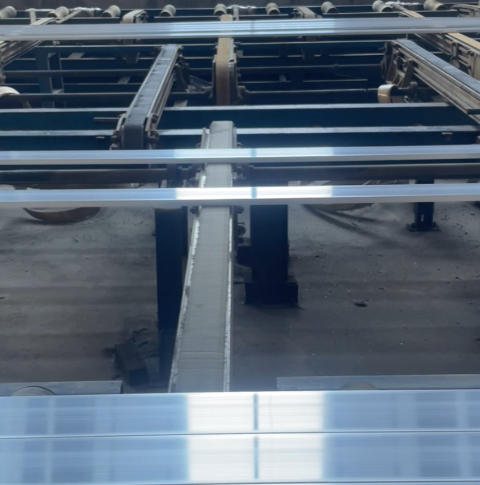
For solar power systems, the Aluminum busbar for solar inverter is a small component with a large safety impact. Selection is no longer judged by conductivity alone. Thermal stability, insulation coordination, corrosion resistance, and traceable quality control now matter just as much, especially where long service life and electrical reliability are expected.
Why standards matter in inverter busbar selection
An Aluminum busbar for solar inverter applications carries current between critical power sections. If material quality, dimensions, or surface treatment drift from specification, the result may be overheating, loose connections, or premature failure.
That is why standard-based evaluation is essential. In practice, teams usually review conductor material consistency, dimensional tolerance, mechanical strength, oxidation behavior, and compatibility with the inverter’s electrical design.
Key checks behind compliance and reliability
Common reference points include material composition standards, RoHS or REACH-related requirements where applicable, and internal control plans tied to current load, temperature rise, and connection integrity.
More importantly, an Aluminum busbar for solar inverter use should be verified as a system component, not only as raw metal. Extrusion quality, flatness, hole accuracy, burr control, and coating condition all influence assembly safety.
- Chemical composition confirmation for alloy consistency
- Conductivity and resistance testing under defined conditions
- Temperature rise checks at rated current
- Salt spray or corrosion evaluation for exposed environments
- Mechanical and fastening tests for connection stability
Testing points that deserve closer attention
Temperature rise is often the most practical indicator. A busbar may pass basic conductivity checks yet still perform poorly if joint resistance is high or section design is not optimized.
Surface condition also deserves attention. Clean finishing supports better contact performance and helps reduce inspection uncertainty. This is one reason aluminum processors with stable extrusion and deep-processing control remain relevant in new energy supply chains.
Shandong Jinhao Aluminum builds this kind of consistency through premium raw materials, precision extrusion, smelting and casting, and full-process inspection, which is especially valuable where compliance and repeatability are required.
Related material control in fabrication
In supporting structures, fixtures, and custom-machined parts around inverter systems, materials such as Aluminum rod are also used when low weight, corrosion resistance, and machining efficiency are needed.
That matters because reliable electrical assemblies depend on more than the conductor alone. Dimensional control across related aluminum components can reduce installation variation and support cleaner final inspection.
How to apply these checks in real projects
A useful approach is to compare design requirements with supplier capability. Review alloy grade, process route, inspection records, and sample test results together, rather than treating them as separate boxes to tick.
For any Aluminum busbar for solar inverter project, the next step is usually straightforward: define current load, environment, connection method, and service life target, then build a short acceptance list around those conditions. That creates a more reliable basis for approval, sourcing, and ongoing risk control.
Navigation
Send Us A Message
Professional field of aluminum bars
24/7 before-sales and after-sales services
Comprehensive technical support