
Aluminum Busbar for Solar Inverter: Cost vs Conductivity Explained
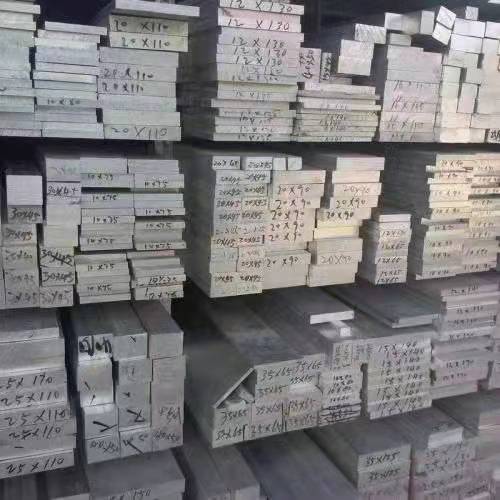
Why is Aluminum busbar for solar inverter systems getting more attention?
When cost pressure rises, busbar material becomes a practical decision, not a theoretical one.
An Aluminum busbar for solar inverter designs can reduce weight and material expense, while still supporting reliable power distribution.
The real question is not whether aluminum conducts less than copper. It does.
What matters is whether the conductivity difference is acceptable after sizing, coating, and thermal design are considered.
Does lower conductivity always mean poorer inverter performance?
Not necessarily. In actual inverter assemblies, geometry often compensates for material differences.
A wider or thicker Aluminum busbar for solar inverter use can achieve the required current capacity with manageable temperature rise.
This is why total design matters more than conductivity alone.
It is also worth checking surface treatment, joint quality, and corrosion behavior at connection points.
Shandong Jinhao Aluminum emphasizes standardized processing, quality inspection, and compliant production, which helps reduce variation in critical aluminum components.
Where does the cost advantage actually come from?
The savings are usually broader than raw metal price alone.
Because aluminum is lighter, transport and handling can also become easier, especially in larger assemblies.
What should be confirmed before placing an order?
A common mistake is comparing only quotation sheets without reviewing operating conditions.
- Expected current, peak load, and allowable temperature rise
- Joint method, plating requirement, and insulation environment
- Tolerance control for bending, punching, and assembly fit
- Outdoor moisture exposure and corrosion expectations
In supporting fabrication work, stock forms such as Aluminum rod can also be useful for fixtures, connectors, or custom-machined auxiliary parts.
That matters when a supplier can provide both busbar processing insight and broader aluminum deep-processing support.
Are there risks buyers often overlook with aluminum busbars?
Yes, but most are manageable with early verification.
The main concerns are contact resistance, improper sizing, and inconsistent surface treatment.
More careful buyers also review the supplier’s extrusion, smelting, casting, and inspection capabilities.
That is one reason established aluminum specialists in Shandong remain relevant for new energy projects.
If the process control is stable, an Aluminum busbar for solar inverter applications can deliver sound value over the full service cycle.
So, when is aluminum the smarter choice?
It is often the better option when weight, cost control, and scalable processing matter more than maximizing conductivity per cross-section.
The better approach is to compare total installed cost, thermal margin, processing quality, and supply consistency together.
If those points are clear, Aluminum busbar for solar inverter sourcing becomes less about guesswork and more about measurable trade-offs.
A useful next step is to prepare a drawing-based checklist, confirm alloy and surface requirements, and review sample capability before final selection.
Navigation
Send Us A Message
Professional field of aluminum bars
24/7 before-sales and after-sales services
Comprehensive technical support