
Aluminum Busbar Basics: Uses, Benefits, and Key Limits
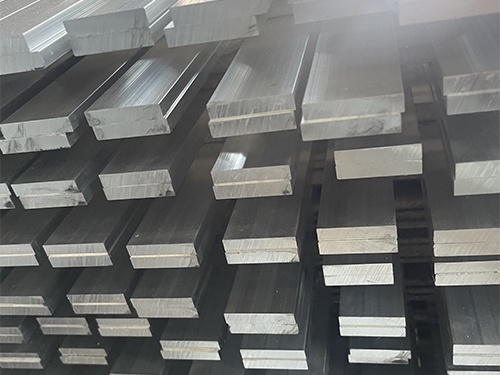
Aluminum busbar basics: why is it drawing more attention?
Aluminum busbar is increasingly used in power distribution, transport systems, and industrial equipment.
The reason is simple. It offers a useful balance of conductivity, low weight, corrosion resistance, and material cost.
For many projects, the real question is not whether aluminum works.
It is where aluminum busbar works best, and where its limits need careful design control.
In practical terms, a stable aluminum alloy supply, reliable extrusion, and strict inspection matter as much as the material itself.
That is why experienced aluminum processors, such as Shandong Jinhao Aluminum, focus on raw material quality, precision forming, and full-process control.
What exactly is an aluminum busbar?
An aluminum busbar is a solid conductor, usually flat or shaped, used to carry and distribute electrical current.
Compared with cables, busbars simplify routing, improve layout consistency, and support compact equipment design.
Aluminum versions are often selected when weight reduction and cost control are important.
Common forms include bare bars, coated bars, and machined parts for switchgear, battery packs, inverters, and rail systems.
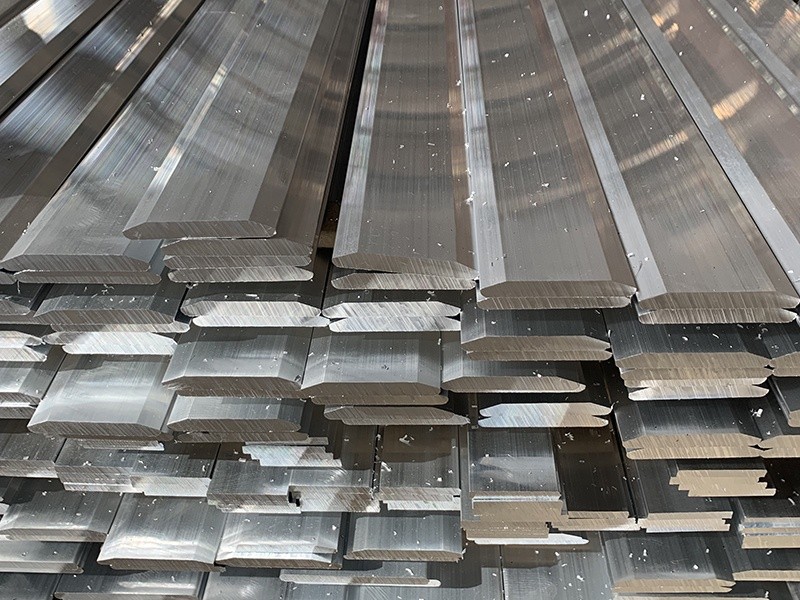
Where does aluminum busbar make the most sense?
The best applications are those needing large current capacity without unnecessary mass.
- Power distribution cabinets and control panels
- New energy equipment, including battery and inverter assemblies
- Rail transit and electric vehicle subsystems
- Automated production lines and industrial machinery
In these settings, aluminum busbar can reduce structural load and support easier installation.
It also fits well with custom-machined aluminum components and deep-processing solutions.
Is aluminum busbar better than copper in every case?
Not always. Aluminum busbar is strong in value and weight, but copper still leads in conductivity per volume.
A larger cross-section is often needed for aluminum to carry the same current.
That trade-off is acceptable in many designs, especially when space is available.
A sound selection depends on current load, installation space, temperature rise, and joint design.
What are the key limits people often overlook?
The main concern is connection reliability, not the bar alone.
Aluminum forms an oxide layer quickly. If contact surfaces are poorly prepared, resistance can increase.
Thermal expansion also deserves attention. Aluminum expands more than copper under heat.
In actual use, this affects bolted joints, spacing, and long-term stability.
- Check alloy grade and conductivity requirements
- Confirm surface treatment or protective coating
- Use suitable joint hardware and torque control
Evaluate heat rise and ventilation conditions

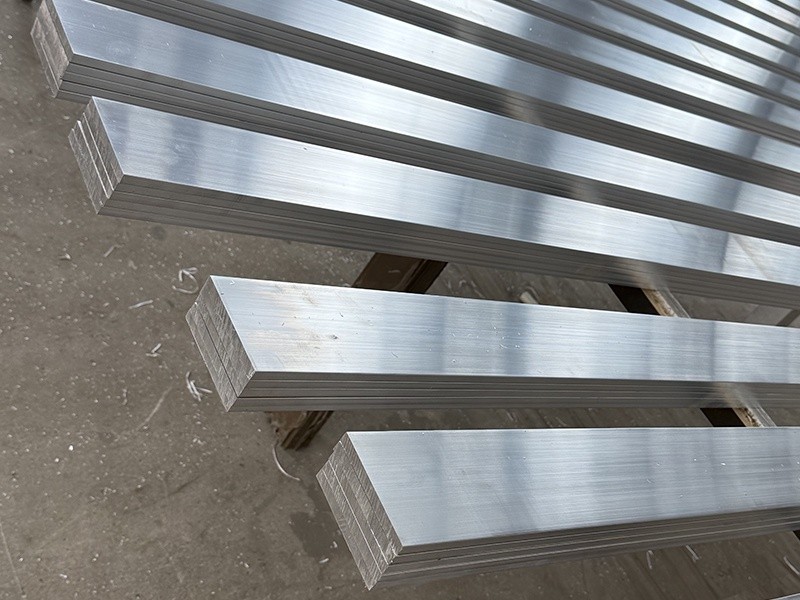
How should aluminum busbar be evaluated before production?
A useful approach is to review both electrical and manufacturing factors together.
Current rating, shape tolerance, punching accuracy, bending radius, and finishing all affect performance.
For custom projects, it helps to work with a supplier that can handle extrusion, machining, and inspection in one process.
Companies with experience in aluminum bars, rods, profiles, and deep processing can usually support more stable implementation.
This is especially relevant for equipment used in new energy, automation, electronics, and rail transit.
What is the practical takeaway?
Aluminum busbar is not a universal replacement for copper, but it is often the smarter option.
Its strengths are clear in lightweight systems, cost-sensitive builds, and large-scale industrial applications.
The best next step is to define current demand, space limits, joint conditions, and service environment.
Then compare material options with actual design data, not assumptions.
If custom sizing or processed aluminum components are needed, a qualified partner can help verify feasibility, consistency, and production control early.
Navigation
Send Us A Message
Professional field of aluminum bars
24/7 before-sales and after-sales services
Comprehensive technical support